Emery Samantha J, Mirzaei Mehdi, Vuong Daniel, Pascovici Dana, Chick Joel M, Lacey Ernest, Haynes Paul A
Department of Chemistry and Biomolecular Sciences, Macquarie University, North Ryde, NSW 2109, Australia.
Microbial Screening Technologies, Pty, Ltd, Smithfield, NSW 2165, Australia.
Sci Rep. 2016 Feb 12;6:20765. doi: 10.1038/srep20765.
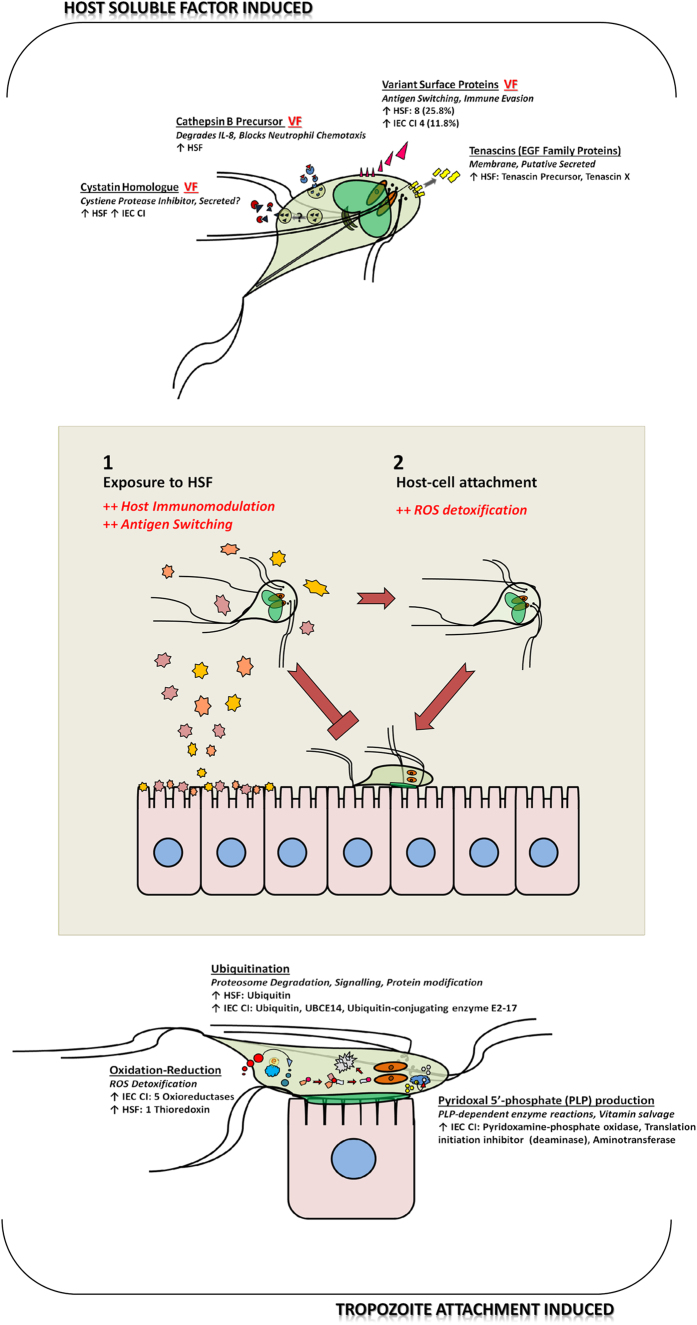
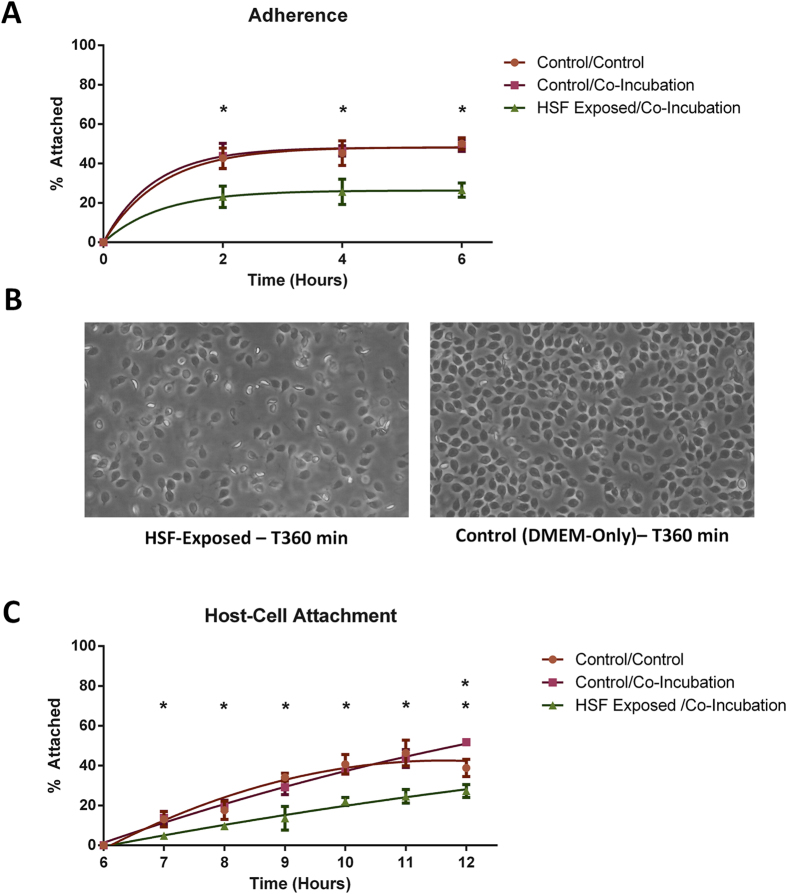
Giardia duodenalis is responsible for the majority of parasitic gastroenteritis in humans worldwide. Host-parasite interaction models in vitro provide insights into disease and virulence and help us to understand pathogenesis. Using HT-29 intestinal epithelial cells (IEC) as a model we have demonstrated that initial sensitisation by host secretions reduces proclivity for trophozoite attachment, while inducing virulence factors. Host soluble factors triggered up-regulation of membrane and secreted proteins, including Tenascins, Cathepsin-B precursor, cystatin, and numerous Variant-specific Surface Proteins (VSPs). By comparison, host-cell attached trophozoites up-regulated intracellular pathways for ubiquitination, reactive oxygen species (ROS) detoxification and production of pyridoxal phosphate (PLP). We reason that these results demonstrate early pathogenesis in Giardia involves two independent host-parasite interactions. Motile trophozoites respond to soluble secreted signals, which deter attachment and induce expression of virulence factors. Trophozoites attached to host cells, in contrast, respond by up-regulating intracellular pathways involved in clearance of ROS, thus anticipating the host defence response.
十二指肠贾第虫是全球人类寄生性肠胃炎的主要病因。体外宿主-寄生虫相互作用模型有助于深入了解疾病和毒力,并帮助我们理解发病机制。以HT-29肠上皮细胞(IEC)为模型,我们证明宿主分泌物的初始致敏作用会降低滋养体的附着倾向,同时诱导毒力因子的产生。宿主可溶性因子触发了膜蛋白和分泌蛋白的上调,包括腱生蛋白、组织蛋白酶B前体、胱抑素以及众多变异特异性表面蛋白(VSP)。相比之下,附着在宿主细胞上的滋养体上调了泛素化、活性氧(ROS)解毒和磷酸吡哆醛(PLP)产生的细胞内途径。我们认为这些结果表明贾第虫的早期发病机制涉及两种独立的宿主-寄生虫相互作用。活动的滋养体对可溶性分泌信号作出反应,这些信号会阻止附着并诱导毒力因子的表达。相反,附着在宿主细胞上的滋养体通过上调参与ROS清除过程的细胞内途径作出反应,从而预先应对宿主的防御反应。