Song Yuan, Wen Luona, Sun Jianxia, Bai Weibin, Jiao Rui, Hu Yunfeng, Peng Xichun, He Yong, Ou Shiyi
Out-patient Department, First Affiliated Hospital, Jinan University, Guangzhou, China.
Department of Food Science and Engineering, Jinan University, Guangzhou, China.
Food Nutr Res. 2016 Feb 10;60:30323. doi: 10.3402/fnr.v60.30323. eCollection 2016.
Ferulic acid (FA), a phenolic acid, is a potential therapy for diabetes mellitus. FA has been shown to protect against hepatic and myocardial injury and oxidative stress in obese rats with late-stage diabetes, but the mechanism of the antioxidative activity of FA is still unclear.
The aim of this study was to elucidate whether FA can prevent damage to cardiomyocytes and hepatocytes caused by high glucose (HG)-induced oxidative stress and whether the protection effects of FA on these cells are related to the Keap1-Nrf2-ARE signaling pathways.
Cells were divided into four groups: a control group (cultured with normal medium), an HG group (medium containing 80 mmol/L glucose), an FA+HG group (medium containing 80 mmol/L glucose and 1, 5, or 10 µg/mL FA), and a dimethylbiguanide (DMBG)+HG group (medium containing 80 mmol/L glucose and 50 µg/mL DMBG).
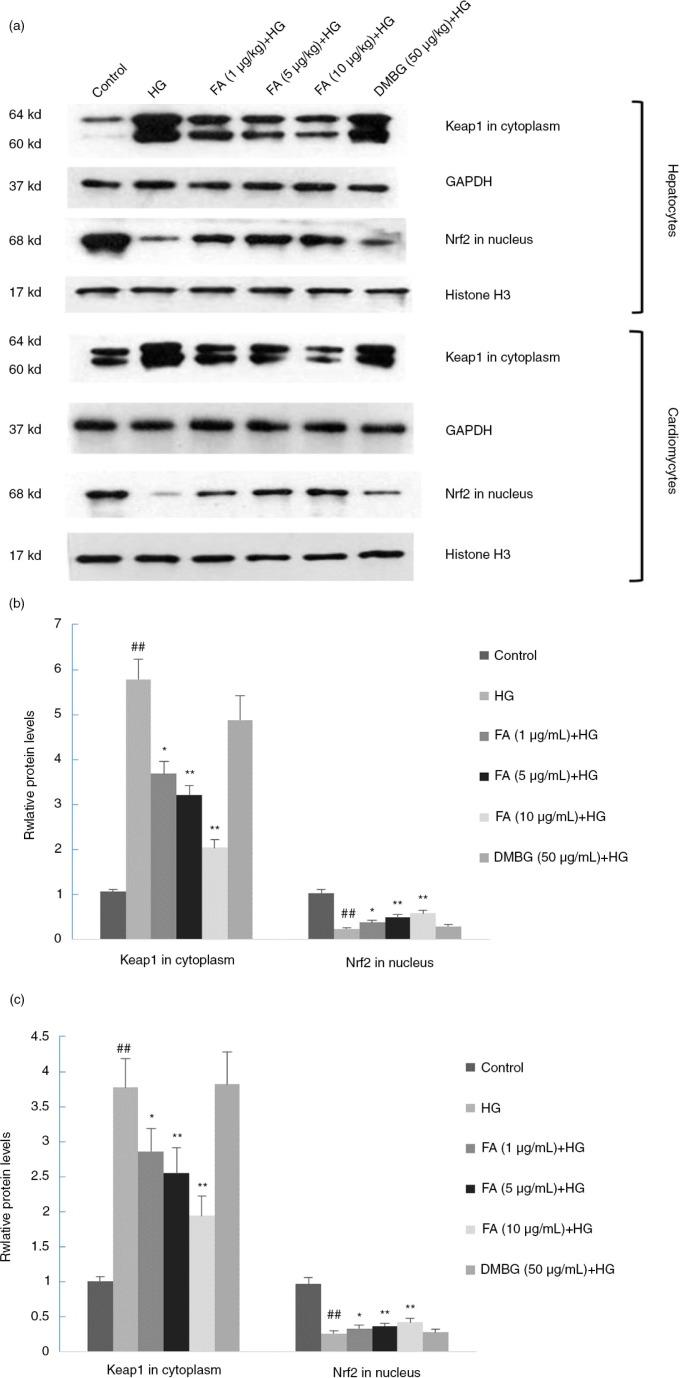
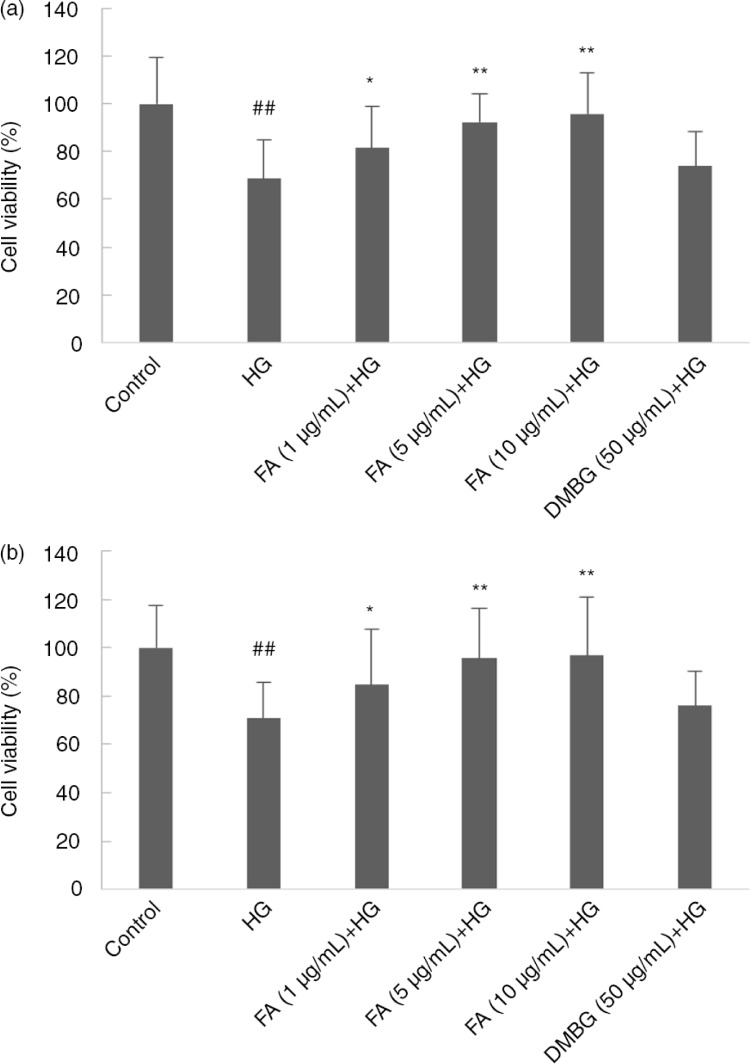
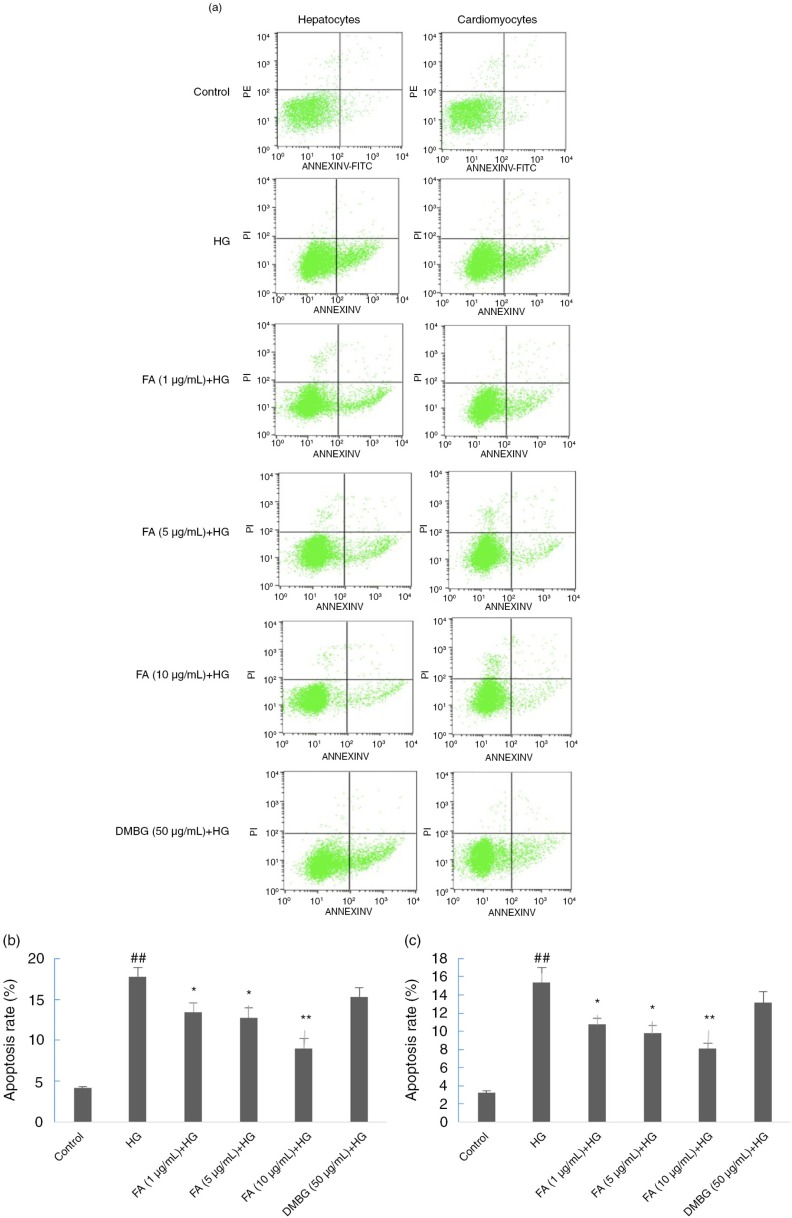
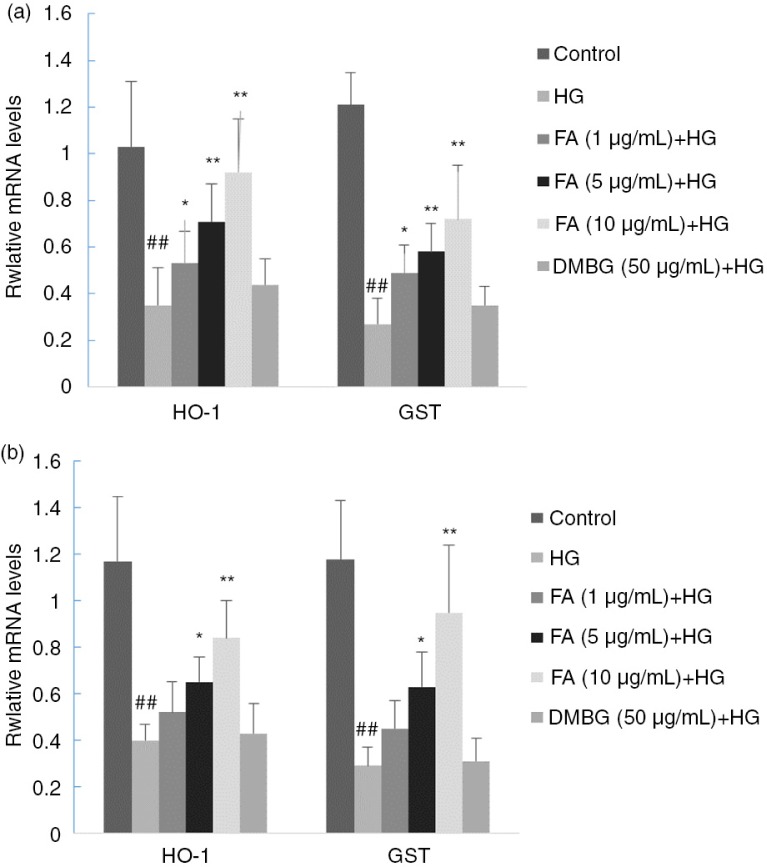
FA treatment significantly increased cell viability and significantly decreased cell apoptosis compared with the HG-treated group. Moreover, FA down-regulated the expression of Keap1 protein and up-regulated the expression of Nrf2 protein and gene transcription of HO-1 and glutathione S-transferase (GST) in a dose-dependent manner.
FA alleviated the HG-induced oxidative stress and decreased cell apoptosis in hepatocytes and cardiomyocytes. These effects were associated with the Keap1-Nrf2-ARE signaling pathway.
阿魏酸(FA)是一种酚酸,是糖尿病的潜在治疗方法。已表明FA可保护晚期糖尿病肥胖大鼠免受肝损伤、心肌损伤和氧化应激,但FA抗氧化活性的机制仍不清楚。
本研究旨在阐明FA是否能预防高糖(HG)诱导的氧化应激对心肌细胞和肝细胞的损伤,以及FA对这些细胞的保护作用是否与Keap1-Nrf2-ARE信号通路有关。
细胞分为四组:对照组(用正常培养基培养)、HG组(含80 mmol/L葡萄糖的培养基)、FA+HG组(含80 mmol/L葡萄糖和1、5或10 µg/mL FA的培养基)和二甲双胍(DMBG)+HG组(含80 mmol/L葡萄糖和50 µg/mL DMBG的培养基)。
与HG处理组相比,FA处理显著提高了细胞活力,显著降低了细胞凋亡。此外,FA以剂量依赖性方式下调Keap1蛋白表达,上调Nrf2蛋白表达以及HO-1和谷胱甘肽S-转移酶(GST)的基因转录。
FA减轻了HG诱导的氧化应激,降低了肝细胞和心肌细胞的凋亡。这些作用与Keap1-Nrf2-ARE信号通路有关。