Aouadi Kaïss, Hajlaoui Hafedh, Arraouadi Soumaya, Ghannay Siwar, Snoussi Mejdi, Kadri Adel
Department of Chemistry, College of Science, Qassim University, Buraidah 51452, Saudi Arabia.
Department of Chemistry, Faculty of Sciences of Monastir, University of Monastir, Avenue of the Environment, Monastir 5019, Tunisia.
Plants (Basel). 2022 Apr 21;11(9):1131. doi: 10.3390/plants11091131.
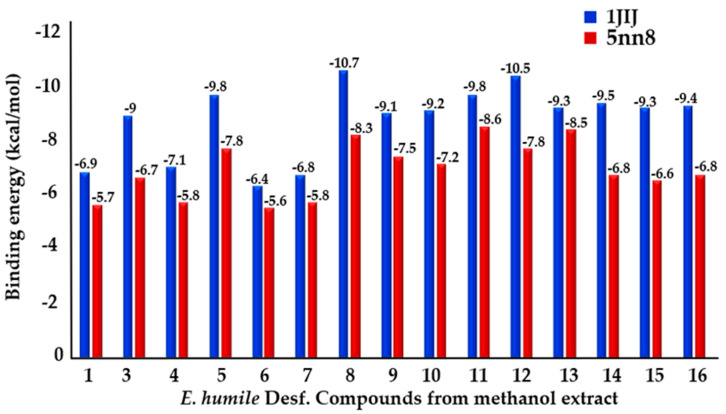
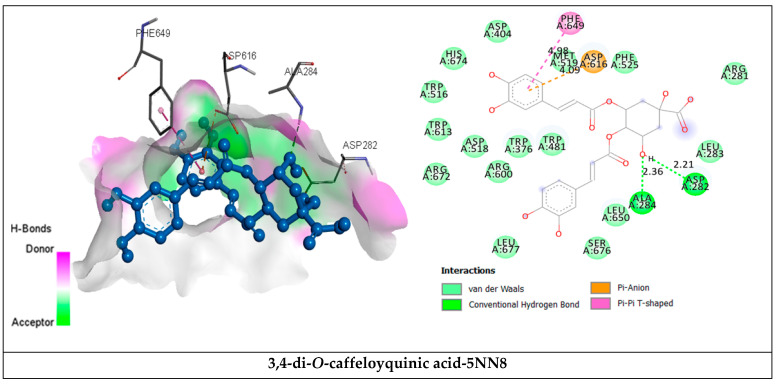
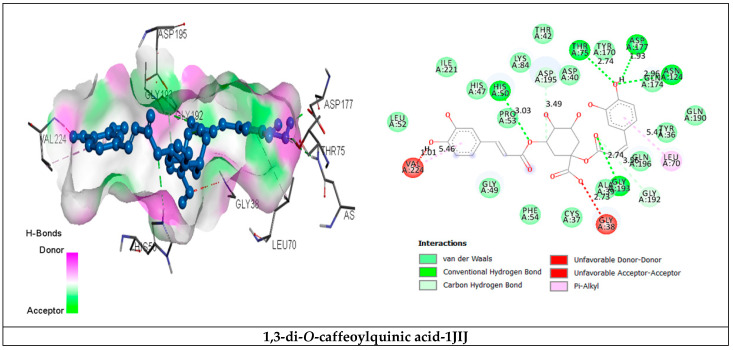
The current study aimed to evaluate the naturally occurring antimicrobial and antidiabetic potential of various () solvent extracts (hexane, dichloromethane, ethyl acetate, methanol and aqueous). The bioactive compounds were identified using HPLC-MS, revealing the presence of sixteen phytochemical compounds, with the most abundant being -coumaric acid, followed by 4,5-di--caffeoylquinic acid, trans-ferulic acid and acacetin. Furthermore, extracts showed marked antimicrobial properties against human pathogen strains, with MIC values for the most relevant extracts (methanol and ethyl acetate) ranging from 0.19 to 6.25 mg/mL and 0.39 to 12.50 mg/mL, respectively. Likewise, methanol was found to be bactericidal towards , and , fungicidal against and and have a bacteriostatic/fungicidal effect for the other strains. In addition, the methanolic extract had the greatest α-glucosidase inhibitory effect (IC = 0.06 ± 0.29 mg/mL), which is higher than the standard drug, acarbose (IC = 0.80 ± 1.81 mg/mL) and the aqueous extract (IC = 0.70 ± 0.67 mg/mL). A correlation study between the major phytochemicals and the evaluated activities was investigated. Docking studies evidenced that most of the identified phenolic compounds showed strong interactions into the binding sites of tyrosyl-tRNA synthetase and human lysosomal acid-α-glucosidase, confirming their suitable inhibitory effect. In summary, these results may provide rational support to explore the clinical efficacy of and its secondary metabolites in the treatment of dual diabetes and infections.
本研究旨在评估各种()溶剂提取物(己烷、二氯甲烷、乙酸乙酯、甲醇和水)天然存在的抗菌和抗糖尿病潜力。使用高效液相色谱 - 质谱联用仪鉴定生物活性化合物,结果显示存在16种植物化学化合物,其中含量最丰富的是对香豆酸,其次是4,5 - 二 - 咖啡酰奎宁酸、反式阿魏酸和刺槐素。此外,提取物对人类病原体菌株表现出显著的抗菌特性,最相关提取物(甲醇和乙酸乙酯)的最低抑菌浓度(MIC)值分别为0.19至6.25毫克/毫升和0.39至12.50毫克/毫升。同样,发现甲醇对金黄色葡萄球菌、大肠杆菌和枯草芽孢杆菌具有杀菌作用,对白色念珠菌和热带念珠菌具有杀真菌作用,对其他菌株具有抑菌/杀真菌作用。此外,甲醇提取物具有最大的α - 葡萄糖苷酶抑制作用(IC50 = 0.06 ± 0.29毫克/毫升),高于标准药物阿卡波糖(IC50 = 0.80 ± 1.81毫克/毫升)和水提取物(IC50 = 0.70 ± 0.67毫克/毫升)。研究了主要植物化学物质与评估活性之间的相关性。对接研究表明,大多数已鉴定的酚类化合物在酪氨酰 - tRNA合成酶和人溶酶体酸性α - 葡萄糖苷酶的结合位点表现出强烈相互作用,证实了它们具有合适的抑制作用。总之,这些结果可为探索其在治疗糖尿病和感染方面的临床疗效提供合理依据。