Hong Noo Ri, Park Hyun Soo, Ahn Tae Seok, Kim Hyun Jung, Ha Ki-Tae, Kim Byung Joo
Division of Longevity and Biofunctional Medicine, Pusan National University School of Korean Medicine, Yangsan, Korea; Healthy Aging Korean Medical Research Center, Pusan National University School of Korean Medicine, Yangsan, Korea.
Healthy Aging Korean Medical Research Center, Pusan National University School of Korean Medicine, Yangsan, Korea; Division of Applied Medicine, School of Korean Medicine, Pusan National University, Yangsan, Korea.
J Ginseng Res. 2015 Oct;39(4):314-21. doi: 10.1016/j.jgr.2015.02.004. Epub 2015 Mar 6.
Ginseng belongs to the genus Panax. Its main active ingredients are the ginsenosides. Interstitial cells of Cajal (ICCs) are the pacemaker cells of the gastrointestinal (GI) tract. To understand the effects of ginsenoside Re (GRe) on GI motility, the authors investigated its effects on the pacemaker activity of ICCs of the murine small intestine.
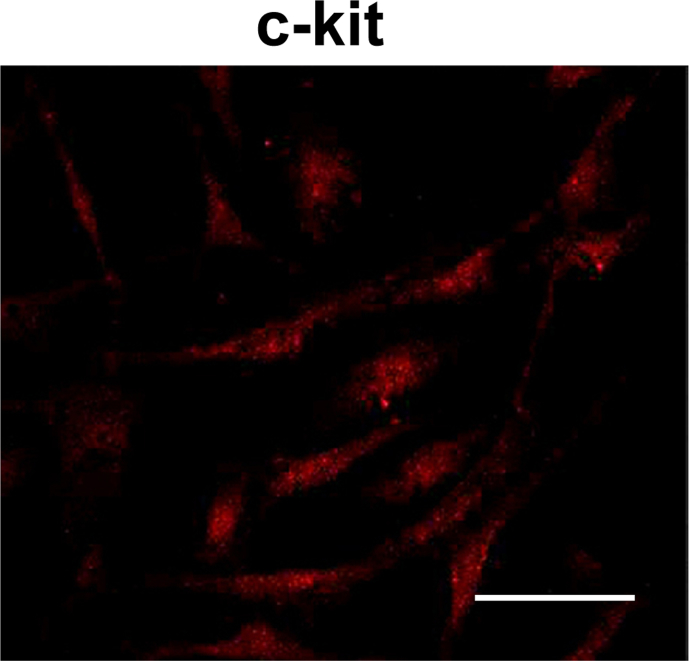
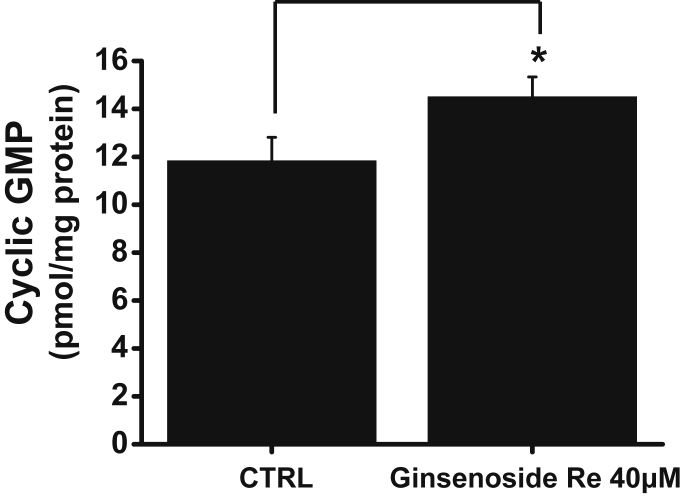
Interstitial cells of Cajal were dissociated from mouse small intestines by enzymatic digestion. The whole-cell patch clamp configuration was used to record pacemaker potentials in cultured ICCs. Changes in cyclic guanosine monophosphate (cGMP) content induced by GRe were investigated.
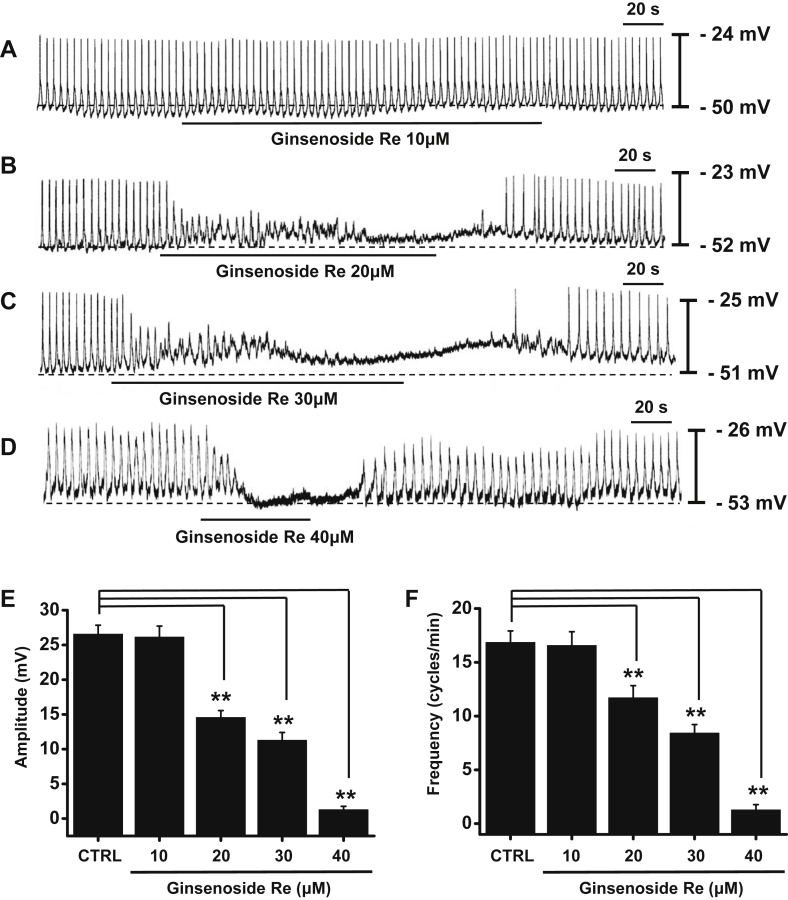
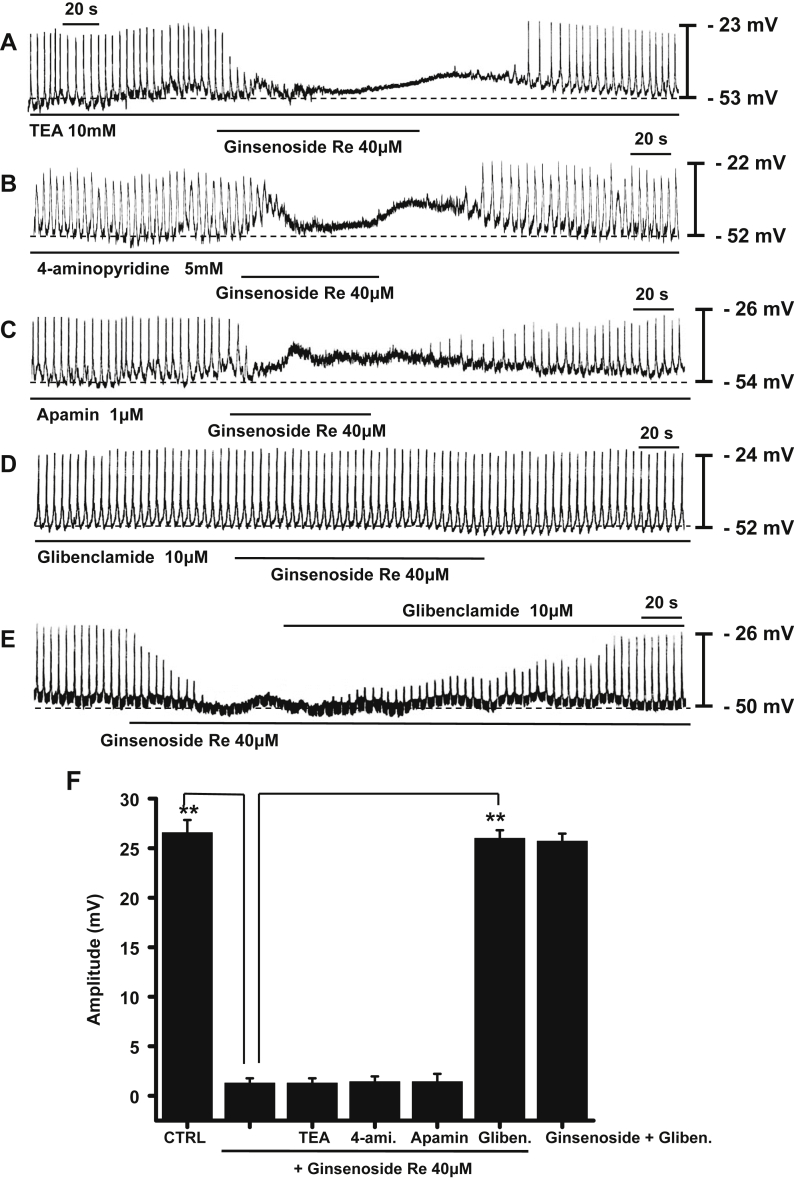
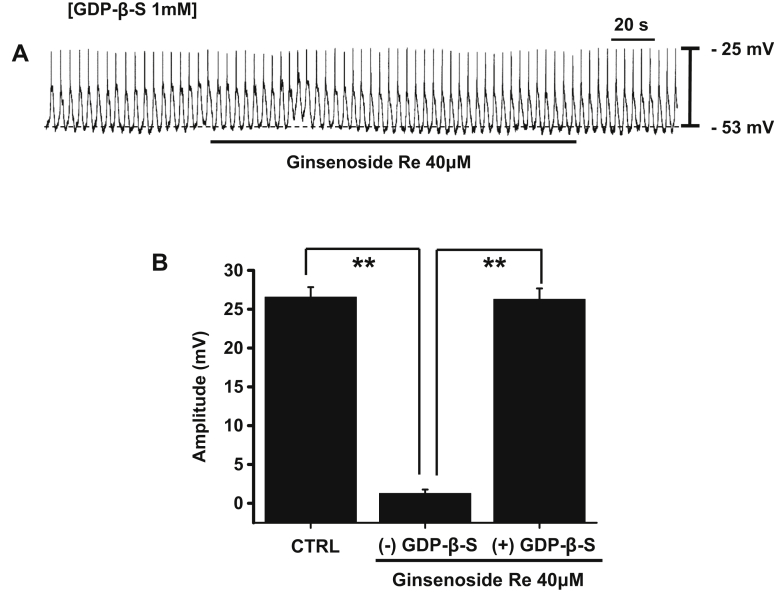
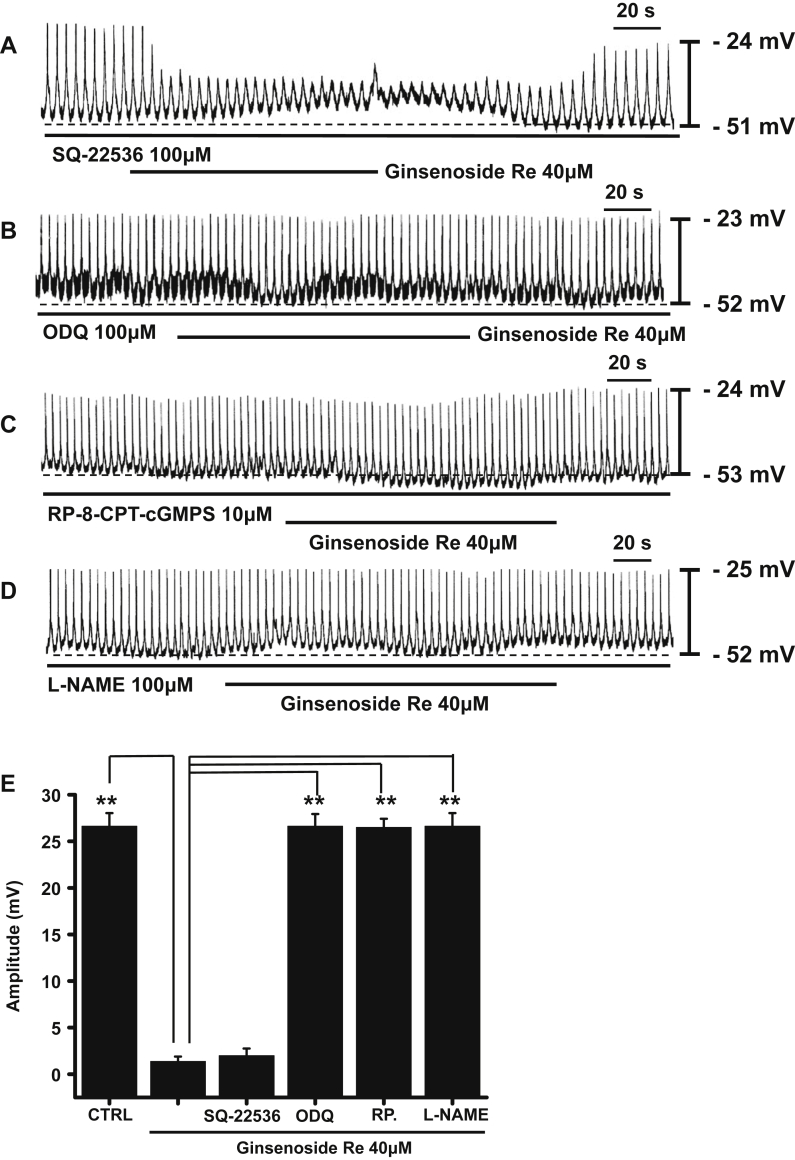
Ginsenoside Re (20-40μM) decreased the amplitude and frequency of ICC pacemaker activity in a concentration-dependent manner. This action was blocked by guanosine 5'-[β-thio]diphosphate [a guanosine-5'-triphosphate (GTP)-binding protein inhibitor] and by glibenclamide [an adenosine triphosphate (ATP)-sensitive K(+) channel blocker]. To study the GRe-induced signaling pathway in ICCs, the effects of 1H-[1,2,4]oxadiazolo[4,3-a]quinoxalin-1-one (a guanylate cyclase inhibitor) and RP-8-CPT-cGMPS (a protein kinase G inhibitor) were examined. Both inhibitors blocked the inhibitory effect of GRe on ICC pacemaker activity. L-NG-nitroarginine methyl ester (100μM), which is a nonselective nitric oxide synthase (NOS) inhibitor, blocked the effects of GRe on ICC pacemaker activity and GRe-stimulated cGMP production in ICCs.
In cultured murine ICCs, GRe inhibits the pacemaker activity of ICCs via the ATP-sensitive potassium (K(+)) channel and the cGMP/NO-dependent pathway. Ginsenoside Re may be a basis for developing novel spasmolytic agents to prevent or alleviate GI motility dysfunction.
人参属于人参属。其主要活性成分是人参皂苷。 Cajal间质细胞(ICCs)是胃肠道(GI)的起搏细胞。为了解人参皂苷Re(GRe)对胃肠动力的影响,作者研究了其对小鼠小肠ICCs起搏活性的作用。
通过酶消化从小鼠小肠中分离出Cajal间质细胞。采用全细胞膜片钳配置记录培养的ICCs中的起搏电位。研究了GRe诱导的环磷酸鸟苷(cGMP)含量变化。
人参皂苷Re(20 - 40μM)以浓度依赖的方式降低了ICCs起搏活性的幅度和频率。这种作用被5'-[β-硫代]二磷酸鸟苷[一种鸟苷-5'-三磷酸(GTP)结合蛋白抑制剂]和格列本脲[一种三磷酸腺苷(ATP)敏感性钾(K(+))通道阻滞剂]所阻断。为了研究ICCs中GRe诱导的信号通路,检测了1H-[1,2,4]恶二唑并[4,3-a]喹喔啉-1-酮(一种鸟苷酸环化酶抑制剂)和RP-8-CPT-cGMPS(一种蛋白激酶G抑制剂)的作用。两种抑制剂均阻断了GRe对ICCs起搏活性的抑制作用。L-NG-硝基精氨酸甲酯(100μM),一种非选择性一氧化氮合酶(NOS)抑制剂,阻断了GRe对ICCs起搏活性的影响以及GRe刺激的ICCs中cGMP的产生。
在培养的小鼠ICCs中,GRe通过ATP敏感性钾(K(+))通道和cGMP/NO依赖性途径抑制ICCs的起搏活性。人参皂苷Re可能是开发新型解痉剂以预防或缓解胃肠动力障碍的基础。