Edmonson Catherine A, Ziats Mark N, Rennert Owen M
University of Florida College of Medicine, Gainesville, FL, USA; National Institute of Child Health and Human Development, National Institutes of Health, Bethesda, MD, USA.
National Institute of Child Health and Human Development, National Institutes of Health, Bethesda, MD, USA; Medical Scientist Training Program, Baylor College of Medicine, Houston, TX, USA.
Front Neurol. 2016 Feb 1;7:9. doi: 10.3389/fneur.2016.00009. eCollection 2016.
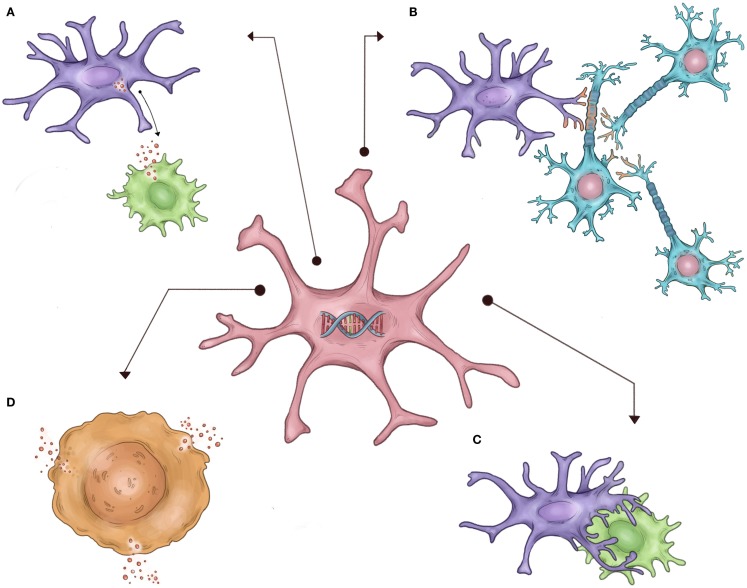
Autism spectrum disorder (ASD) is a neurodevelopmental disorder characterized by deficits in social interaction, difficulties with language, and repetitive/restricted behaviors. The etiology of ASD is still largely unclear, but immune dysfunction and abnormalities in synaptogenesis have repeatedly been implicated as contributing to the disease phenotype. However, an understanding of how and if these two processes are related has not firmly been established. As non-inflammatory roles of microglia become increasingly recognized as critical to normal neurodevelopment, it is important to consider how dysfunction in these processes might explain the seemingly disparate findings of immune dysfunction and aberrant synaptogenesis seen in ASD. In this review, we highlight research demonstrating the importance of microglia to the development of normal neural networks, review recent studies demonstrating abnormal microglia in autism, and discuss how the relationship between these processes may contribute to the development of autism and other neurodevelopmental disorders at the cellular level.
自闭症谱系障碍(ASD)是一种神经发育障碍,其特征为社交互动缺陷、语言障碍以及重复/受限行为。ASD的病因仍不清楚,但免疫功能障碍和突触发生异常多次被认为与疾病表型有关。然而,这两个过程如何关联以及是否相关尚未得到确切证实。随着小胶质细胞的非炎症作用越来越被认为对正常神经发育至关重要,重要的是要考虑这些过程中的功能障碍如何解释在ASD中看到的免疫功能障碍和异常突触发生这些看似不同的发现。在这篇综述中,我们强调了证明小胶质细胞对正常神经网络发育重要性的研究,回顾了最近证明自闭症中小胶质细胞异常的研究,并讨论了这些过程之间的关系如何在细胞水平上促进自闭症和其他神经发育障碍的发展。