Chan J Y, LaPara K, Yee D
Department of Pharmacology, University of Minnesota, Minneapolis, MN, USA.
Masonic Cancer Center, University of Minnesota, Minneapolis, MN, USA.
Oncogene. 2016 Aug 11;35(32):4235-43. doi: 10.1038/onc.2015.488. Epub 2016 Feb 15.
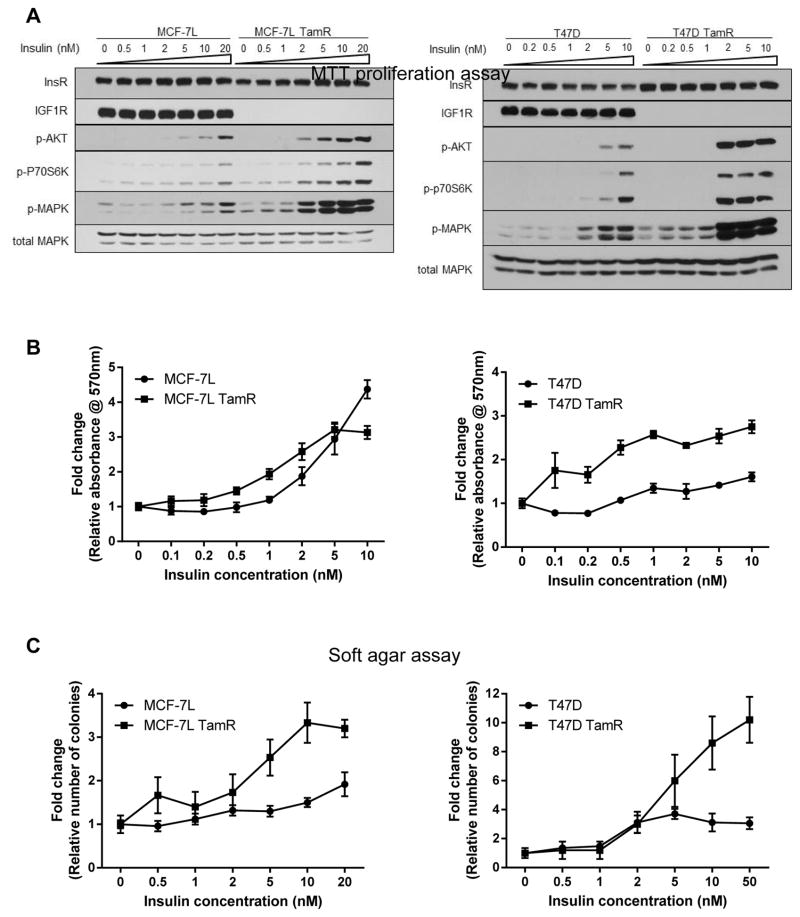
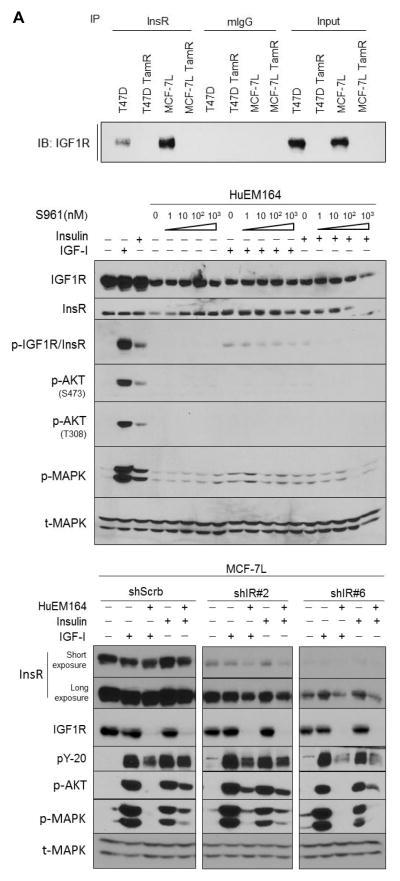
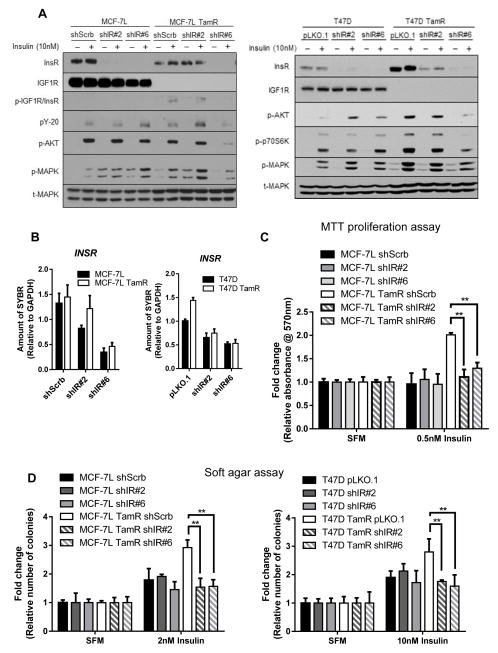
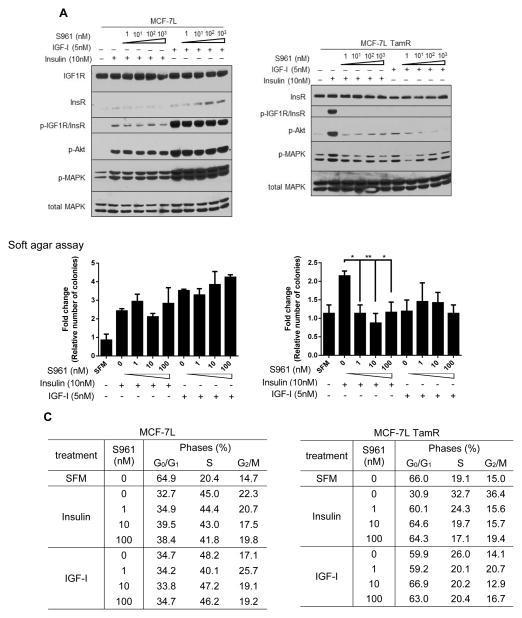
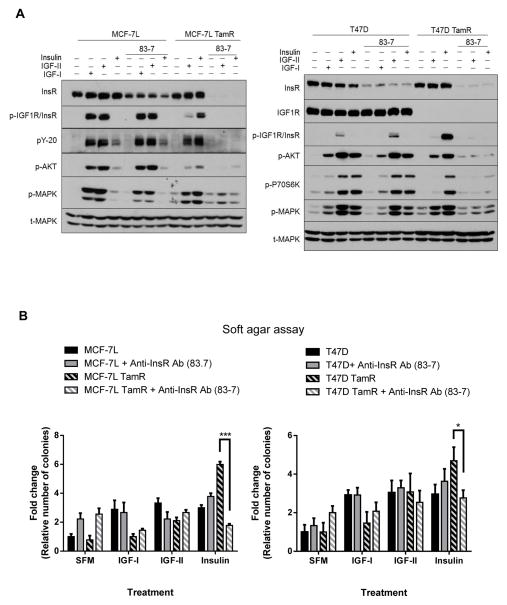
The insulin-like growth factor (IGF) system is a well-studied growth regulatory pathway implicated in breast cancer biology. Clinical trials testing monoclonal antibodies directed against the type I IGF receptor (IGF1R) in combination with estrogen receptor-α (ER) targeting have been completed, but failed to show benefits in patients with endocrine-resistant tumors compared to ER targeting alone. We have previously shown that the closely related insulin receptor (InsR) is expressed in tamoxifen-resistant (TamR) breast cancer cells. Here we examined if inhibition of InsR affected TamR breast cancer cells. InsR function was inhibited by three different mechanisms: InsR short hairpin RNA, a small InsR-blocking peptide, S961 and an InsR monoclonal antibody (mAb). Suppression of InsR function by these methods in TamR cells successfully blocked insulin-mediated signaling, monolayer proliferation, cell cycle progression and anchorage-independent growth. This strategy was not effective in parental cells likely because of the presence of IGFR /InsR hybrid receptors. Downregulation of IGF1R in conjunction with InsR inhibition was more effective in blocking IGF- and insulin-mediated signaling and growth in parental cells compared with single-receptor targeting alone. Our findings show TamR cells were stimulated by InsR and were not sensitive to IGF1R inhibition, whereas in tamoxifen-sensitive parental cancer cells, the presence of both receptors, especially hybrid receptors, allowed cross-reactivity of ligand-mediated activation and growth. To suppress the IGF system, targeting of both IGF1R and InsR is optimal in endocrine-sensitive and -resistant breast cancer.
胰岛素样生长因子(IGF)系统是一条经过充分研究的生长调节通路,与乳腺癌生物学相关。针对I型IGF受体(IGF1R)的单克隆抗体与雌激素受体-α(ER)靶向联合应用的临床试验已经完成,但与单独的ER靶向相比,在内分泌抵抗性肿瘤患者中未显示出益处。我们之前已经表明,密切相关的胰岛素受体(InsR)在他莫昔芬抵抗(TamR)的乳腺癌细胞中表达。在此,我们研究了抑制InsR是否会影响TamR乳腺癌细胞。InsR功能通过三种不同机制被抑制:InsR短发夹RNA、一种小的InsR阻断肽S961以及一种InsR单克隆抗体(mAb)。通过这些方法在TamR细胞中抑制InsR功能成功阻断了胰岛素介导的信号传导、单层增殖、细胞周期进程和非锚定依赖性生长。这种策略在亲本细胞中无效,可能是因为存在IGFR/InsR杂交受体。与单独的单受体靶向相比,IGF1R的下调与InsR抑制相结合在阻断亲本细胞中IGF和胰岛素介导的信号传导及生长方面更有效。我们的研究结果表明,TamR细胞受到InsR刺激,对IGF1R抑制不敏感,而在他莫昔芬敏感的亲本癌细胞中,两种受体尤其是杂交受体的存在允许配体介导的激活和生长的交叉反应。为了抑制IGF系统,在内分泌敏感和抵抗性乳腺癌中,同时靶向IGF1R和InsR是最佳选择。