Yadav Yad Ram, Parihar Vijay, Kher Yatin, Bhatele Pushp Raj
Department of Neurosurgery, MP MRI, Netaji Subhash Chandra Bose Medical College, Jabalpur, Madhya Pradesh, India.
Department of Radiodiagnosis, MP MRI, Netaji Subhash Chandra Bose Medical College, Jabalpur, Madhya Pradesh, India.
Asian J Neurosurg. 2016 Jan-Mar;11(1):1-7. doi: 10.4103/1793-5482.145377.
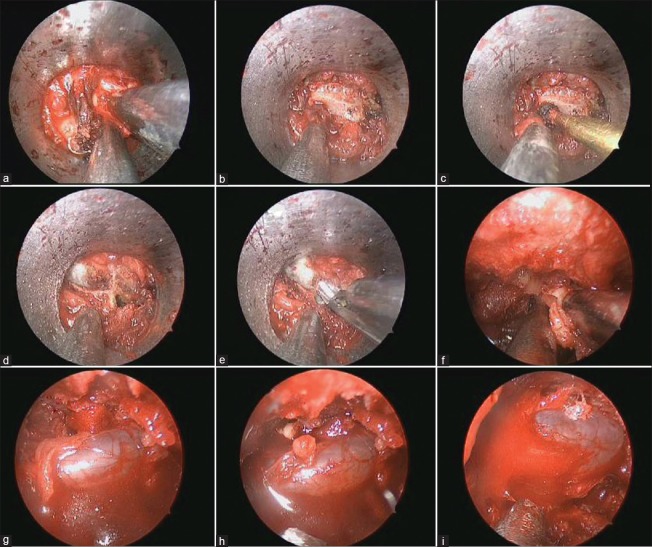
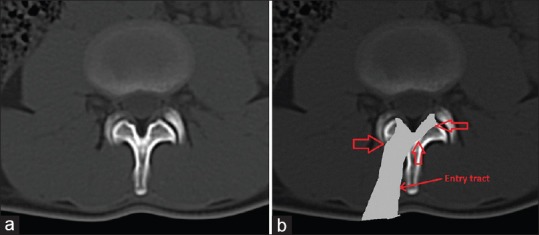
Discectomy for lumbar disc provides faster relief in acute attack than does conservative management. Long-term results of open, microscopy-, and endoscopy-assisted discectomy are same. Early results of endoscopy-assisted surgery are better as compared to that of open surgery in terms of better visualization, smaller incision, reduced hospital stay, better education, lower cost, less pain, early return to work, and rehabilitation. Although microscopic discectomy also has comparable advantages, endoscopic-assisted technique better addresses opposite side pathology. Inter laminar technique (ILT) and trans foraminal technique (TFT) are two main endoscopic approaches for lumbar pathologies. Endoscopy-assisted ILT can be performed in recurrent, migrated, and calcified discs. All lumbar levels including L5-S1 level, intracanalicular, foraminal disc, lumbar canal and lateral recess stenosis, multiple levels, and bilateral lesions can be managed by ILT. Migrated, calcified discs, L5-S1 pathology, lumbar canal, and lateral recess stenosis can be better approached by ILT than by TFT. Most spinal surgeons are familiar with anatomy of ILT. It can be safely performed in foramen stenosis and in uncooperative and anxious patients. There is less risk of exiting nerve root damage, especially in short pedicles and in presence of facet osteophytes as compared to TFT. On the other hand, ILT is more invasive than TFT with more chances of perforations of the dura matter, pseudomeningocele formation, and cerebrospinal fluid fistula in early learning curve. Obtaining microsurgical experience, attending workshops, and suitable patient selection can help shorten the learning curve. Once adequate skill is acquired, this procedure is safe and effective. The surgeon must be prepared to convert to an open procedure, especially in early learning curve. Spinal endoscopy is likely to achieve more roles in future. Endoscopy-assisted ILT is a safer alternative to the microscopic technique.
腰椎间盘切除术在急性发作时比保守治疗能更快缓解症状。开放手术、显微镜辅助手术和内镜辅助手术的长期效果相同。内镜辅助手术的早期效果优于开放手术,在视野更好、切口更小、住院时间缩短、教育效果更好、成本更低、疼痛更少、更早重返工作岗位和康复方面表现更佳。虽然显微镜下椎间盘切除术也有类似的优势,但内镜辅助技术能更好地处理对侧病变。椎间孔镜技术(ILT)和经椎间孔技术(TFT)是腰椎疾病的两种主要内镜手术方法。内镜辅助ILT可用于复发性、移位性和钙化性椎间盘。包括L5-S1节段、椎管内、椎间孔椎间盘、腰椎管和侧隐窝狭窄、多节段以及双侧病变在内的所有腰椎节段都可通过ILT进行治疗。对于移位性、钙化性椎间盘、L5-S1病变、腰椎管和侧隐窝狭窄,ILT比TFT能更好地处理。大多数脊柱外科医生熟悉ILT的解剖结构。它可安全地用于椎间孔狭窄以及不配合和焦虑的患者。与TFT相比,神经根损伤的风险较小,尤其是在短椎弓根和存在关节突骨赘的情况下。另一方面,在早期学习曲线中,ILT比TFT更具侵入性,硬脊膜穿孔、假性脑脊膜膨出形成和脑脊液漏的可能性更大。获得显微手术经验、参加研讨会和选择合适的患者有助于缩短学习曲线。一旦获得足够的技能,该手术是安全有效的。外科医生必须准备好转为开放手术,尤其是在早期学习曲线阶段。脊柱内镜在未来可能会发挥更多作用。内镜辅助ILT是显微镜技术的一种更安全的替代方法。