Han Xiao, Deng Shan, Wang Ning, Liu Yafei, Yang Xingbin
Key Laboratory of Ministry of Education for Medicinal Resource and Natural Pharmaceutical Chemistry, College of Food Engineering and Nutritional Science, Shaanxi Normal University, Xi'an, China.
Key Laboratory of Ministry of Education for Medicinal Resource and Natural Pharmaceutical Chemistry, College of Food Engineering and Nutritional Science, Shaanxi Normal University, Xi'an, China;
Food Nutr Res. 2016 Feb 17;60:30616. doi: 10.3402/fnr.v60.30616. eCollection 2016.
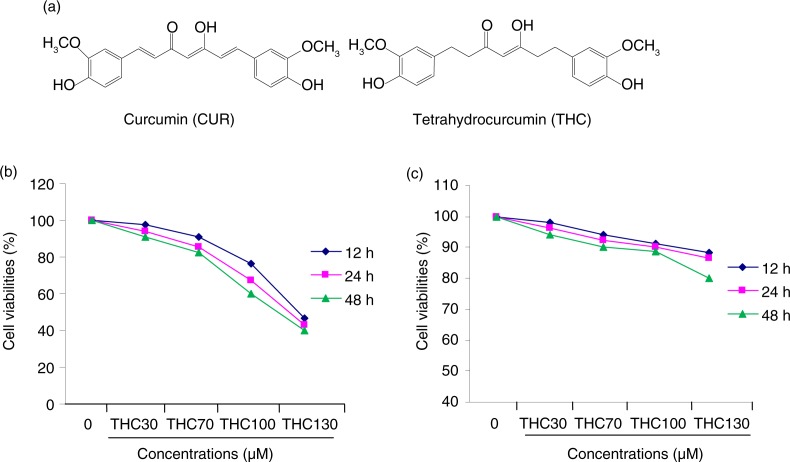
Tetrahydrocurcumin (THC), an active metabolite of curcumin, has been reported to have similar biological effects to curcumin, but the mechanism of the antitumor activity of THC is still unclear.
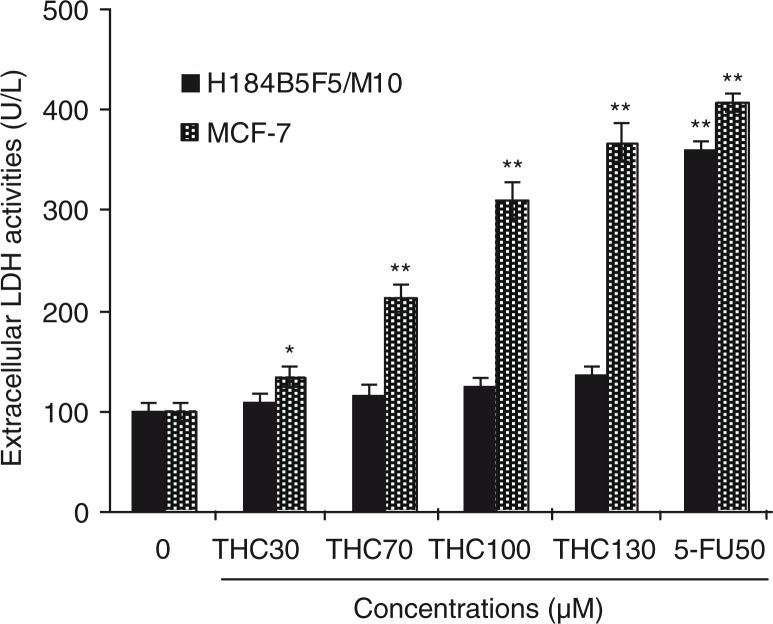
The present study was to investigate the antitumor effects and mechanism of THC in human breast cancer MCF-7 cells using the methods of MTT assay, LDH assay, flow cytometry analysis, and western blot assay.
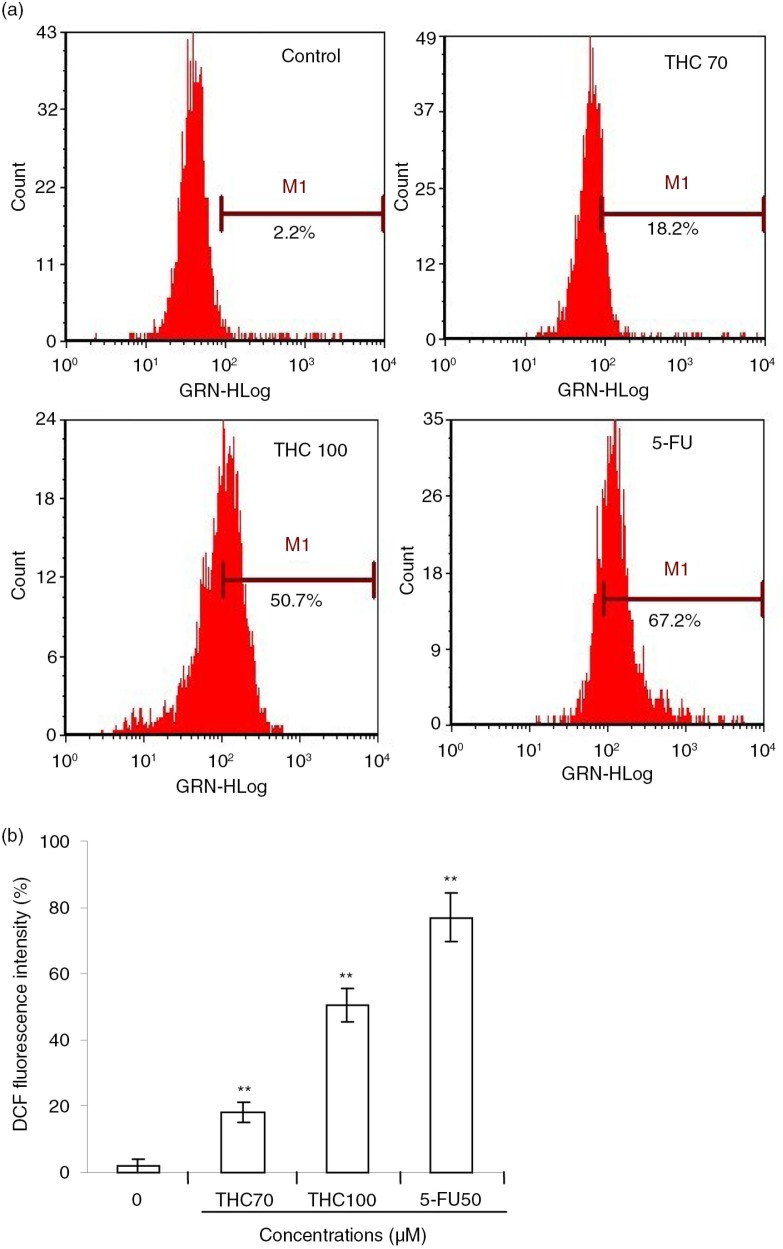
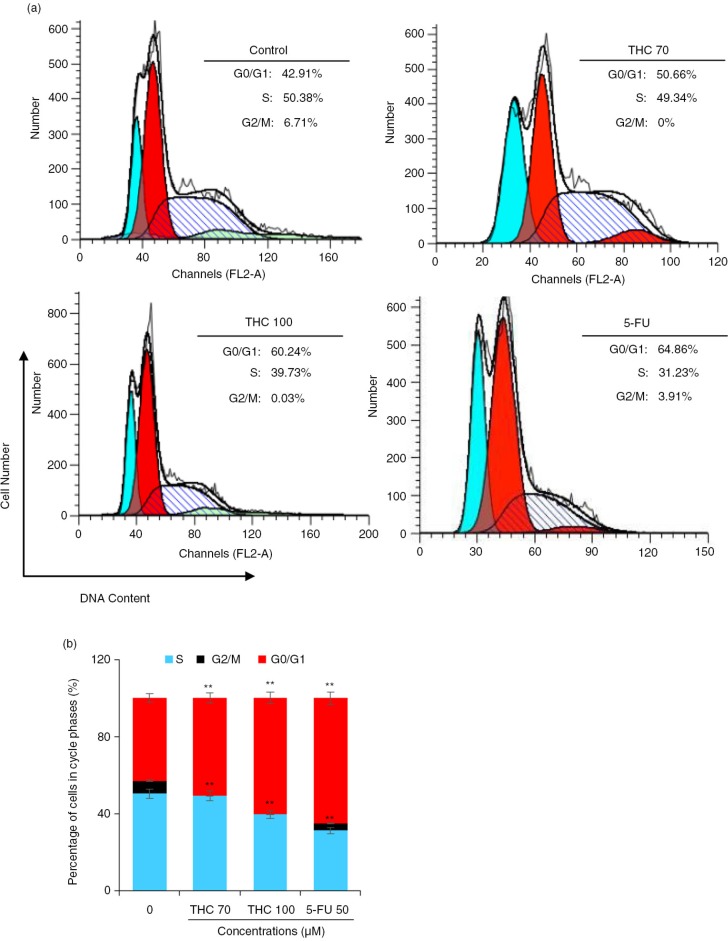
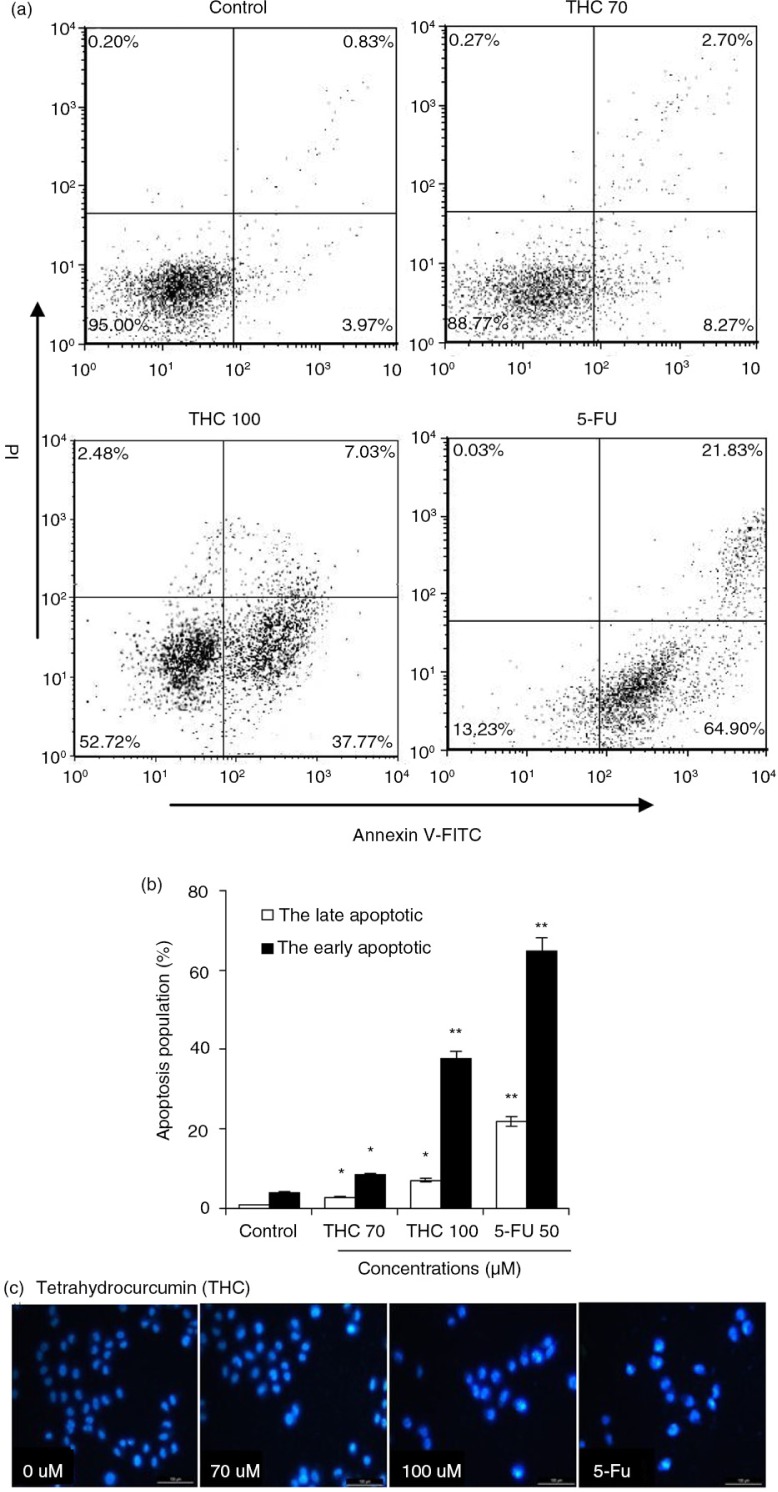
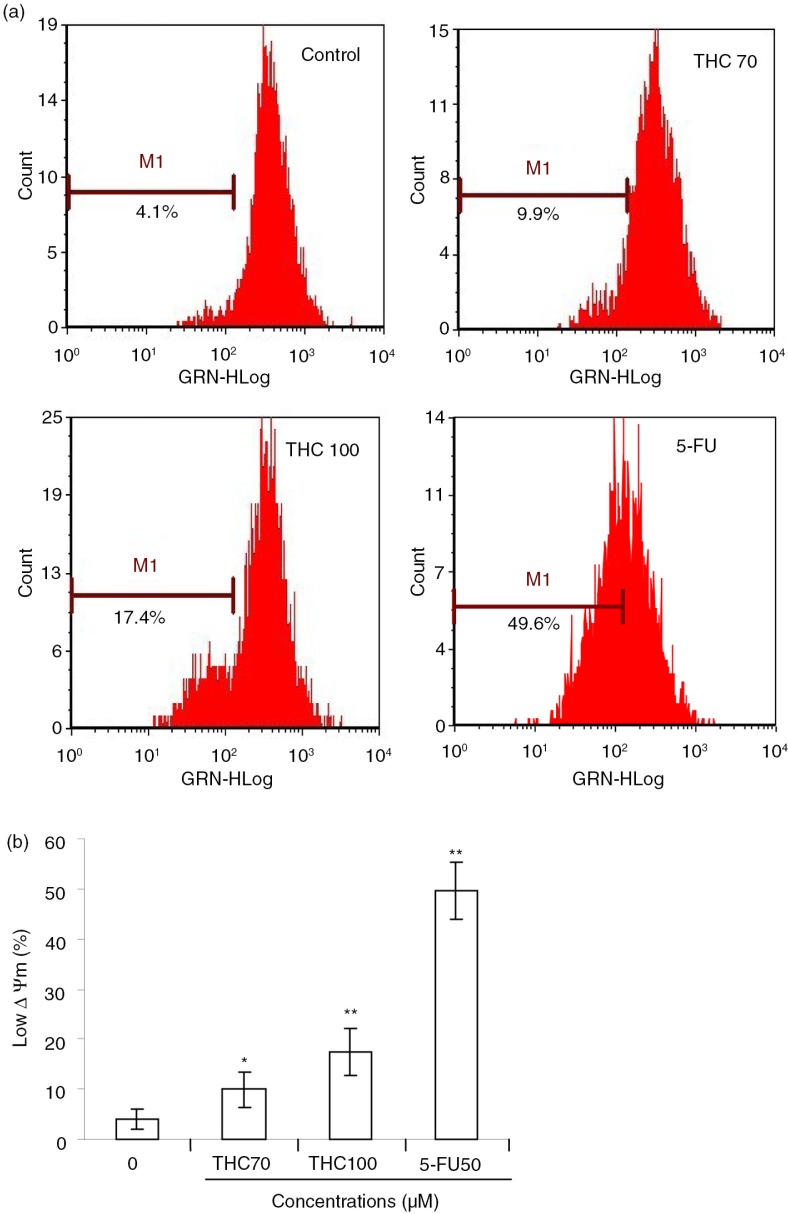
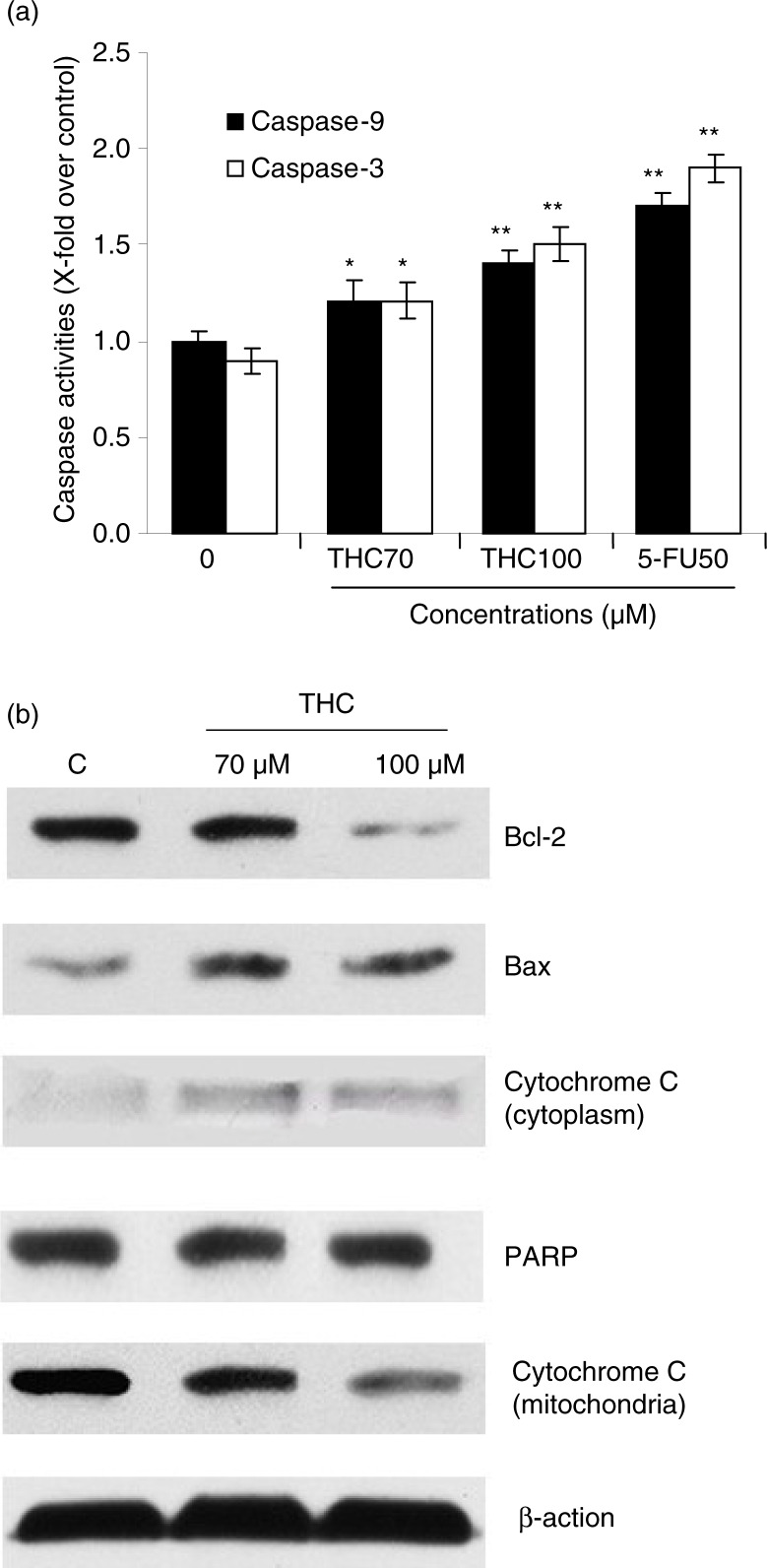
THC was found to have markedly cytotoxic effect and antiproliferative activity against MCF-7 cells in a dose-dependent manner with the IC50 for 24 h of 107.8 μM. Flow cytometry analysis revealed that THC mediated the cell-cycle arrest at G0/G1 phase, and 32.8% of MCF-7 cells entered the early phase of apoptosis at 100 μM for 24 h. THC also dose-dependently led to apoptosis in MCF-7 cells via the mitochondrial pathway, as evidenced by the activation of caspase-3 and caspase-9, the elevation of intracellular ROS, a decrease in Bcl-2 and PARP expression, and an increase in Bax expression. Meanwhile, cytochrome C was released to cytosol and the loss of mitochondria membrane potential (Δψm) was observed after THC treatment.
THC is an excellent source of chemopreventive agents in the treatment of breast cancer and has excellent potential to be explored as antitumor precursor compound.
四氢姜黄素(THC)是姜黄素的一种活性代谢产物,据报道具有与姜黄素相似的生物学效应,但THC抗肿瘤活性的机制仍不清楚。
本研究采用MTT法、LDH法、流式细胞术分析和蛋白质免疫印迹法,研究THC对人乳腺癌MCF-7细胞的抗肿瘤作用及其机制。
发现THC对MCF-7细胞具有明显的细胞毒性作用和抗增殖活性,呈剂量依赖性,24小时的IC50为107.8μM。流式细胞术分析显示,THC介导细胞周期阻滞于G0/G1期,100μM处理24小时时,32.8%的MCF-7细胞进入早期凋亡阶段。THC还通过线粒体途径剂量依赖性地诱导MCF-7细胞凋亡,表现为caspase-3和caspase-9的激活、细胞内ROS升高、Bcl-2和PARP表达降低以及Bax表达增加。同时,THC处理后观察到细胞色素C释放到细胞质中,线粒体膜电位(Δψm)丧失。
THC是治疗乳腺癌的一种优良化学预防剂来源,作为抗肿瘤前体化合物具有良好的开发潜力。