University of Trento, Center for Mind/Brain Sciences, Rovereto, 38068, Italy.
University of Trento, Department of Physics, Trento, 38123, Italy.
Sci Rep. 2016 Feb 22;6:21893. doi: 10.1038/srep21893.
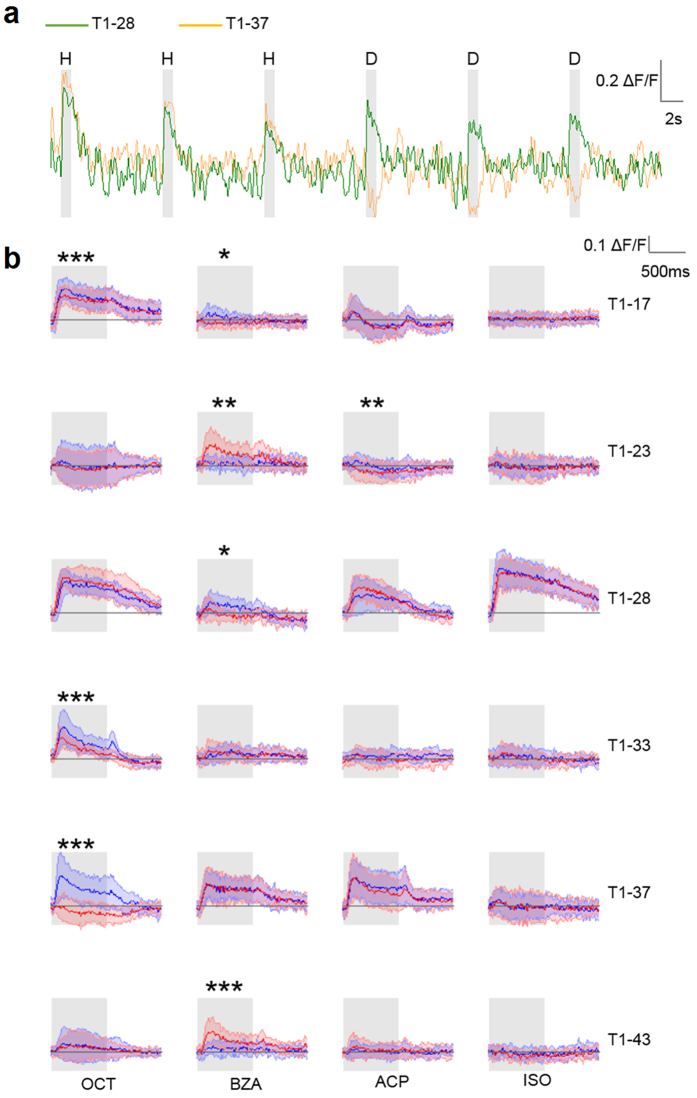
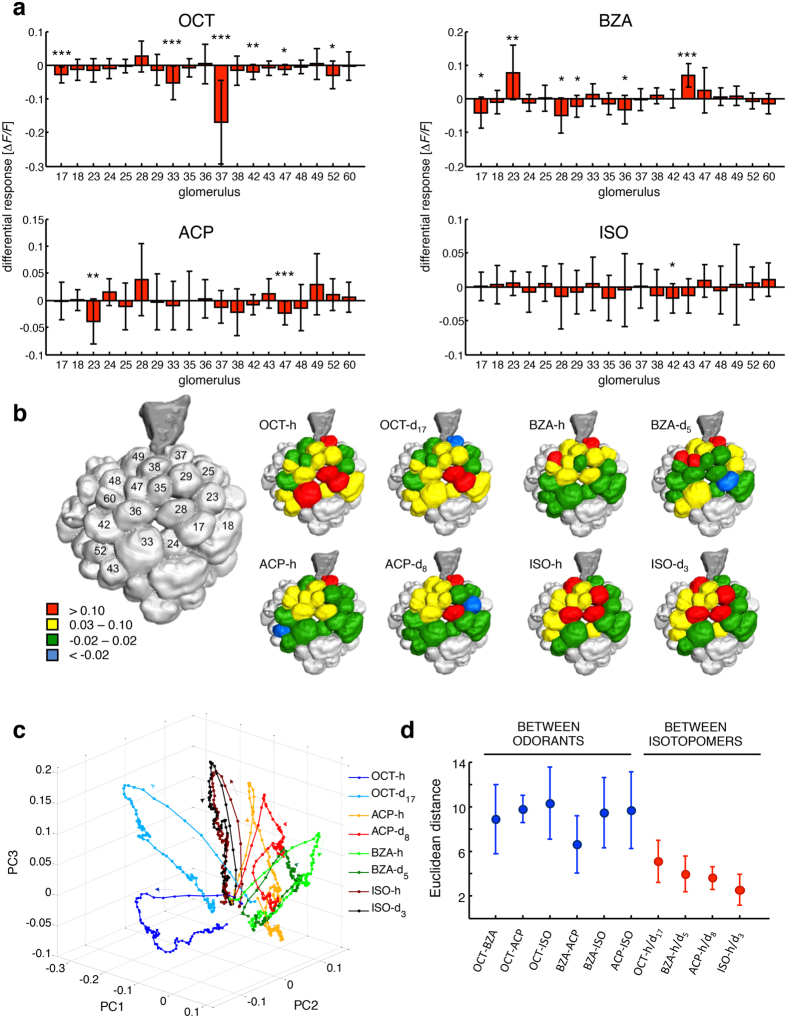
The shape recognition model of olfaction maintains that odorant reception probes physicochemical properties such as size, shape, electric charge, and hydrophobicity of the ligand. Recently, insects were shown to distinguish common from deuterated isotopomers of the same odorant, suggesting the involvement of other molecular properties to odorant reception. Via two-photon functional microscopy we investigated how common and deuterated isoforms of natural odorants are coded within the honeybee brain. Our results provide evidence that (i) different isotopomers generate different neuronal activation maps, (ii) isotopomer sensitivity is a general mechanism common to multiple odorant receptors, and (iii) isotopomer specificity is highly consistent across individuals. This indicates that honeybee's olfactory system discriminates between isotopomers of the same odorant, suggesting that other features, such as molecular vibrations, may contribute to odour signal transduction.
嗅觉形状识别模型认为,气味受体探测配体的大小、形状、电荷和疏水性等物理化学特性。最近,昆虫被证明可以区分相同气味的常见氘代同量异位体,这表明其他分子特性也参与了气味的接收。通过双光子功能显微镜,我们研究了天然气味的常见和氘代同量异位体在蜜蜂大脑中是如何编码的。我们的研究结果表明:(i)不同的同量异位体产生不同的神经元激活图谱;(ii)同量异位体敏感性是一种普遍存在于多种气味受体中的机制;(iii)同量异位体特异性在个体间高度一致。这表明蜜蜂的嗅觉系统可以区分相同气味的同量异位体,这表明其他特征,如分子振动,可能有助于气味信号转导。