Zhang Chu, Ye Hui, Liu Fei, He Yong, Kong Wenwen, Sheng Kuichuan
College of Biosystems Engineering and Food Science, Zhejiang University, Hangzhou 310058, China.
School of Information Engineering, Zhejiang A&F University, Hangzhou 311300, China.
Sensors (Basel). 2016 Feb 18;16(2):244. doi: 10.3390/s16020244.
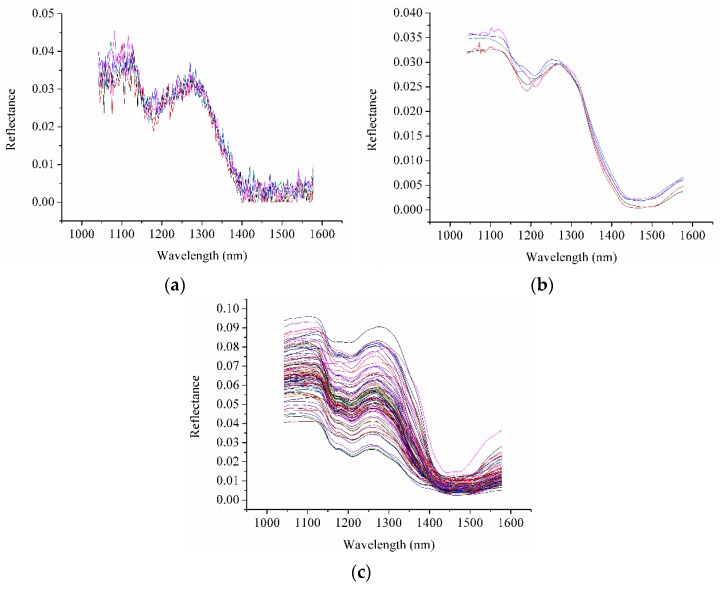
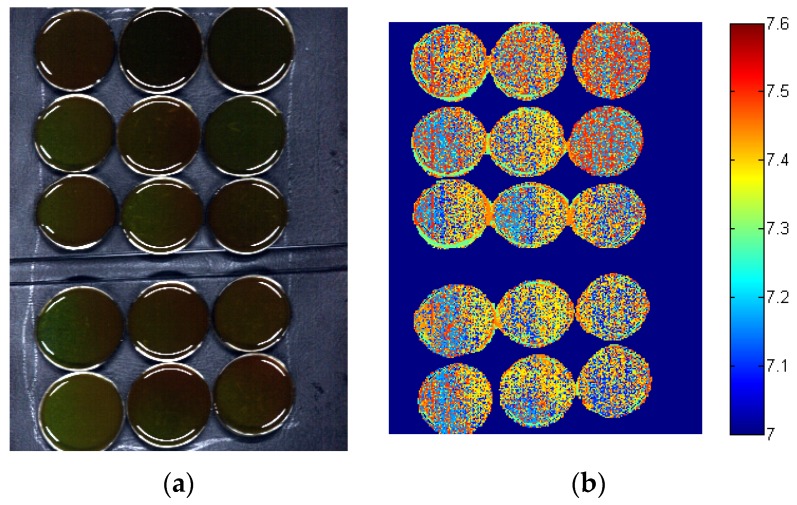
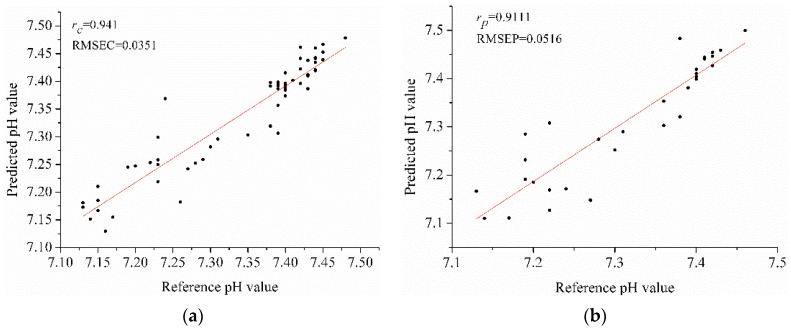
Biomass energy represents a huge supplement for meeting current energy demands. A hyperspectral imaging system covering the spectral range of 874-1734 nm was used to determine the pH value of anaerobic digestion liquid produced by water hyacinth and rice straw mixtures used for methane production. Wavelet transform (WT) was used to reduce noises of the spectral data. Successive projections algorithm (SPA), random frog (RF) and variable importance in projection (VIP) were used to select 8, 15 and 20 optimal wavelengths for the pH value prediction, respectively. Partial least squares (PLS) and a back propagation neural network (BPNN) were used to build the calibration models on the full spectra and the optimal wavelengths. As a result, BPNN models performed better than the corresponding PLS models, and SPA-BPNN model gave the best performance with a correlation coefficient of prediction (rp) of 0.911 and root mean square error of prediction (RMSEP) of 0.0516. The results indicated the feasibility of using hyperspectral imaging to determine pH values during anaerobic digestion. Furthermore, a distribution map of the pH values was achieved by applying the SPA-BPNN model. The results in this study would help to develop an on-line monitoring system for biomass energy producing process by hyperspectral imaging.
生物质能是满足当前能源需求的巨大补充。使用一个覆盖874 - 1734纳米光谱范围的高光谱成像系统来测定用于甲烷生产的水葫芦和稻草混合物产生的厌氧消化液的pH值。采用小波变换(WT)来降低光谱数据的噪声。连续投影算法(SPA)、随机蛙跳算法(RF)和投影变量重要性(VIP)分别用于选择8个、15个和20个用于pH值预测的最佳波长。偏最小二乘法(PLS)和反向传播神经网络(BPNN)用于在全光谱和最佳波长上建立校准模型。结果表明,BPNN模型的性能优于相应的PLS模型,其中SPA - BPNN模型性能最佳,预测相关系数(rp)为0.911,预测均方根误差(RMSEP)为0.0516。结果表明利用高光谱成像测定厌氧消化过程中pH值的可行性。此外,通过应用SPA - BPNN模型获得了pH值分布图。本研究结果将有助于开发一种基于高光谱成像的生物质能生产过程在线监测系统。