Gutierrez-Heredia Luis, Benzoni Francesca, Murphy Emma, Reynaud Emmanuel G
School of Biology & Environmental Science, UCD Science Centre, University College Dublin, Belfield, Dublin, Ireland.
Department of Biotechnology and Biosciences, Università degli Studi di Milano-Bicocca, Milano, Italy.
PLoS One. 2016 Feb 22;11(2):e0149641. doi: 10.1371/journal.pone.0149641. eCollection 2016.
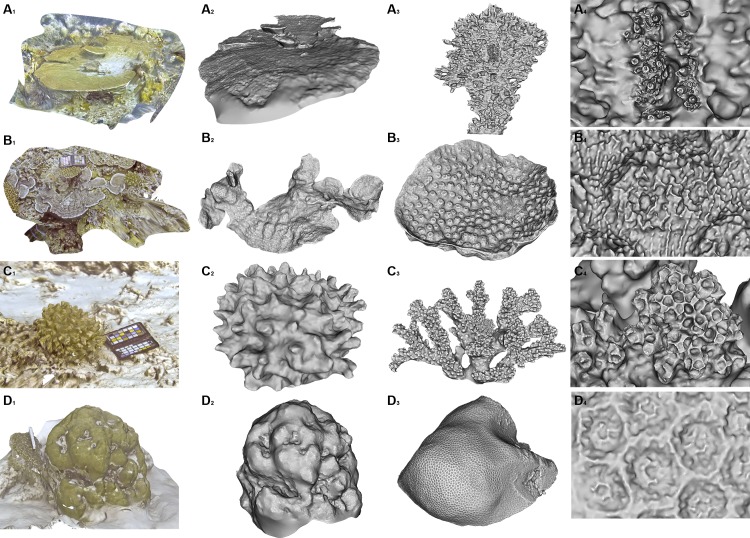
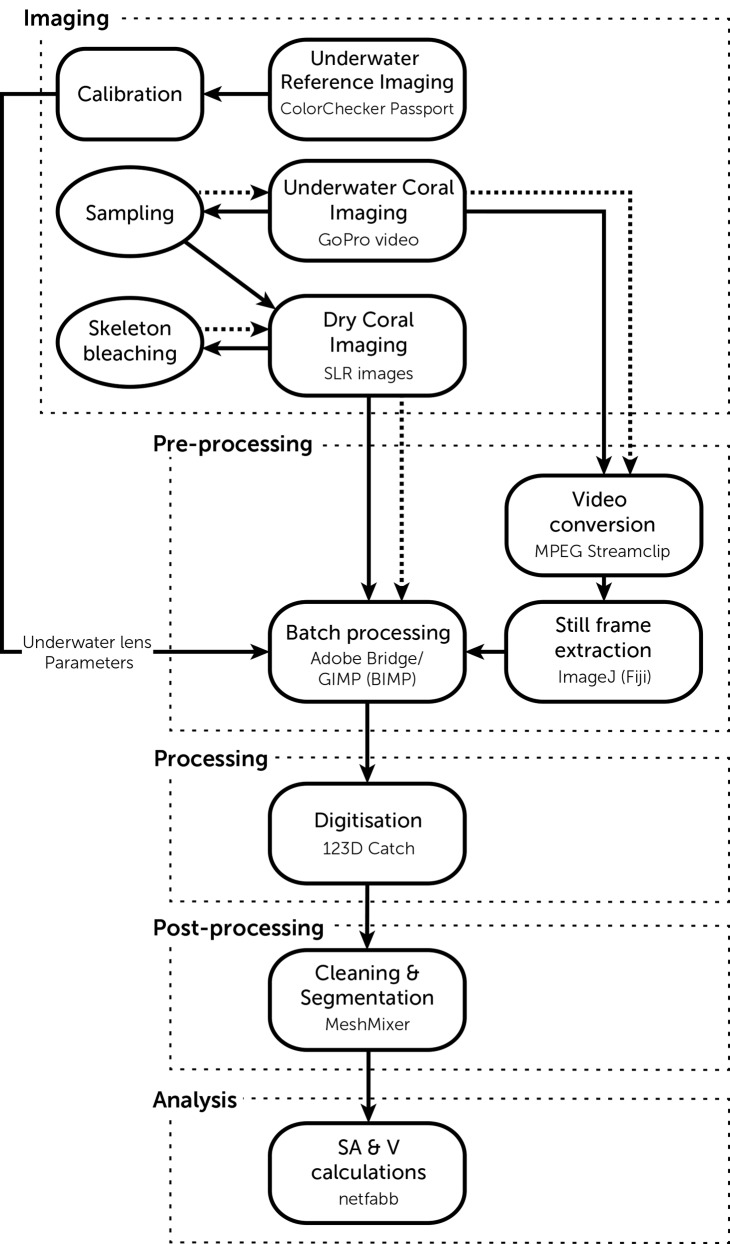
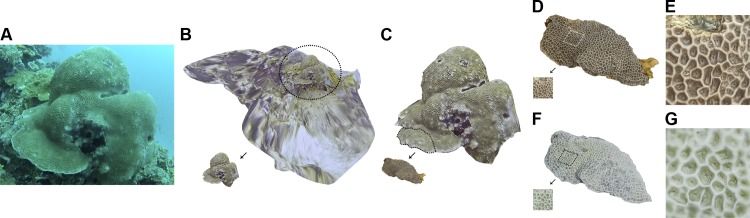
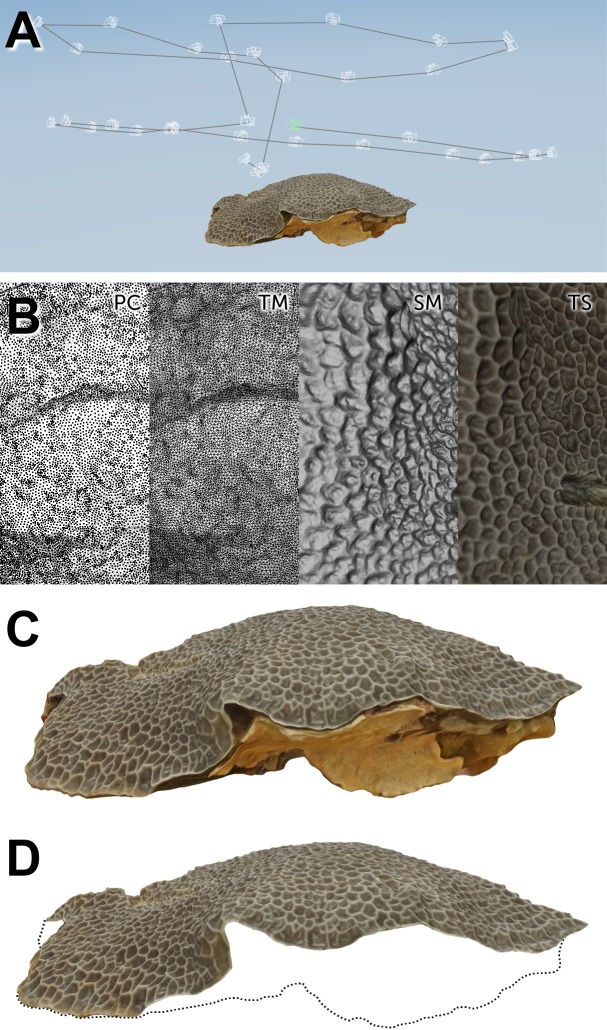
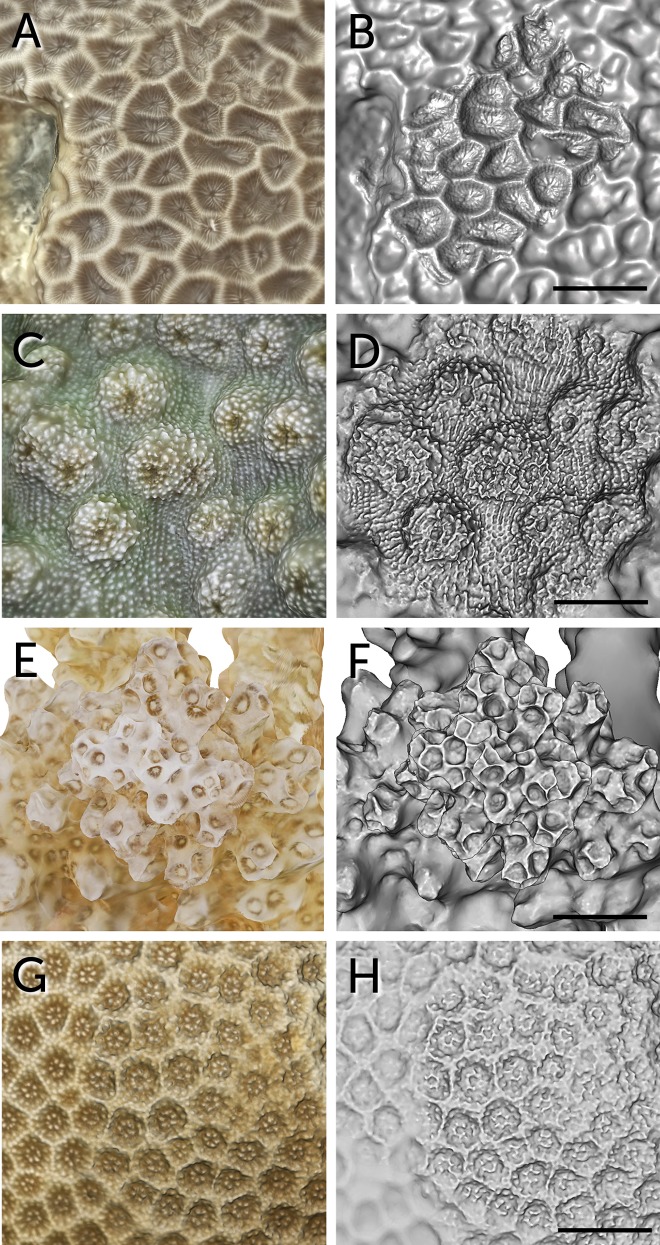
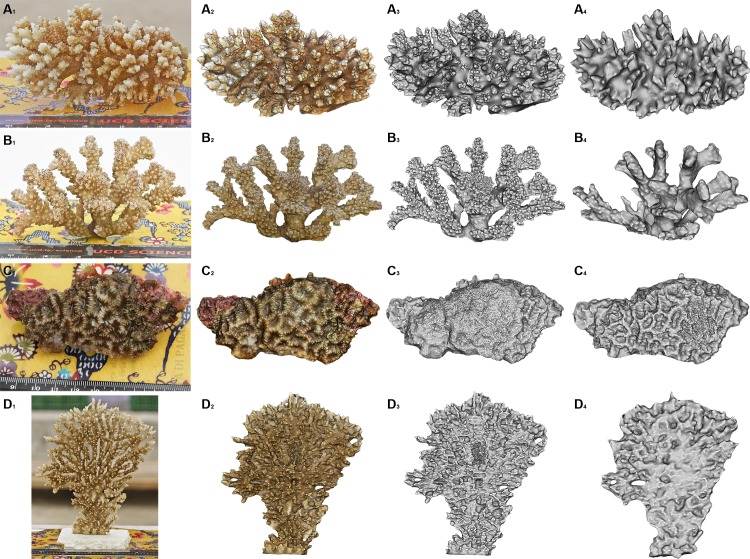
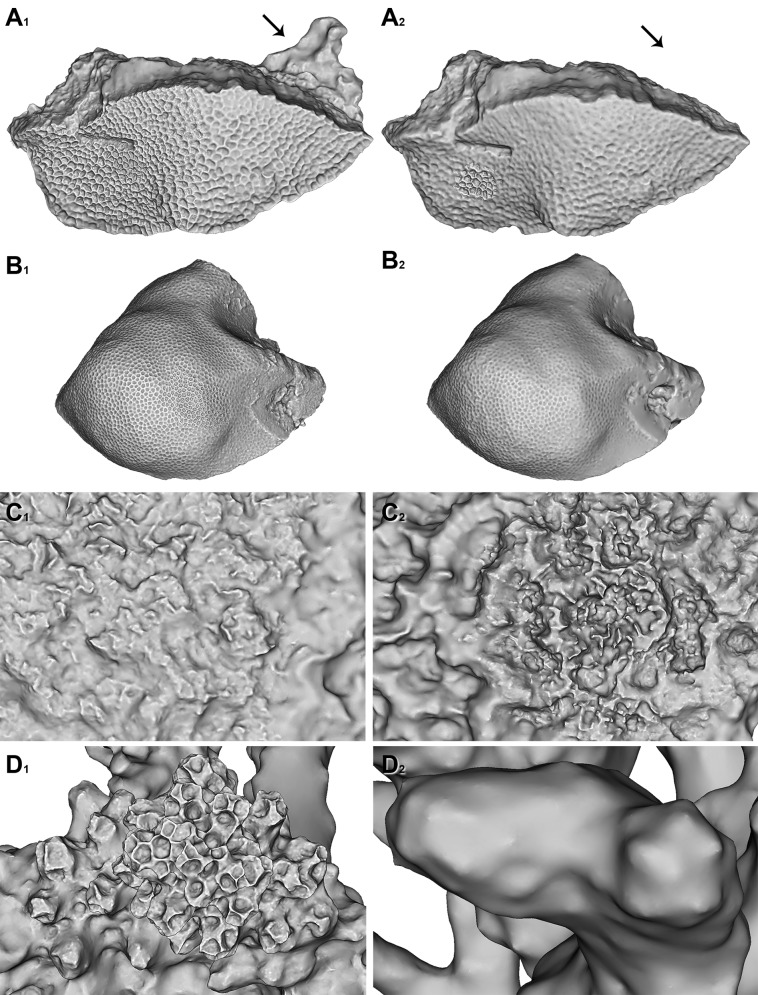
Coral reefs hosts nearly 25% of all marine species and provide food sources for half a billion people worldwide while only a very small percentage have been surveyed. Advances in technology and processing along with affordable underwater cameras and Internet availability gives us the possibility to provide tools and softwares to survey entire coral reefs. Holistic ecological analyses of corals require not only the community view (10s to 100s of meters), but also the single colony analysis as well as corallite identification. As corals are three-dimensional, classical approaches to determine percent cover and structural complexity across spatial scales are inefficient, time-consuming and limited to experts. Here we propose an end-to-end approach to estimate these parameters using low-cost equipment (GoPro, Canon) and freeware (123D Catch, Meshmixer and Netfabb), allowing every community to participate in surveys and monitoring of their coral ecosystem. We demonstrate our approach on 9 species of underwater colonies in ranging size and morphology. 3D models of underwater colonies, fresh samples and bleached skeletons with high quality texture mapping and detailed topographic morphology were produced, and Surface Area and Volume measurements (parameters widely used for ecological and coral health studies) were calculated and analysed. Moreover, we integrated collected sample models with micro-photogrammetry models of individual corallites to aid identification and colony and polyp scale analysis.
珊瑚礁栖息着近25%的海洋物种,为全球5亿人提供食物来源,而目前仅有极小比例的珊瑚礁被勘查过。随着技术和处理能力的进步,以及价格亲民的水下相机和互联网的普及,我们有可能提供工具和软件来勘查整个珊瑚礁。对珊瑚进行全面的生态分析不仅需要群落视角(数十米到数百米范围),还需要对单个珊瑚群体进行分析以及识别珊瑚虫。由于珊瑚是三维的,传统方法在跨空间尺度确定覆盖百分比和结构复杂性时效率低下、耗时且只有专家才能操作。在此,我们提出一种端到端的方法,使用低成本设备(GoPro、佳能相机)和免费软件(123D Catch、Meshmixer和Netfabb)来估算这些参数,使每个群体都能参与对其珊瑚生态系统的勘查和监测。我们在9种大小和形态各异的水下珊瑚群体上展示了我们的方法。制作了具有高质量纹理映射和详细地形形态的水下珊瑚群体、新鲜样本和白化骨骼的三维模型,并计算和分析了表面积和体积测量值(生态和珊瑚健康研究中广泛使用的参数)。此外,我们将收集的样本模型与单个珊瑚虫的显微摄影测量模型相结合,以辅助识别以及群体和珊瑚虫体尺度的分析。