Krysiak Robert, Drosdzol-Cop Agnieszka, Skrzypulec-Plinta Violetta, Okopien Bogusław
Department of Internal Medicine and Clinical Pharmacology, Medical University of Silesia, ul. Medyków 18, 40-752, Katowice, Poland.
Chair of Woman's Health, School of Health Sciences in Katowice, Medical University of Silesia, ul. Medyków 12, 40-752, Katowice, Poland.
Endocrine. 2016 Jul;53(1):291-8. doi: 10.1007/s12020-016-0898-5. Epub 2016 Feb 22.
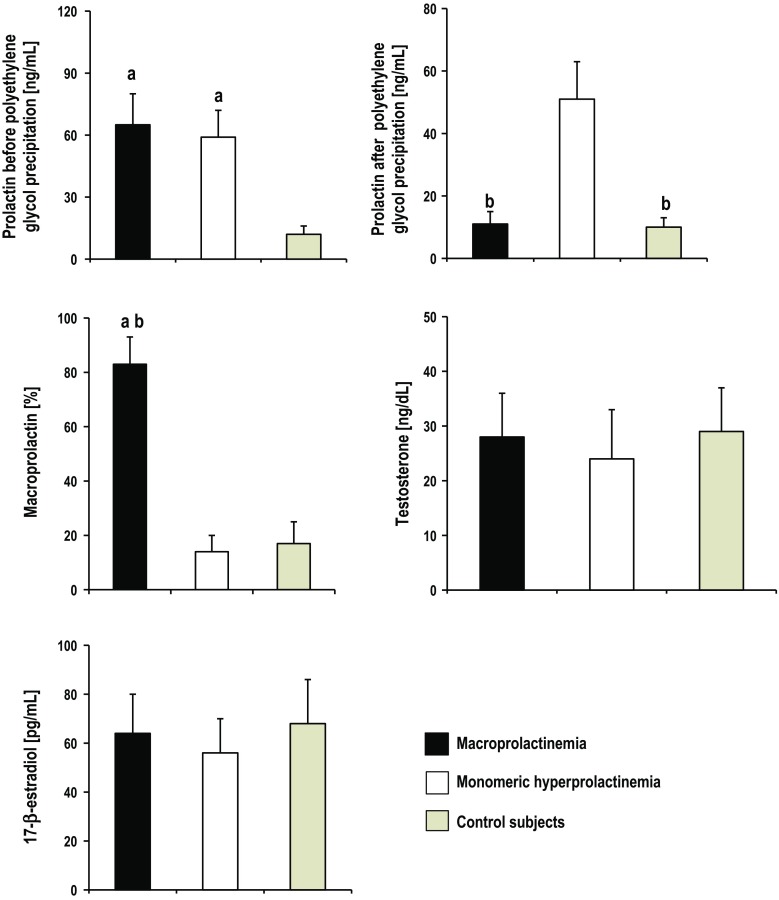
Elevated prolactin levels seem to be associated with impaired sexuality. The clinical significance of macroprolactinemia, associated with the predominance of high molecular mass circulating forms of prolactin, is still poorly understood. This study was aimed at investigating sexual function in young women with macroprolactinemia. The study enrolled 14 young women with macroprolactinemia, 14 with increased monomeric prolactin levels, as well as 14 age- and weight-matched healthy women. All patients completed a questionnaire evaluating female sexual function (Female Sexual Function Index-FSFI), as well as a questionnaire assessing the presence and severity of depressive symptoms (Beck Depression Inventory Second Edition-BDI-II). Apart from total prolactin levels and macroprolactin content, circulating levels of thyrotropin, total testosterone, and 17-β estradiol were also measured. Patients with elevated monomeric prolactin levels had a lower total FSFI score, as well as lower scores for all domains: sexual desire, sexual arousal, lubrication, orgasm, sexual satisfaction, and dyspareunia. These scores correlated with total and monomeric prolactin levels. In turn, women with macroprolactinemia were characterized by a lower score for sexual desire, and only this score correlated with total prolactin levels and macroprolactin content. The total score in the BDI-II questionnaire was higher in patients with hyper- and macroprolactinemia than in the control subjects. Contrary to multidimensional impairment of sexual function in women with elevated monomeric prolactin, macroprolactinemia only seems to disturb sexual desire.
催乳素水平升高似乎与性功能受损有关。巨泌乳素血症的临床意义,与循环中高分子质量形式的催乳素占优势相关,目前仍了解甚少。本研究旨在调查患有巨泌乳素血症的年轻女性的性功能。该研究招募了14名患有巨泌乳素血症的年轻女性、14名单体催乳素水平升高的女性,以及14名年龄和体重匹配的健康女性。所有患者均完成了一份评估女性性功能的问卷(女性性功能指数-FSFI),以及一份评估抑郁症状的存在和严重程度(贝克抑郁量表第二版-BDI-II)的问卷。除了总催乳素水平和巨泌乳素含量外,还测量了促甲状腺激素、总睾酮和17-β雌二醇的循环水平。单体催乳素水平升高的患者FSFI总分较低,所有领域的得分也较低:性欲、性唤起、润滑、性高潮、性满意度和性交困难。这些得分与总催乳素和单体催乳素水平相关。反过来,患有巨泌乳素血症的女性的特征是性欲得分较低,只有该得分与总催乳素水平和巨泌乳素含量相关。BDI-II问卷中的总分在高催乳素血症和巨泌乳素血症患者中高于对照组。与单体催乳素水平升高的女性性功能的多维损害相反,巨泌乳素血症似乎仅会干扰性欲。