Ho Ming-Fen, Low Leanne M, Rose'Meyer Roselyn B
Heart Foundation Research Centre, School of Medical Science, Griffith University, Gold Coast, Queensland, Australia.
PLoS One. 2016 Feb 23;11(2):e0150021. doi: 10.1371/journal.pone.0150021. eCollection 2016.
Essential hypertension is considered to be a multifactorial disorder and its aetiology has yet to be clearly identified. As the adenosine receptors have a significant role in mediating vasodilation, alterations in their structures or signalling pathways may be involved in the development of hypertension. This study aimed to measure the expression of adenosine A3 receptors in a range of cardiovascular tissues and determine whether they could be altered with essential hypertension, and to functionally test responses to adenosine A3 receptor agonists in coronary blood vessels using the isolated perfused heart preparation.
mRNA samples from cardiovascular tissues and a range of blood vessels were collected from 10 week old male spontaneously hypertensive rats and age-gender matched Wistar rats (n = 8). The Langendorff heart perfusion preparation was used to characterise adenosine A3 receptor mediated coronary vasodilation in the rat heart.
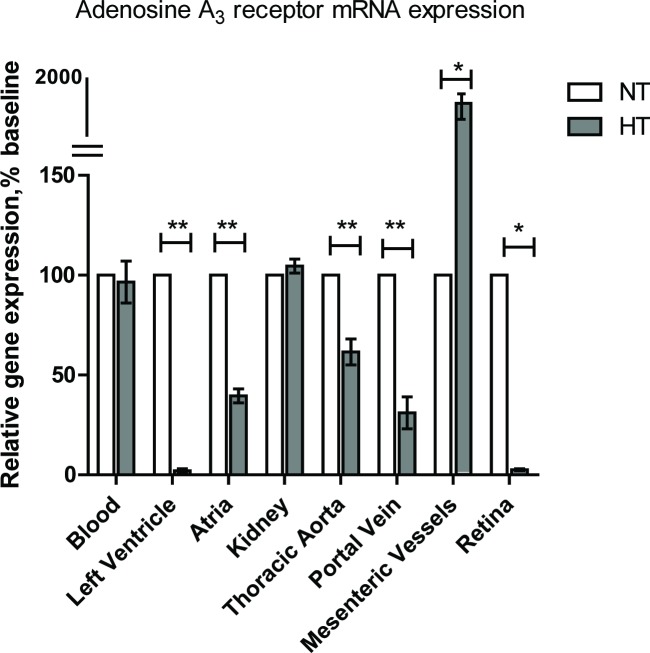
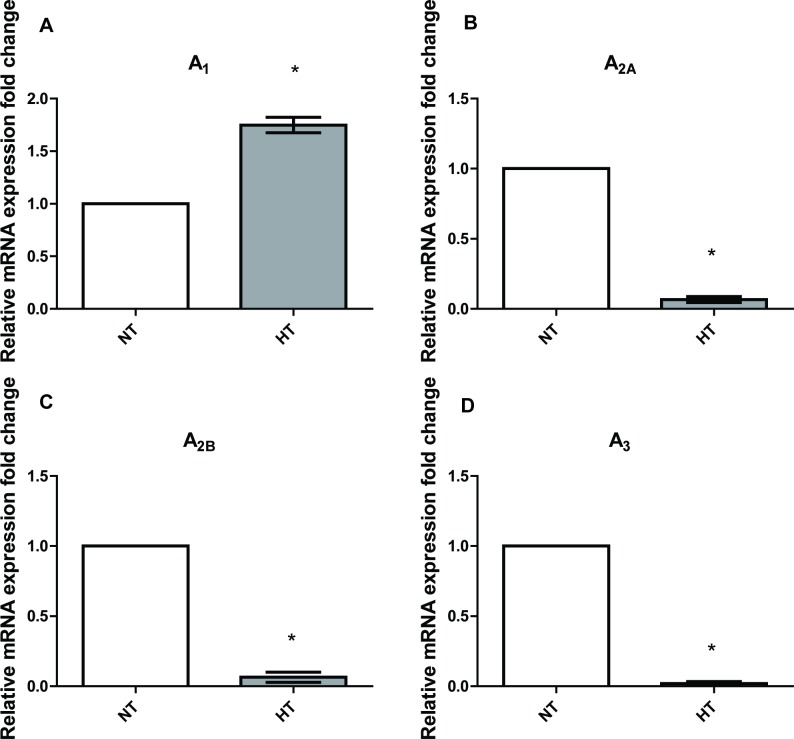
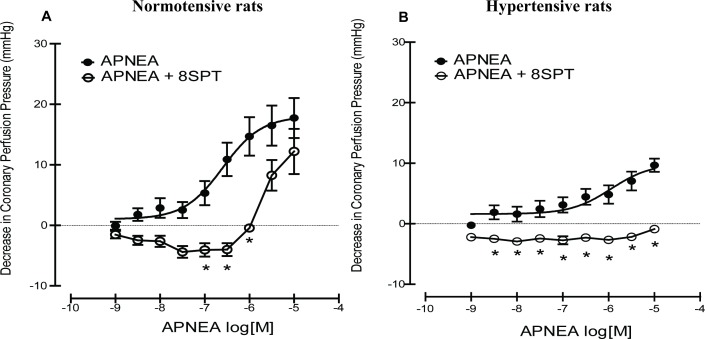
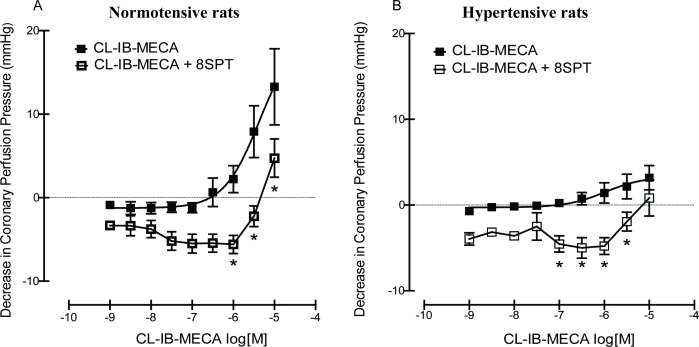
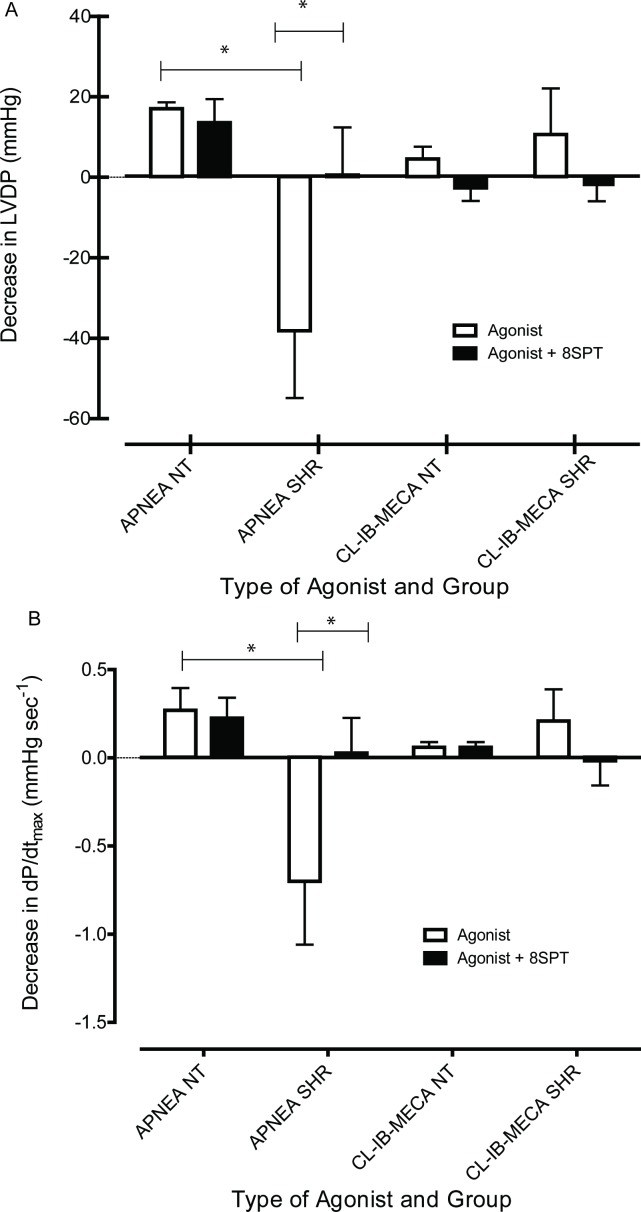
Adenosine A3 receptor agonists induced coronary vasodilation. The expression of adenosine A3 receptors in cardiovascular tissues was altered in a tissue-specific pattern. Specifically, down-regulation of adenosine A3 receptor expression occurred in hypertensive hearts, which might be associated with attenuated vasodilator responses observed in coronary vessels to adenosine A3 receptor agonists.
This study demonstrated alterations in the expression of adenosine A3 receptors occurred in a tissue specific mode, and reduced adenosine A3 receptor mediated coronary vasodilation in hearts from spontaneously hypertensive rats. Our findings with regard to changes in the adenosine A3 receptor in hypertensive hearts suggest that adenosine A3 receptor might play a role in the physiopathology of essential hypertension and potentially open the way to pharmacologic manipulation of vasomotor activity by the use of adenosine A3 receptor agonists.
原发性高血压被认为是一种多因素疾病,其病因尚未明确。由于腺苷受体在介导血管舒张中起重要作用,其结构或信号通路的改变可能与高血压的发生有关。本研究旨在测量一系列心血管组织中腺苷A3受体的表达,并确定其是否会因原发性高血压而改变,同时使用离体灌注心脏标本对冠状动脉血管中腺苷A3受体激动剂的反应进行功能测试。
从10周龄雄性自发性高血压大鼠和年龄性别匹配的Wistar大鼠(n = 8)中收集心血管组织和一系列血管的mRNA样本。采用Langendorff心脏灌注标本对大鼠心脏中腺苷A3受体介导的冠状动脉舒张进行表征。
腺苷A3受体激动剂可诱导冠状动脉舒张。心血管组织中腺苷A3受体的表达以组织特异性模式发生改变。具体而言,高血压心脏中腺苷A3受体表达下调,这可能与冠状动脉血管中观察到的对腺苷A3受体激动剂的血管舒张反应减弱有关。
本研究表明,腺苷A3受体的表达改变以组织特异性方式发生,自发性高血压大鼠心脏中腺苷A3受体介导的冠状动脉舒张减弱。我们关于高血压心脏中腺苷A3受体变化的研究结果表明,腺苷A3受体可能在原发性高血压的病理生理学中起作用,并可能为通过使用腺苷A3受体激动剂对血管运动活性进行药物调控开辟道路。