Ricker Charité, Culver Julie O, Lowstuter Katrina, Sturgeon Duveen, Sturgeon Julia D, Chanock Christopher R, Gauderman William J, McDonnell Kevin J, Idos Gregory E, Gruber Stephen B
USC Norris Comprehensive Cancer Center, University of Southern California, Los Angeles, CA 90033, USA; Department of Medicine, University of Southern California, Los Angeles, CA 90033, USA.
USC Norris Comprehensive Cancer Center, University of Southern California, Los Angeles, CA 90033, USA.
Cancer Genet. 2016 Apr;209(4):130-7. doi: 10.1016/j.cancergen.2015.12.013. Epub 2016 Jan 12.
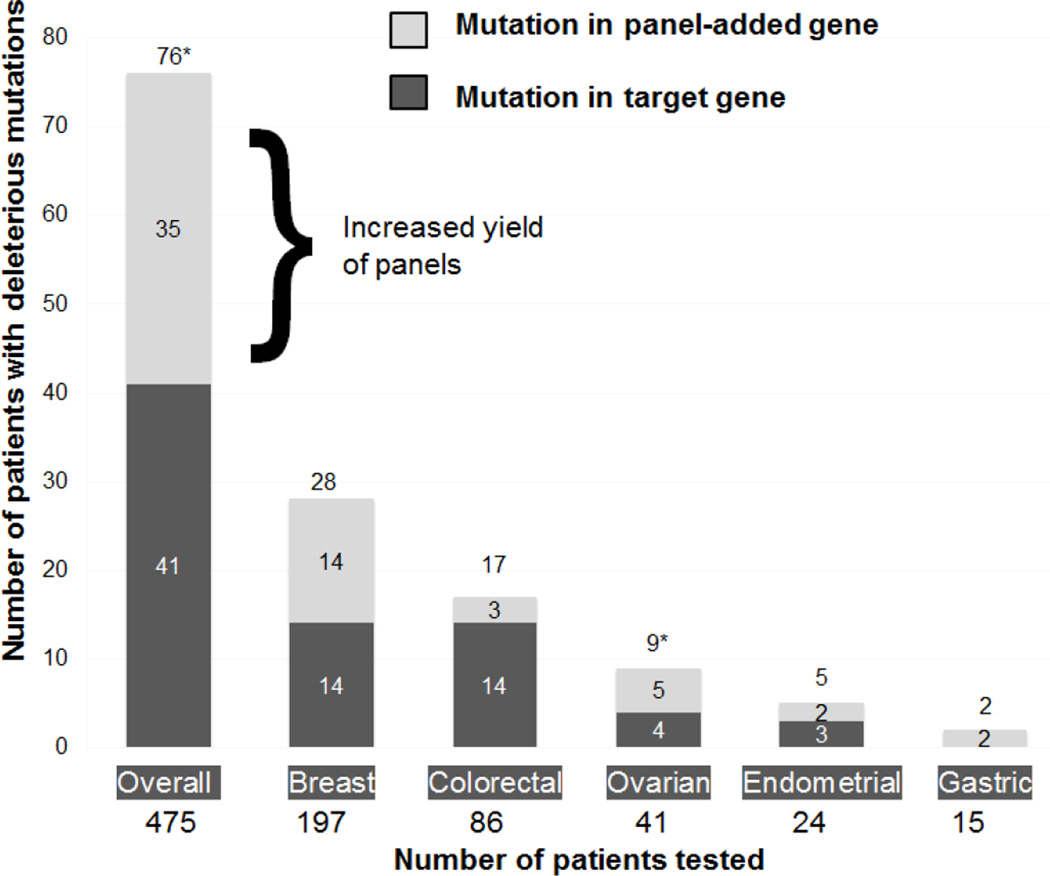
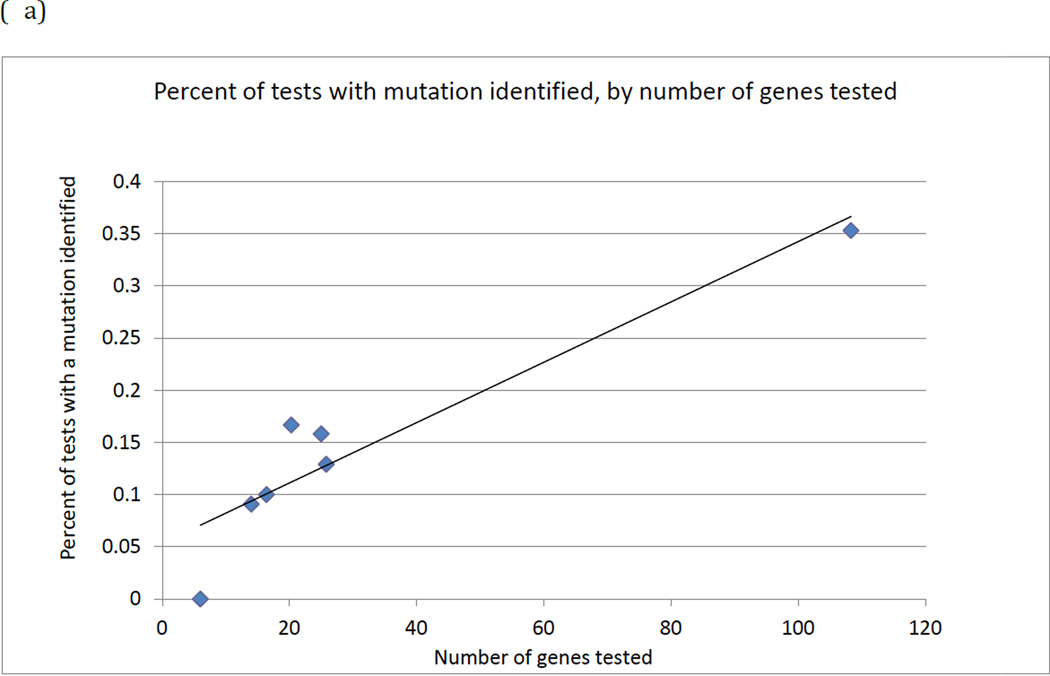
This study aims to assess multi-gene panel testing in an ethnically diverse clinical cancer genetics practice. We conducted a retrospective study of individuals with a personal or family history of cancer undergoing clinically indicated multi-gene panel tests of 6-110 genes, from six commercial laboratories. The 475 patients in the study included 228 Hispanics (47.6%), 166 non-Hispanic Whites (35.4%), 55 Asians (11.6%), 19 Blacks (4.0%), and seven others (1.5%). Panel testing found that 15.6% (74/475) of patients carried deleterious mutations for a total of 79 mutations identified. This included 7.4% (35/475) of patients who had a mutation identified that would not have been tested with a gene-by-gene approach. The identification of a panel-added mutation impacted clinical management for most of cases (69%, 24/35), and genetic testing was recommended for the first degree relatives of nearly all of them (91%, 32/35). Variants of uncertain significance (VUSs) were identified in a higher proportion of tests performed in ethnic minorities. Multi-gene panel testing increases the yield of mutations detected and adds to the capability of providing individualized cancer risk assessment. VUSs represent an interpretive challenge due to less data available outside of White, non-Hispanic populations. Further studies are necessary to expand understanding of the implementation and utilization of panels across broad clinical settings and patient populations.
本研究旨在评估在种族多样化的临床癌症遗传学实践中进行多基因panel检测的情况。我们对来自六个商业实验室、有个人或家族癌症病史且接受临床指示的6至110个基因的多基因panel检测的个体进行了一项回顾性研究。该研究中的475名患者包括228名西班牙裔(47.6%)、166名非西班牙裔白人(35.4%)、55名亚洲人(11.6%)、19名黑人(4.0%)和7名其他种族(1.5%)。panel检测发现,15.6%(74/475)的患者携带有害突变,共鉴定出79个突变。这包括7.4%(35/475)的患者,其鉴定出的突变若采用逐个基因检测方法则不会被检测到。对于大多数病例(69%,24/35),鉴定出的panel添加突变影响了临床管理,并且几乎所有病例(91%,32/35)都建议对其一级亲属进行基因检测。在少数民族中进行的检测中,不确定意义的变异(VUS)被鉴定出的比例更高。多基因panel检测提高了检测到的突变率,并增强了提供个性化癌症风险评估的能力。由于在非西班牙裔白人人群之外可获得的数据较少,VUS带来了解读方面的挑战。有必要进一步开展研究,以扩大对在广泛临床环境和患者群体中panel的实施和应用的理解。