Branum Sylvia R, Tazawa Hiroshi, Burggren Warren W
Developmental Integrative Biology Research Group, Department of Biological Sciences, University of North Texas, Denton, Texas.
Developmental Integrative Biology Research Group, Department of Biological Sciences, University of North Texas, Denton, Texas
Physiol Rep. 2016 Feb;4(4). doi: 10.14814/phy2.12712.
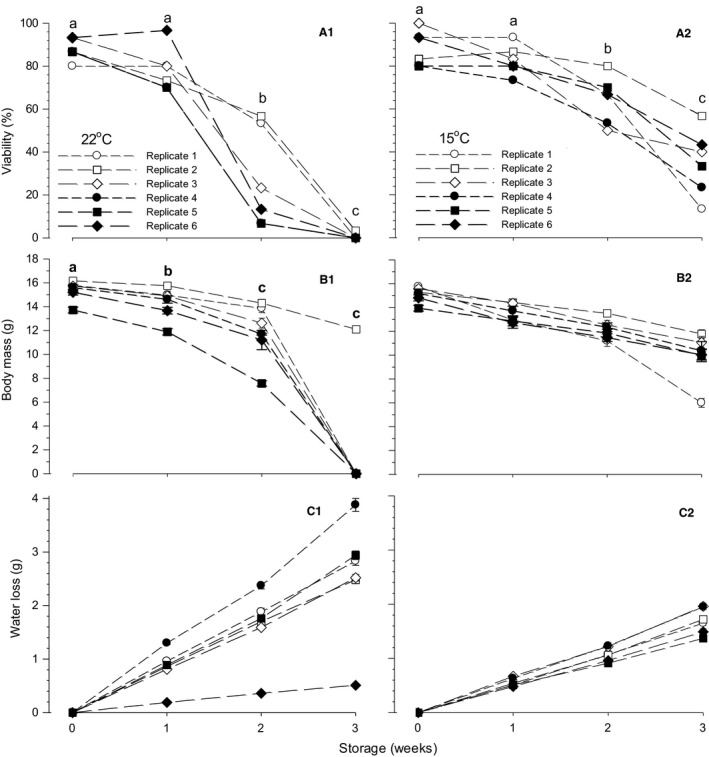
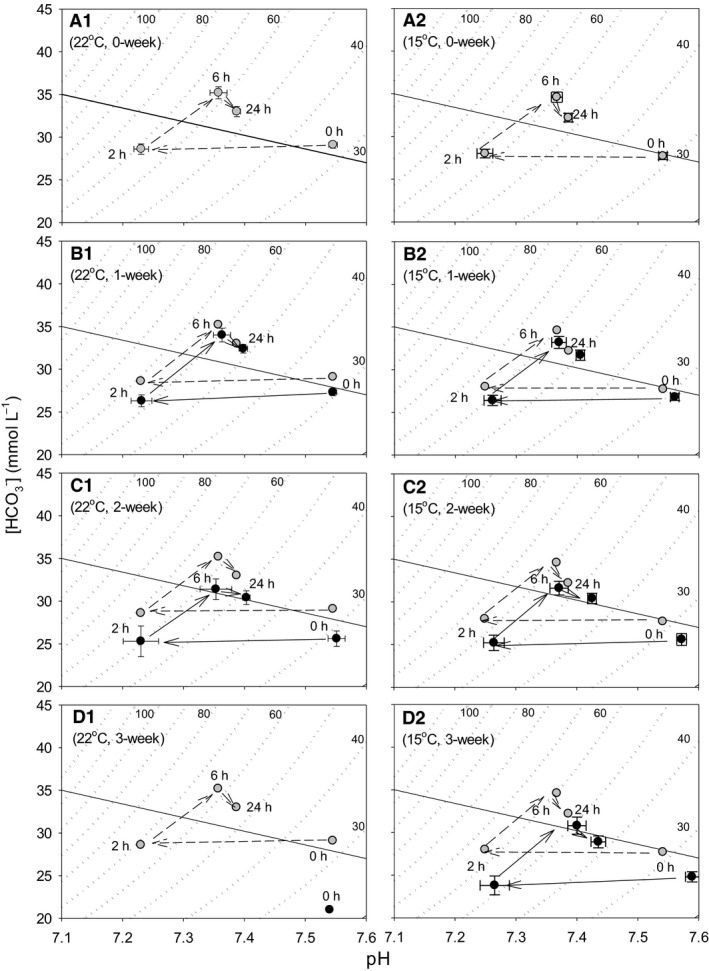
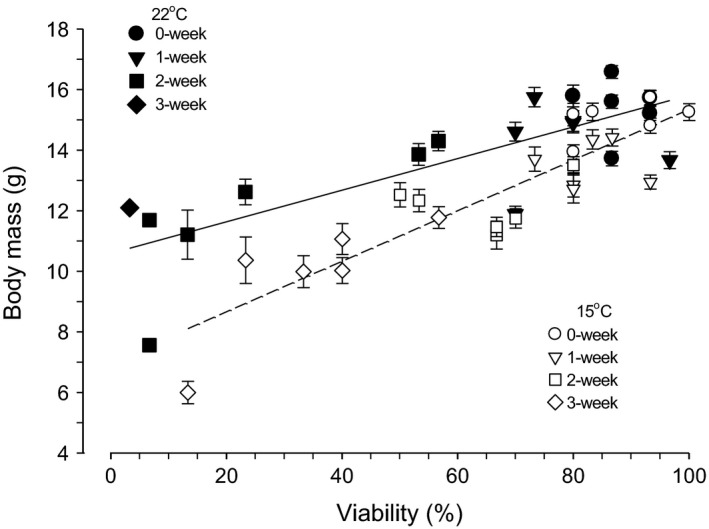
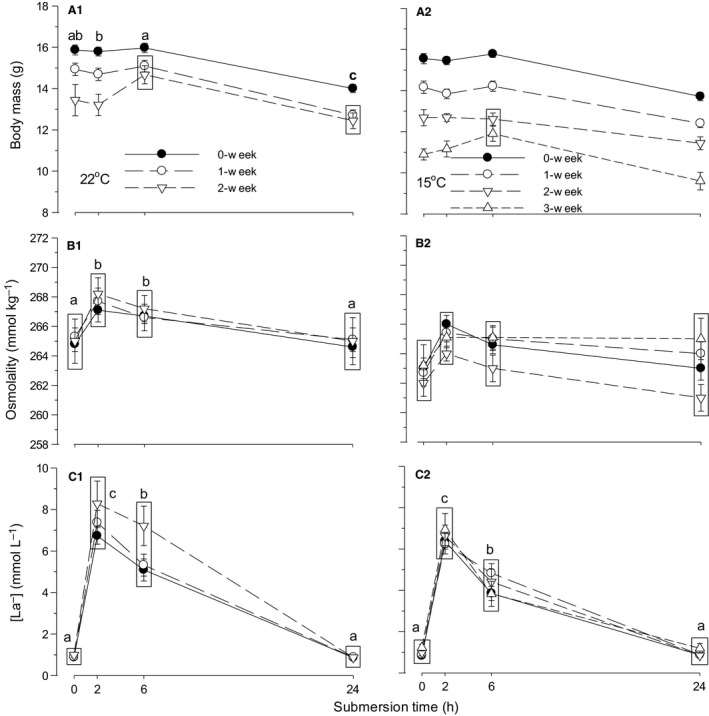
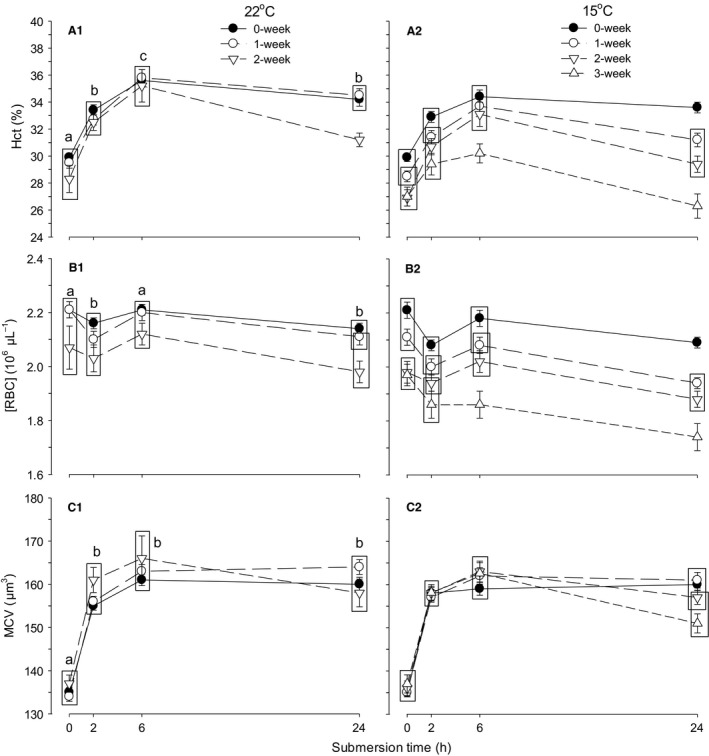
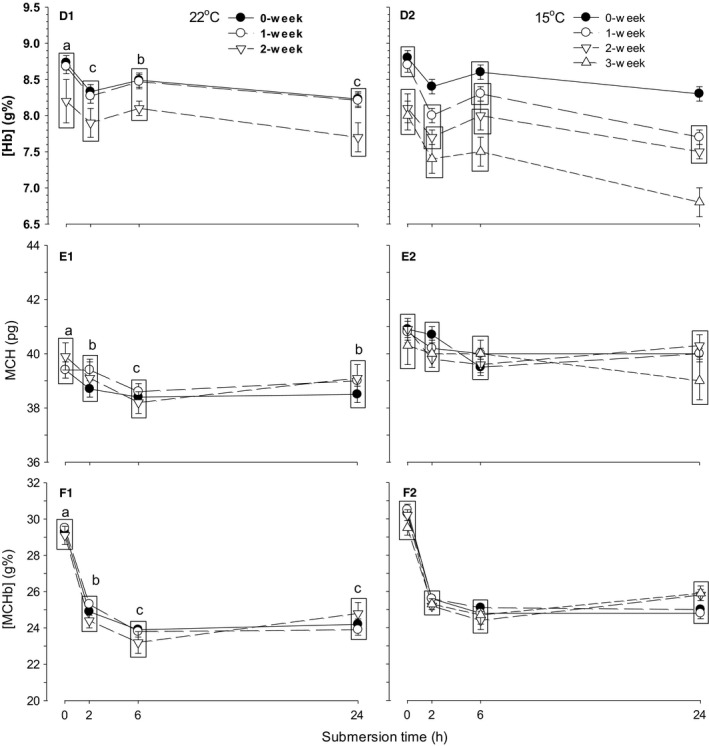
The developing chicken blastoderm can be temporarily maintained in dormancy below physiological zero temperature. However, prolonged preincubation egg storage impairs normal morphological and physiological development of embryos in a potential example of fetal programming (in this case, "embryonic programming"). We investigated how preincubation egg storage conditions (temperature, duration, hypoxia, and hypercapnia) affects viability, body mass, and physiological variables and functions in day 15 chicken embryos. Embryo viability was impaired in eggs stored for 2 and 3 weeks, with the effects greater at 22°C compared to 15°C. However, embryo size was reduced in eggs stored at 15°C compared with 22°C. Phenotypic change resulting from embryonic programming was evident in the fact that preincubation storage at 15°C diminished hematocrit (Hct), red blood cell concentration ([RBC]), and hemoglobin concentration ([Hb]). Storage duration at 15°C more severely affected the time course (2, 6, and 24 h) responses of Hct, [RBC], and [Hb] to progressive hypoxia and hypercapnia induced by submersion compared with storage duration at 22°C. The time-specific regulation of acid-base balance was changed progressively with storage duration at both 22 and 15°C preincubation storages. Consequently, preincubation egg storage at 22°C resulted in poor viability compared with eggs stored at 15°C, but size and physiological functions of embryos in eggs stored for 1-2 weeks were worse in eggs stored in the cooler than stored under room conditions. Avian eggs thus prove to be useful for examining developmental consequences to physiology of altered preincubation thermal environment in very early stages of development (embryonic programming).
发育中的鸡胚盘可以在低于生理零度的温度下暂时保持休眠状态。然而,孵化前长时间的鸡蛋储存会损害胚胎的正常形态和生理发育,这可能是胎儿编程(在这种情况下是“胚胎编程”)的一个例子。我们研究了孵化前鸡蛋的储存条件(温度、持续时间、低氧和高碳酸血症)如何影响第15天鸡胚的活力、体重以及生理变量和功能。储存2周和3周的鸡蛋中的胚胎活力受损,与15°C相比,在22°C下的影响更大。然而,与22°C相比,在15°C下储存的鸡蛋中胚胎大小减小。胚胎编程导致的表型变化在以下事实上很明显:在15°C下孵化前储存会降低血细胞比容(Hct)、红细胞浓度([RBC])和血红蛋白浓度([Hb])。与在22°C下储存的持续时间相比,在15°C下储存的持续时间对Hct、[RBC]和[Hb]对浸没诱导的渐进性低氧和高碳酸血症的时间进程(2、6和24小时)反应影响更严重。在22°C和15°C的孵化前储存条件下,酸碱平衡的时间特异性调节都随着储存持续时间而逐渐改变。因此,与在15°C下储存的鸡蛋相比,在22°C下孵化前储存的鸡蛋活力较差,但在较凉爽温度下储存1 - 2周的鸡蛋中的胚胎大小和生理功能比在室温条件下储存的鸡蛋更差。因此,禽蛋被证明对于研究发育早期(胚胎编程)孵化前热环境改变对生理的发育后果很有用。