DeRossi Charles, Vacaru Ana, Rafiq Ruhina, Cinaroglu Ayca, Imrie Dru, Nayar Shikha, Baryshnikova Anastasia, Milev Miroslav P, Stanga Daniela, Kadakia Dhara, Gao Ningguo, Chu Jaime, Freeze Hudson H, Lehrman Mark A, Sacher Michael, Sadler Kirsten C
Department of Medicine, Division of Liver Diseases, Icahn School of Medicine at Mount Sinai, New York, NY 10029 Department of Developmental and Regenerative Biology, Icahn School of Medicine at Mount Sinai, New York, NY 10029.
Department of Medicine, Division of Liver Diseases, Icahn School of Medicine at Mount Sinai, New York, NY 10029 Graduate School of Biomedical Sciences, Icahn School of Medicine at Mount Sinai, New York, NY 10029.
Mol Biol Cell. 2016 Apr 15;27(8):1220-34. doi: 10.1091/mbc.E15-08-0557. Epub 2016 Feb 24.
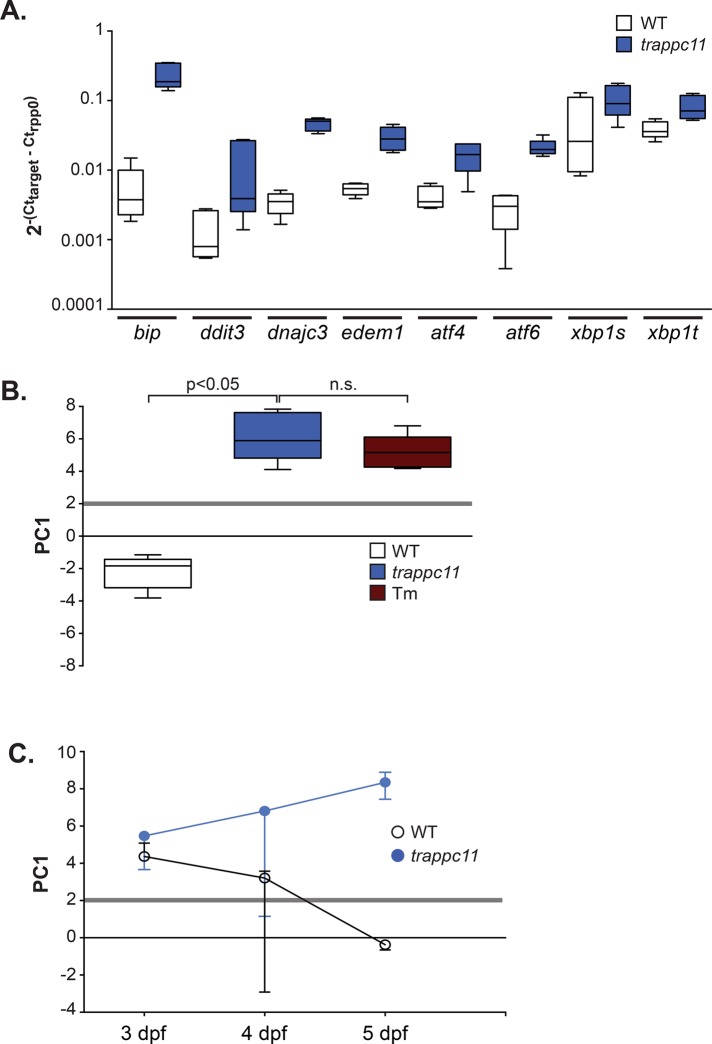
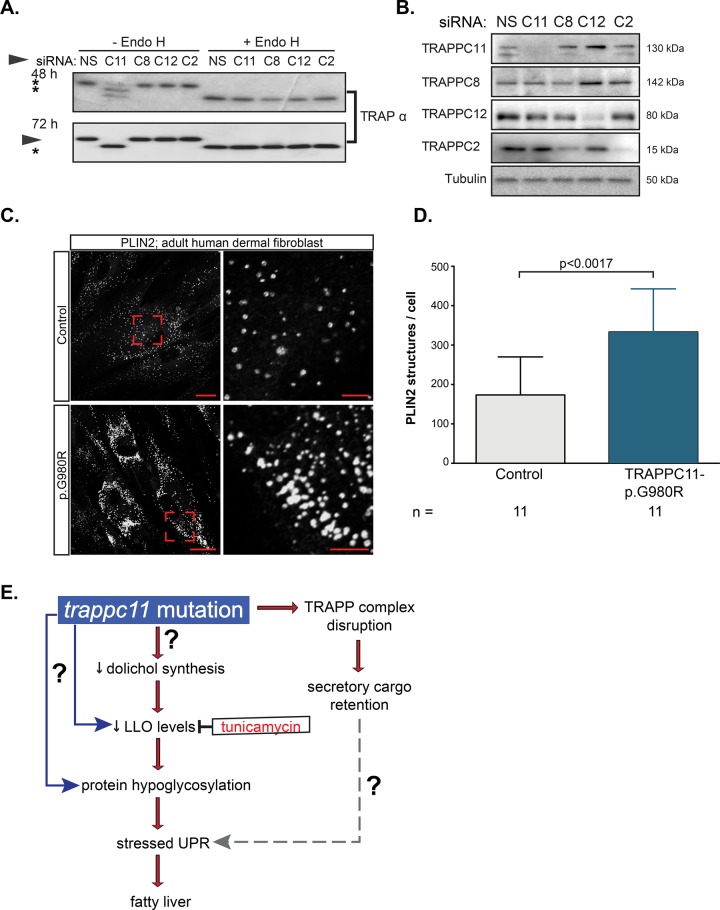
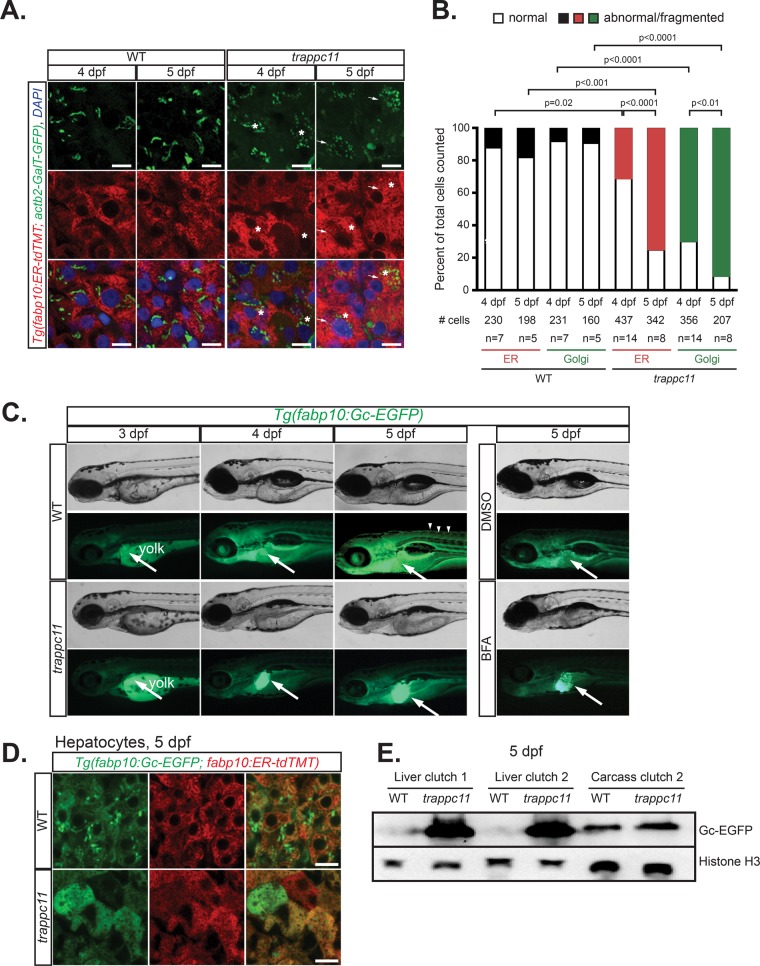
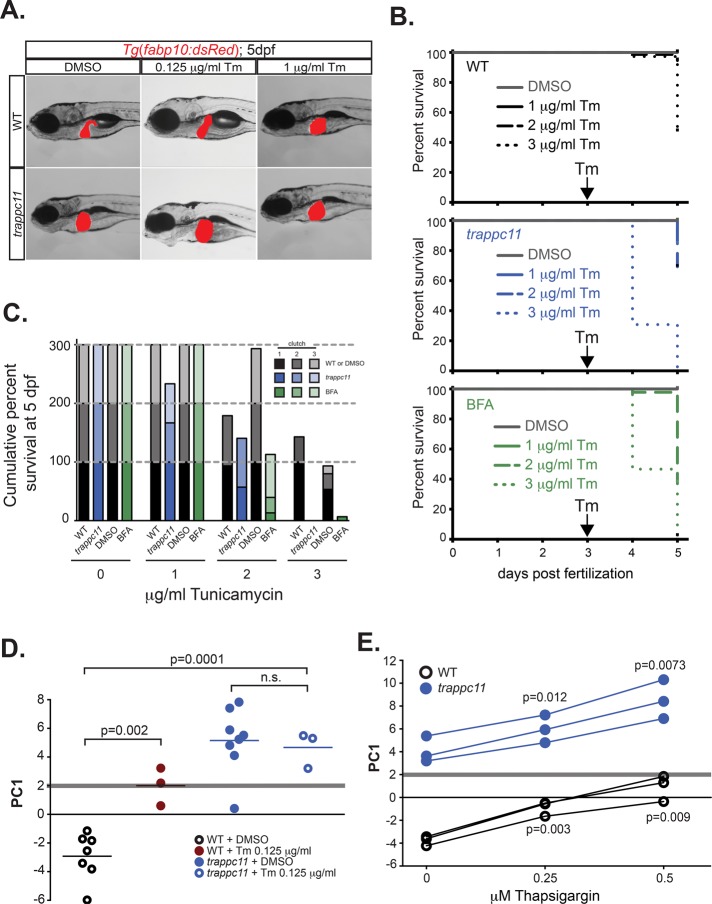
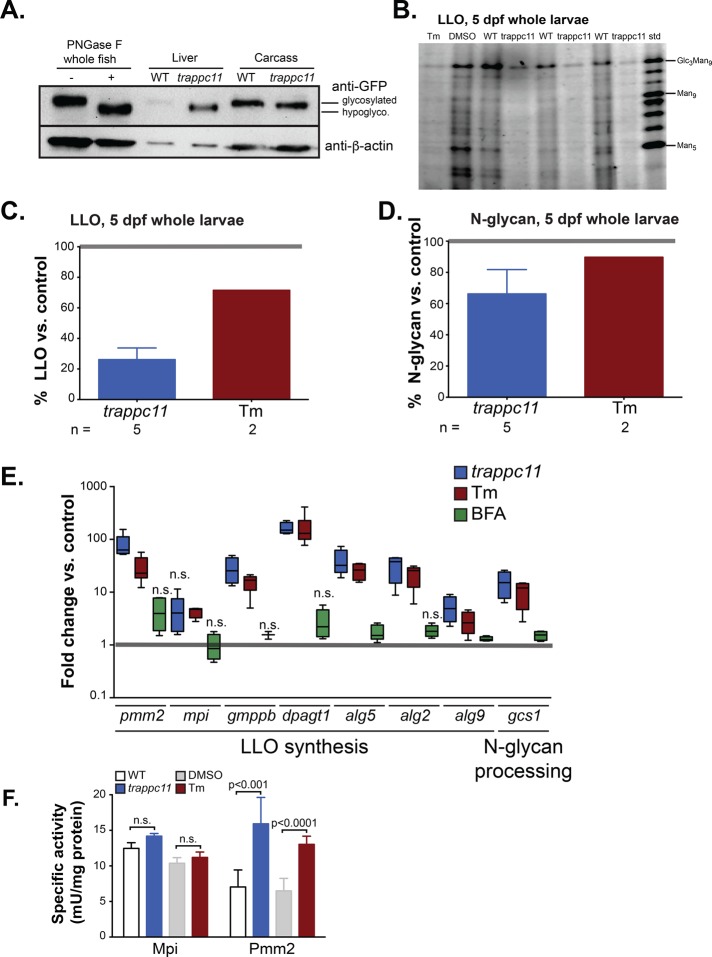
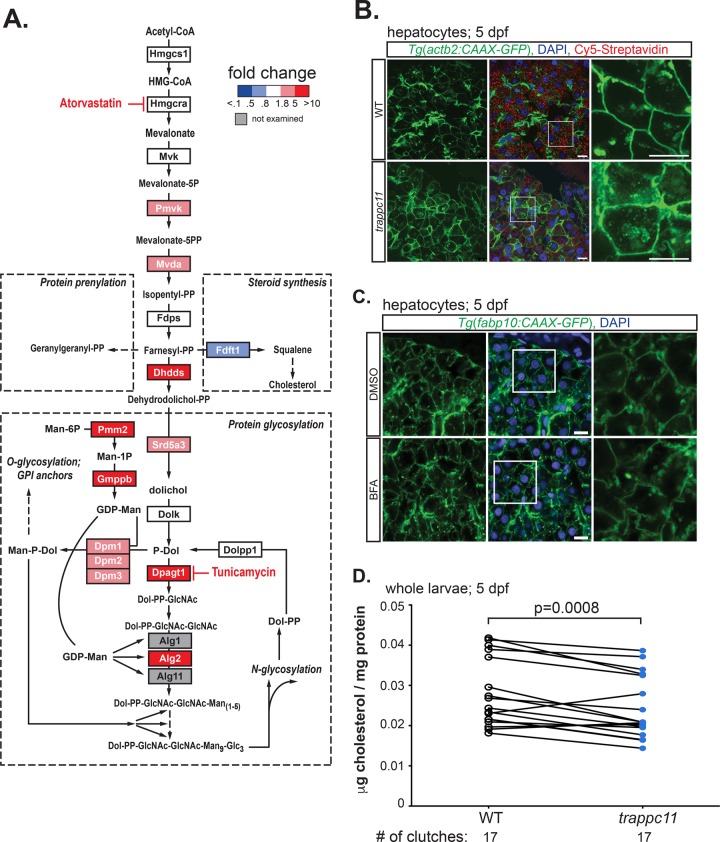
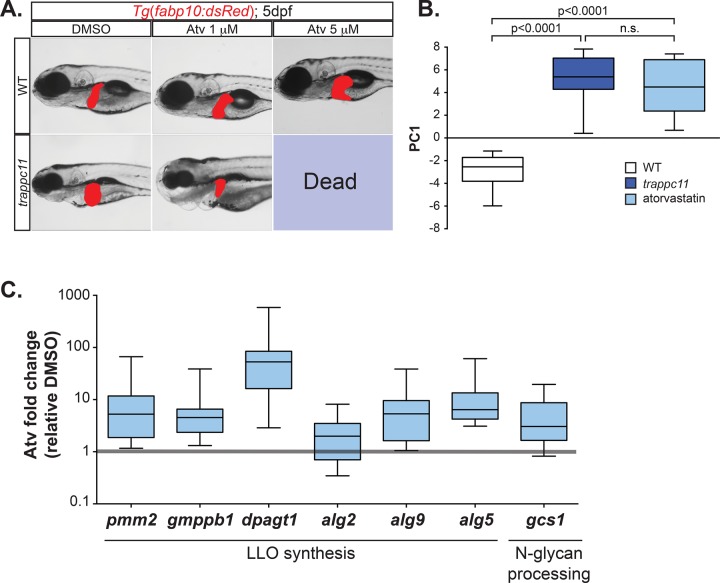
Activation of the unfolded protein response (UPR) can be either adaptive or pathological. We term the pathological UPR that causes fatty liver disease a "stressed UPR." Here we investigate the mechanism of stressed UPR activation in zebrafish bearing a mutation in thetrappc11gene, which encodes a component of the transport protein particle (TRAPP) complex.trappc11mutants are characterized by secretory pathway defects, reflecting disruption of the TRAPP complex. In addition, we uncover a defect in protein glycosylation intrappc11mutants that is associated with reduced levels of lipid-linked oligosaccharides (LLOs) and compensatory up-regulation of genes in the terpenoid biosynthetic pathway that produces the LLO anchor dolichol. Treating wild-type larvae with terpenoid or LLO synthesis inhibitors phenocopies the stressed UPR seen intrappc11mutants and is synthetically lethal withtrappc11mutation. We propose that reduced LLO level causing hypoglycosylation is a mechanism of stressed UPR induction intrappc11mutants. Of importance, in human cells, depletion of TRAPPC11, but not other TRAPP components, causes protein hypoglycosylation, and lipid droplets accumulate in fibroblasts from patients with theTRAPPC11mutation. These data point to a previously unanticipated and conserved role for TRAPPC11 in LLO biosynthesis and protein glycosylation in addition to its established function in vesicle trafficking.
未折叠蛋白反应(UPR)的激活既可以是适应性的,也可以是病理性的。我们将导致脂肪肝疾病的病理性UPR称为“应激UPR”。在这里,我们研究了携带trappc11基因突变的斑马鱼中应激UPR激活的机制,该基因编码转运蛋白颗粒(TRAPP)复合物的一个组成部分。trappc11突变体的特征是分泌途径缺陷,反映了TRAPP复合物的破坏。此外,我们发现trappc11突变体中存在蛋白质糖基化缺陷,这与脂质连接寡糖(LLO)水平降低以及产生LLO锚定多萜醇的萜类生物合成途径中基因的代偿性上调有关。用萜类或LLO合成抑制剂处理野生型幼虫可模拟trappc11突变体中出现的应激UPR,并且与trappc11突变具有合成致死性。我们提出,LLO水平降低导致低糖基化是trappc11突变体中应激UPR诱导的一种机制。重要的是,在人类细胞中,TRAPPC11的缺失而非其他TRAPP成分的缺失会导致蛋白质低糖基化,并且脂质滴在患有TRAPPC11突变的患者的成纤维细胞中积累。这些数据表明,除了其在囊泡运输中已确立的功能外,TRAPPC11在LLO生物合成和蛋白质糖基化中具有先前未预料到的保守作用。