Magnússon Benedikt, Pétursson Þröstur, Edmunds Kyle, Magnúsdóttir Gígja, Halldórsson Grétar, Jónsson Halldór, Gargiulo Paolo
Institute for Biomedical and Neural Engineering, Háskólinn í Reykjavík, Reykjavík, Iceland; Department of Clinical Engineering, Landspítali Hospital, Reykjavík, Iceland.
Department of Systems and Solutions, Landspítali Hospital , Reykjavík, Iceland.
Eur J Transl Myol. 2015 Mar 11;25(2):4913. doi: 10.4081/ejtm.2015.4913.
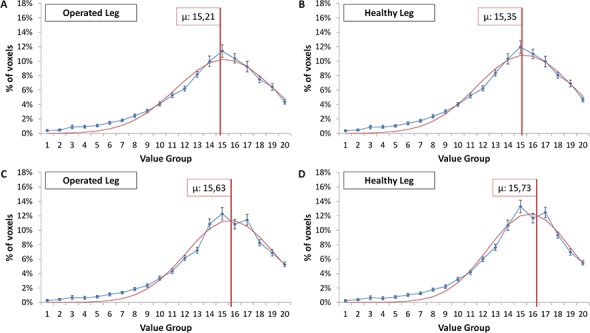
Total Hip Arthroplasty (THA) remains the gold standard of treatment for patients who suffer with a variety of hip-related pathological degeneration or trauma. These patients often exhibit significantly less post-operative pain and an increase in the range of motion of the joint, but there are still relatively common instances of debilitating periprosthetic complications that call into question the method for pre-surgical implant choice. Currently, there are two principal options for THA prostheses: cemented or non cemented. Utilizing the cemented procedure ensures a faster acquisition of adequate implant stability than with the non cemented procedure, but can eventually lead to an increased periprosthetic fracture risk. Non cemented prosthetic stems are more frequently revised within the first few years following THA due to periprosthetic fracture, but non cemented revision surgeries generally result in fewer complications than those of cemented implants. Surgeons typically rely on experience or simple patient metrics such as age and sex to prescribe which implant procedure is optimal, and while this may work for most patients, there is a clear need to analyze more rigoriously patient conditions that correlate to optimal post-THA outcomes. The results from the investigation reported herein indicate that an understanding of how the percent composition and quality of a patient's quadriceps muscle in both healthy and operated legs may be a better indicator for prosthetic choice. Additionally, these data emphasize that the traditional metrics of age and sex inadequately predict changes in quadriceps composition and quality and thereby have comparatively minor utility in determining the patient-appropriate prosthetic type.
Total Hip Arthroplasty, Prosthetic selection, Muscle size and quality, Anatomical modeling, Surgical planning.
全髋关节置换术(THA)仍然是患有各种髋关节相关病理退变或创伤患者的治疗金标准。这些患者术后疼痛通常明显减轻,关节活动范围增加,但仍有相对常见的假体周围并发症使人质疑术前植入物选择方法。目前,THA假体有两种主要选择:骨水泥型或非骨水泥型。与非骨水泥型手术相比,采用骨水泥型手术能更快获得足够的植入物稳定性,但最终可能导致假体周围骨折风险增加。由于假体周围骨折,非骨水泥型假体柄在THA后的头几年更常需要翻修,但非骨水泥型翻修手术通常比骨水泥型植入物的并发症少。外科医生通常依靠经验或简单的患者指标(如年龄和性别)来确定哪种植入手术是最佳的,虽然这对大多数患者可能有效,但显然需要更严格地分析与THA术后最佳结果相关的患者情况。本文报道的调查结果表明,了解患者健侧和手术侧股四头肌的成分百分比和质量可能是更好的假体选择指标。此外,这些数据强调,年龄和性别等传统指标不能充分预测股四头肌成分和质量的变化,因此在确定适合患者的假体类型方面效用相对较小。
全髋关节置换术;假体选择;肌肉大小和质量;解剖建模;手术规划