Garfin Phillip M, Nguyen Thuyen, Sage Julien
Department of Pediatrics, Stanford University, Stanford, CA, United States of America.
Department of Genetics, Stanford University, Stanford, CA, United States of America.
PLoS One. 2016 Feb 25;11(2):e0149430. doi: 10.1371/journal.pone.0149430. eCollection 2016.
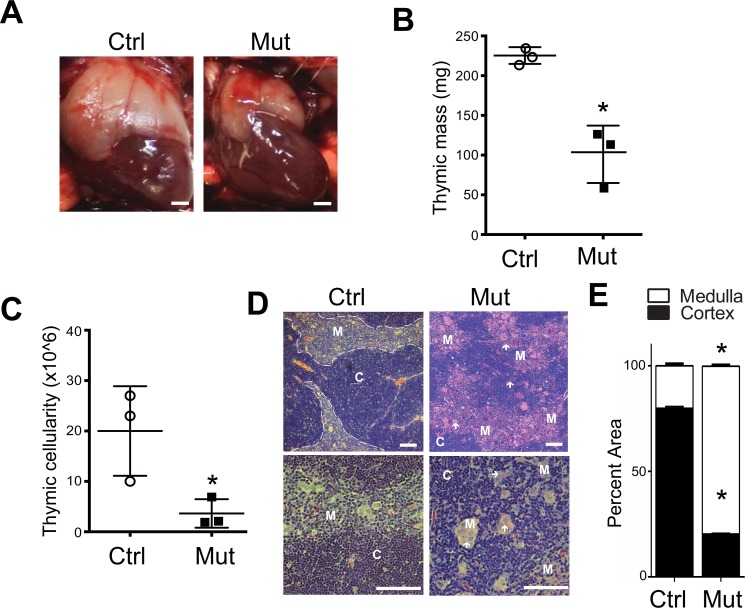
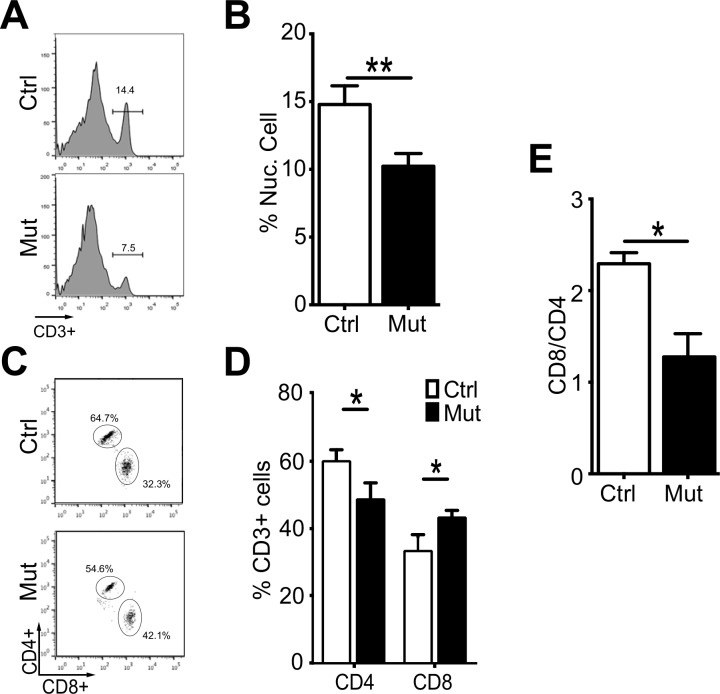
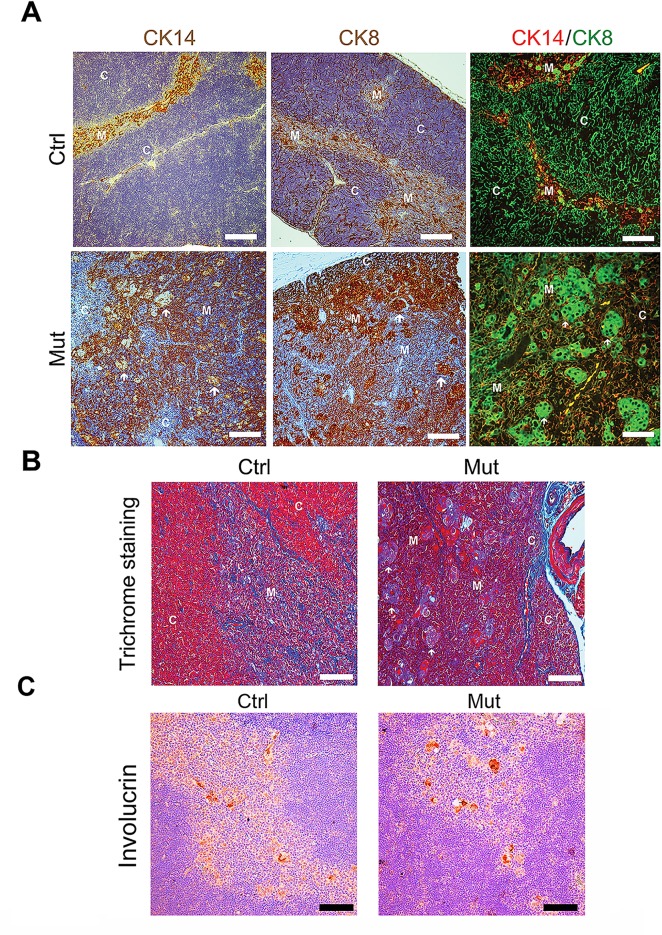
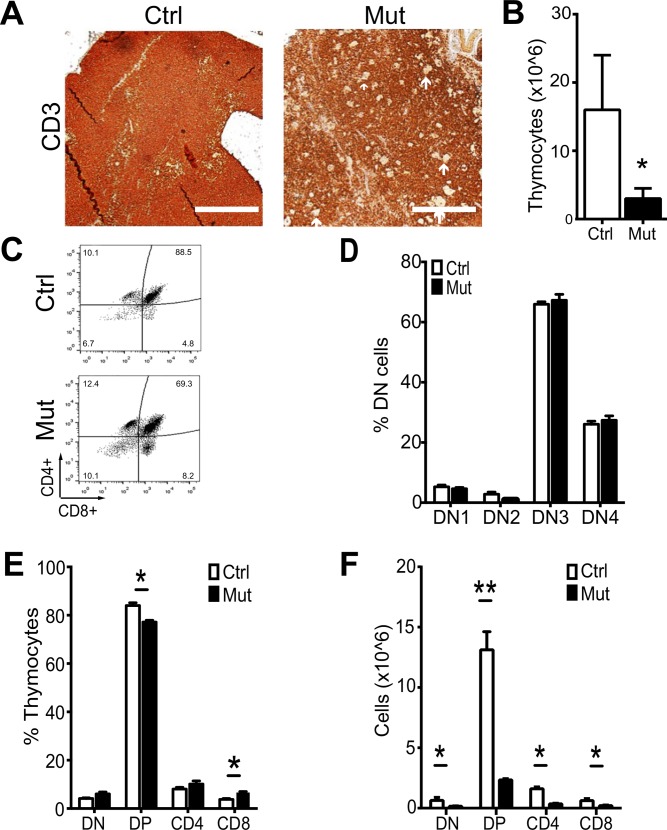
The thymus is the site of T cell development and selection. In addition to lymphocytes, the thymus is composed of several types of stromal cells that are exquisitely organized to create the appropriate environment and microenvironment to support the development and selection of maturing T cells. Thymic epithelial cells (TECs) are one of the more important cell types in the thymic stroma, and they play a critical role in selecting functional T cell clones and supporting their development. In this study, we used a mouse genetics approach to investigate the consequences of deleting the Pten tumor suppressor gene in the TEC compartment of the developing thymus. We found that PTEN deficiency in TECs results in a smaller thymus with significantly disordered architecture and histology. Accordingly, loss of PTEN function also results in decreased T cells with a shift in the distribution of T cell subtypes towards CD8+ T cells. These experiments demonstrate that PTEN is critically required for the development of a functional thymic epithelium in mice. This work may help better understand the effects that certain medical conditions or clinical interventions have upon the thymus and immune function.
胸腺是T细胞发育和选择的场所。除淋巴细胞外,胸腺由几种类型的基质细胞组成,这些细胞组织精巧,可营造适宜的环境和微环境,以支持成熟T细胞的发育和选择。胸腺上皮细胞(TECs)是胸腺基质中较为重要的细胞类型之一,在选择功能性T细胞克隆并支持其发育方面发挥着关键作用。在本研究中,我们采用小鼠遗传学方法,研究在发育中的胸腺的TEC区室中删除抑癌基因Pten的后果。我们发现,TECs中PTEN的缺失导致胸腺变小,结构和组织学明显紊乱。因此,PTEN功能的丧失还会导致T细胞数量减少,且T细胞亚群的分布向CD8+ T细胞偏移。这些实验表明,PTEN对小鼠功能性胸腺上皮的发育至关重要。这项工作可能有助于更好地理解某些医学状况或临床干预对胸腺和免疫功能的影响。