Wang Jigang, Zhang Jianbin, Zhang Chong-Jing, Wong Yin Kwan, Lim Teck Kwang, Hua Zi-Chun, Liu Bin, Tannenbaum Steven R, Shen Han-Ming, Lin Qingsong
Interdisciplinary Research Group in Infectious Diseases, Singapore-MIT Alliance for Research &Technology (SMART), 138602, Singapore.
Department of Biological Sciences, National University of Singapore, 117543, Singapore.
Sci Rep. 2016 Feb 26;6:22146. doi: 10.1038/srep22146.
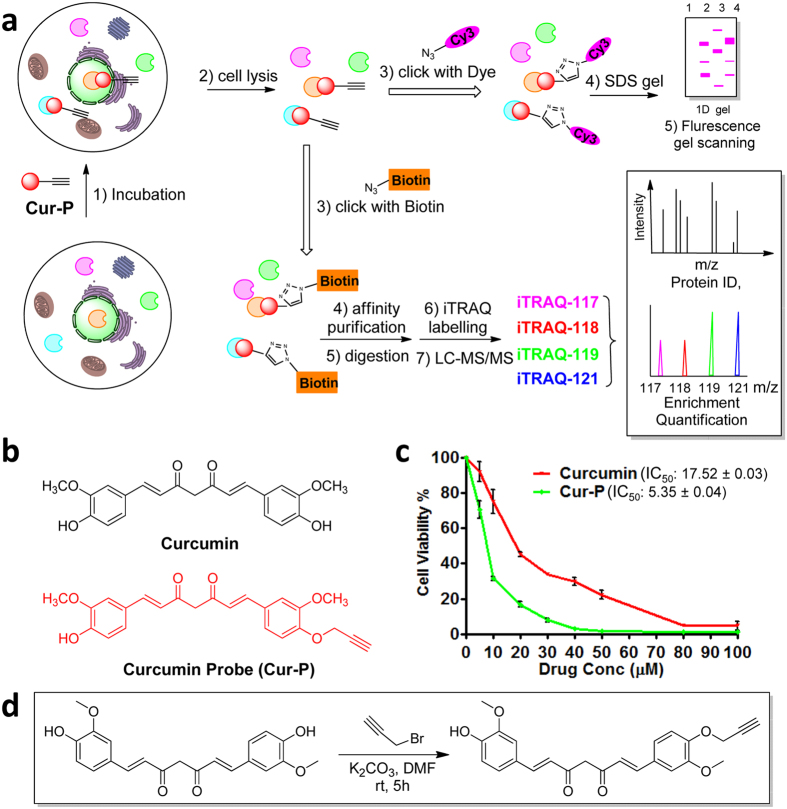
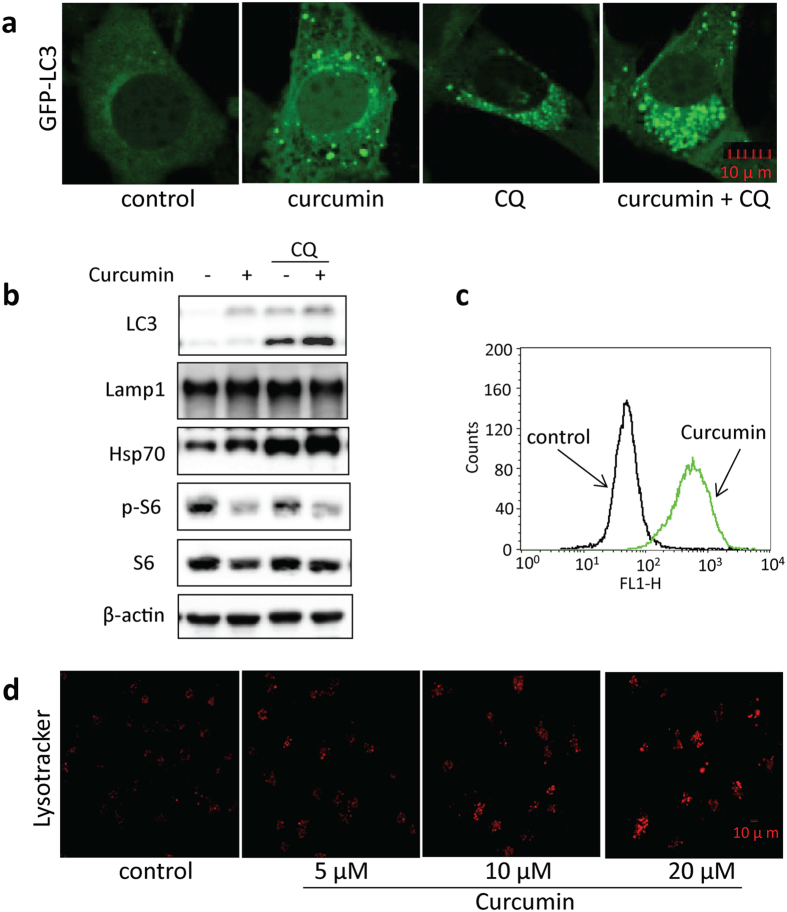
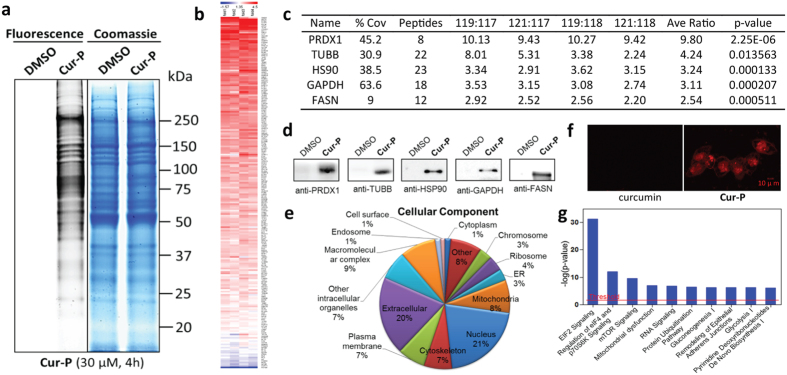
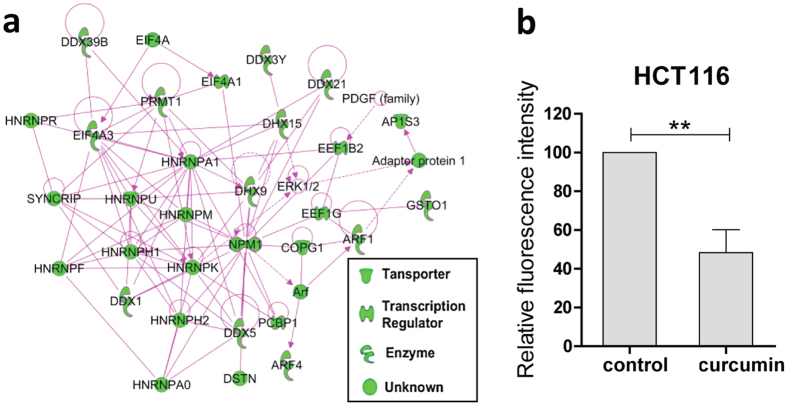
To date, the exact targets and mechanism of action of curcumin, a natural product with anti-inflammatory and anti-cancer properties, remain elusive. Here we synthesized a cell permeable curcumin probe (Cur-P) with an alkyne moiety, which can be tagged with biotin for affinity enrichment, or with a fluorescent dye for visualization of the direct-binding protein targets of curcumin in situ. iTRAQ(TM) quantitative proteomics approach was applied to distinguish the specific binding targets from the non-specific ones. In total, 197 proteins were confidently identified as curcumin binding targets from HCT116 colon cancer cell line. Gene Ontology analysis showed that the targets are broadly distributed and enriched in the nucleus, mitochondria and plasma membrane, and they are involved in various biological functions including metabolic process, regulation, response to stimulus and cellular process. Ingenuity Pathway Analysis(TM) (IPA) suggested that curcumin may exert its anticancer effects over multiple critical biological pathways including the EIF2, eIF4/p70S6K, mTOR signaling and mitochondrial dysfunction pathways. Functional validations confirmed that curcumin downregulates cellular protein synthesis, and induces autophagy, lysosomal activation and increased ROS production, thus leading to cell death.
迄今为止,姜黄素这种具有抗炎和抗癌特性的天然产物的确切作用靶点和作用机制仍不清楚。在此,我们合成了一种带有炔基部分的可穿透细胞的姜黄素探针(Cur-P),它可以用生物素进行标记以用于亲和富集,或者用荧光染料进行标记以原位可视化姜黄素的直接结合蛋白靶点。采用iTRAQ(TM)定量蛋白质组学方法来区分特异性结合靶点和非特异性结合靶点。总共从HCT116结肠癌细胞系中可靠地鉴定出197种蛋白质为姜黄素结合靶点。基因本体分析表明,这些靶点分布广泛,在细胞核、线粒体和质膜中富集,并且它们参与包括代谢过程、调节、对刺激的反应和细胞过程在内的各种生物学功能。 Ingenuity Pathway Analysis(TM)(IPA)表明,姜黄素可能通过包括EIF2、eIF4/p70S6K、mTOR信号传导和线粒体功能障碍途径在内的多个关键生物学途径发挥其抗癌作用。功能验证证实,姜黄素下调细胞蛋白质合成,并诱导自噬、溶酶体激活和增加活性氧生成,从而导致细胞死亡。