Xie Qipeng, Guo Xirui, Gu Jiayan, Zhang Liping, Jin Honglei, Huang Haishan, Li Jingxia, Huang Chuanshu
Zhejiang Provincial Key Laboratory for Technology and Application of Model Organisms, School of Life Sciences, Wenzhou Medical University, Wenzhou, Zhejiang, 325035, China.
Nelson Institute of Environmental Medicine, New York University School of Medicine, Tuxedo, NY 10987, USA.
Oncotarget. 2016 Mar 29;7(13):16636-49. doi: 10.18632/oncotarget.7674.
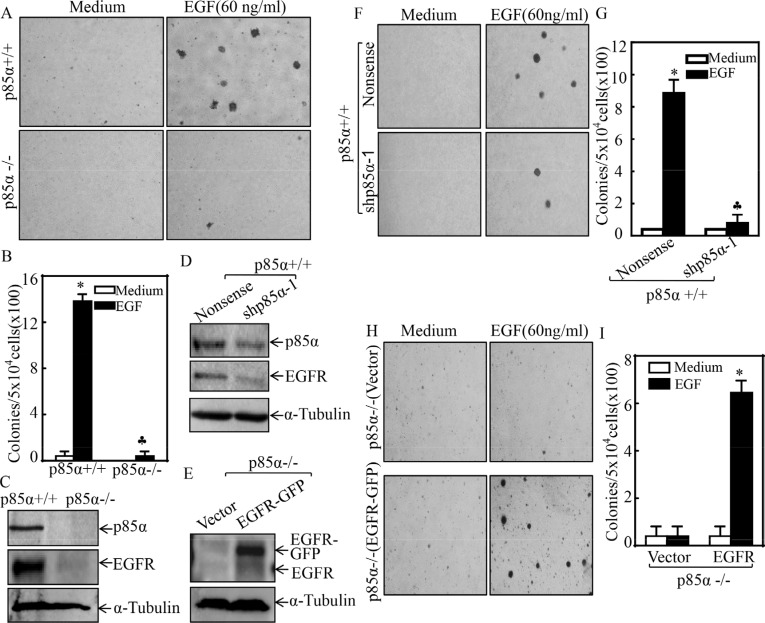
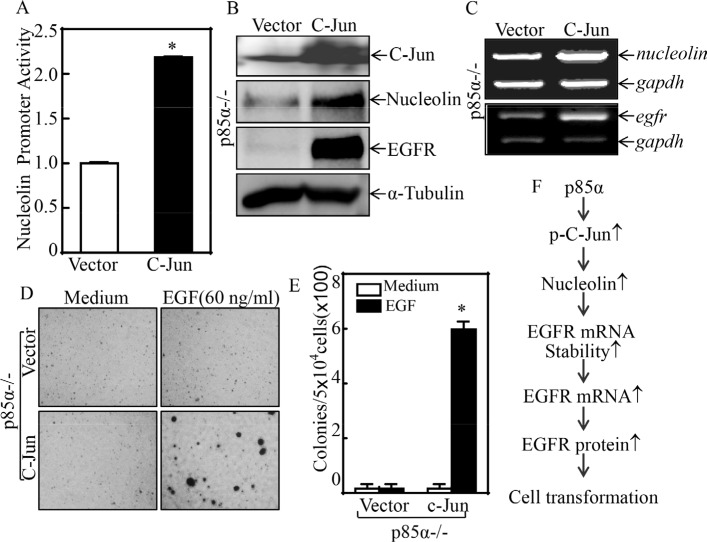
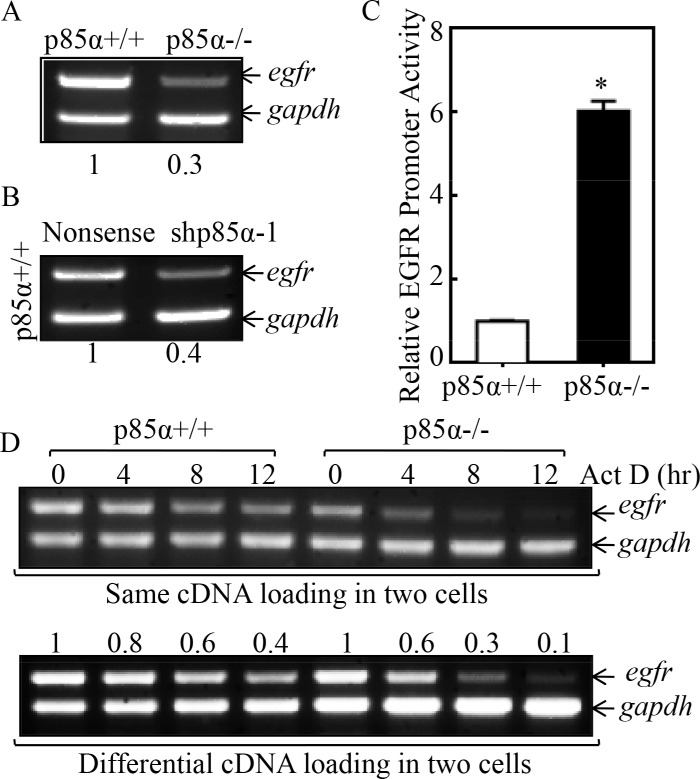
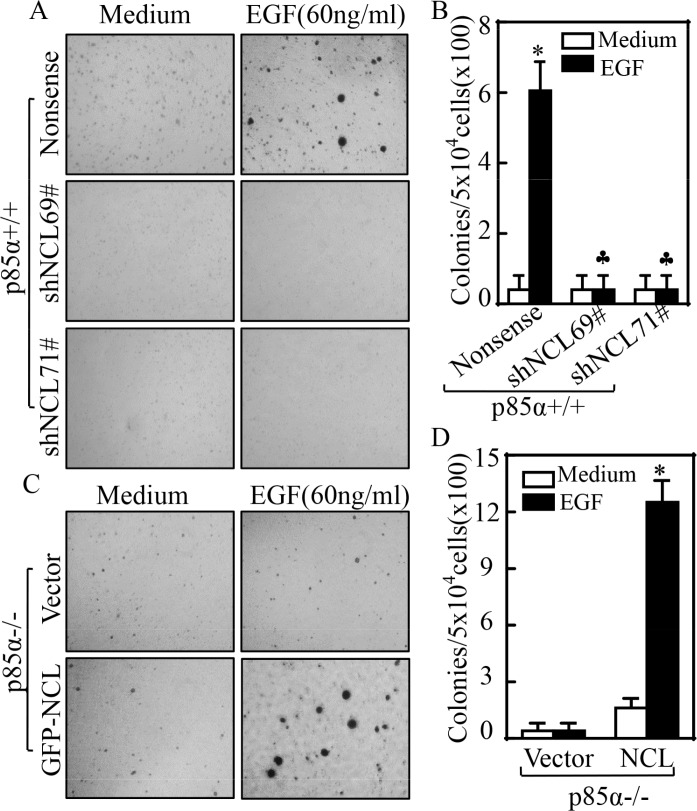
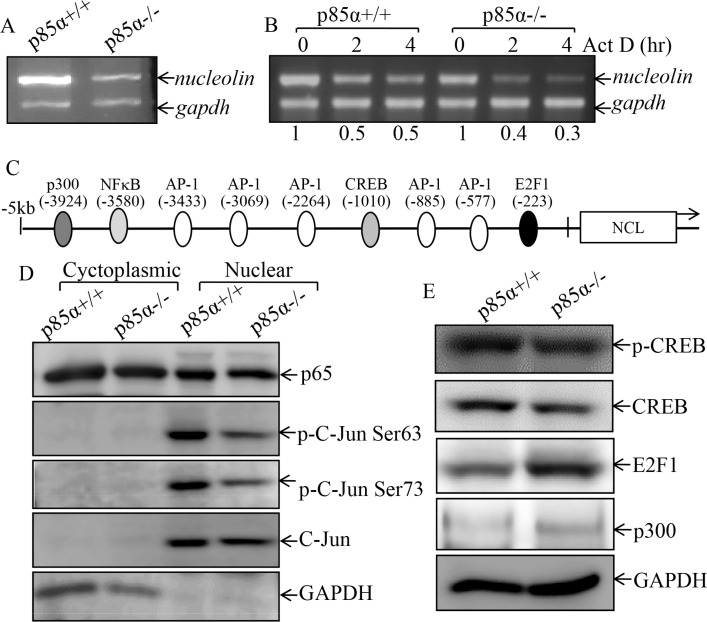
p85α is a regulatory subunit of phosphatidylinositol 3-kinase (PI3K) that is a key lipid enzyme for generating phosphatidylinositol 3, 4, 5-trisphosphate, and subsequently activates signaling that ultimately regulates cell cycle progression, cell growth, cytoskeletal changes, and cell migration. In addition to form a complex with the p110 catalytic subunit, p85α also exists as a monomeric form due to that there is a greater abundance of p85α than p110 in many cell types. Our previous studies have demonstrated that monomeric p85α exerts a pro-apoptotic role in UV response through induction of TNF-α gene expression in PI3K-independent manner. In current studies, we identified a novel biological function of p85α as a positive regulator of epidermal growth factor receptor (EGFR) expression and cell malignant transformation via nucleolin-dependent mechanism. Our results showed that p85α was crucial for EGFR and nucleolin expression and subsequently resulted in an increase of malignant cellular transformation by using both specific knockdown and deletion of p85α in its normal expressed cells. Mechanistic studies revealed that p85α upregulated EGFR protein expression mainly through stabilizing its mRNA, whereas nucleolin (NCL) was able to bind to egfr mRNA and increase its mRNA stability. Consistently, overexpression of NCL in p85α-/- cells restored EGFR mRNA stabilization, protein expression and cell malignant transformation. Moreover, we discovered that p85α upregulated NCL gene transcription via enhancing C-Jun activation. Collectively, our studies demonstrate a novel function of p85α as a positive regulator of EGFR mRNA stability and cell malignant transformation, providing a significant insight into the understanding of biomedical nature of p85α protein in mammalian cells and further supporting that p85α might be a potential target for cancer prevention and therapy.
p85α是磷脂酰肌醇3激酶(PI3K)的一个调节亚基,PI3K是一种关键的脂质酶,可生成磷脂酰肌醇3,4,5-三磷酸,随后激活信号传导,最终调节细胞周期进程、细胞生长、细胞骨架变化和细胞迁移。除了与p110催化亚基形成复合物外,p85α还以单体形式存在,因为在许多细胞类型中p85α的丰度高于p110。我们之前的研究表明,单体p85α通过以PI3K非依赖的方式诱导TNF-α基因表达,在紫外线反应中发挥促凋亡作用。在当前的研究中,我们确定了p85α的一种新的生物学功能,即通过核仁素依赖的机制作为表皮生长因子受体(EGFR)表达和细胞恶性转化的正调节因子。我们的结果表明,通过在正常表达细胞中特异性敲低和缺失p85α,p85α对EGFR和核仁素表达至关重要,并随后导致恶性细胞转化增加。机制研究表明,p85α主要通过稳定其mRNA上调EGFR蛋白表达,而核仁素(NCL)能够结合egfr mRNA并增加其mRNA稳定性。一致地,在p85α-/-细胞中过表达NCL可恢复EGFR mRNA稳定性、蛋白表达和细胞恶性转化。此外,我们发现p85α通过增强C-Jun激活上调NCL基因转录。总的来说,我们的研究证明了p85α作为EGFR mRNA稳定性和细胞恶性转化正调节因子的新功能,为理解p85α蛋白在哺乳动物细胞中的生物医学性质提供了重要见解,并进一步支持p85α可能是癌症预防和治疗的潜在靶点。