Reed Jennifer L, Harris Jennifer M, Midence Liz, Yee Elizabeth B, Grace Sherry L
Division of Prevention and Rehabilitation, University of Ottawa Heart Institute, 40 Ruskin Street, Ottawa, Ontario, K1Y 4W7, Canada.
School of Kinesiology and Health Science, York University, Toronto, Ontario, Canada.
BMC Public Health. 2016 Feb 27;16:190. doi: 10.1186/s12889-016-2866-7.
Greater availability of community exercise facilities is recommended to promote physical activity in the large number of people with chronic disease. The Heart Wise Exercise (HWE) program encourages existing community-based exercise facilities to build capacity to serve such patients, by working with interested facilities to ensure they meet safety criteria, and educating exercise leaders.
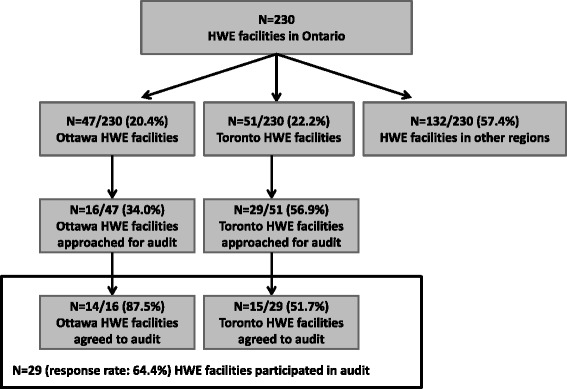
Using a piloted checklist, 45 HWE programs were audited for the six HWE criteria (outlined below) in the greater Ottawa and Toronto areas of Ontario, Canada. A survey was also administered to a convenience sample of HWE program participants (N = 127).
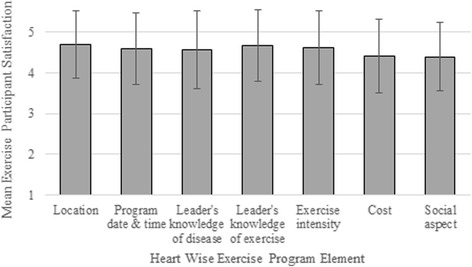
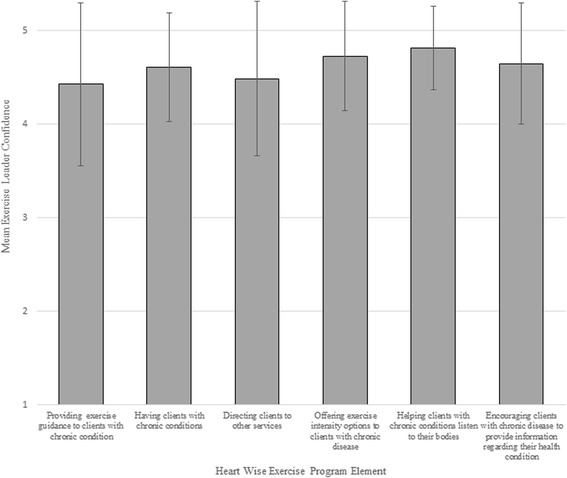
Criteria 1: 71% of leaders encouraged daily aerobic exercise; participants reported engaging in 194 min/week of aerobic exercise. Criteria 2: 100% of programs incorporated a warm-up and cool-down, and 84% encouraged self-monitoring during class. Criteria 3: 98% of programs offered options for participants to exercise at their appropriate intensity. Criteria 4: HWE participants reported having chronic conditions including arthritis (41%), osteoporosis (26%) diabetes (8%), heart disease (6%) and chronic obstructive pulmonary disease (6%). Criteria 5: 93% of instructors offered health screening for participants. Criteria 6: 100% of sites had automated external defibrillators, and 90% of the instructors were aware of the documented emergency plan. The exercise leaders reported being 'knowledgeable/comfortable/confident' in providing exercise guidance to, and having clients with chronic health conditions; directing clients to other services; offering exercise intensity options; helping clients listen to their bodies; and, encouraging clients to provide information regarding their health. The participants reported being, on average, 'somewhat happy' to 'very happy' with HWE locations; program dates and times; leaders' knowledge of disease and exercise; exercise intensity; cost; and, social aspect.
HWE programs are safe and appropriate for persons with varying chronic health conditions, and participants are satisfied with and will likely continue attending their HWE classes. Future efforts should be directed at increasing awareness of HWE programs among referring healthcare professionals and participants at risk of chronic conditions. The HWE training program should emphasize that HWE leaders regularly encourage self-monitoring and daily aerobic exercise, which is well-known to reduce the burden of many chronic diseases.
建议增加社区健身设施的可及性,以促进大量慢性病患者的体育活动。心脏健康锻炼(HWE)项目通过与感兴趣的设施合作,确保其符合安全标准,并对锻炼指导人员进行培训,鼓励现有的社区健身设施增强服务此类患者的能力。
使用一份试点清单,对加拿大安大略省大渥太华地区和多伦多地区的45个HWE项目进行六项HWE标准(如下所述)的审核。还对HWE项目参与者的一个便利样本(N = 127)进行了一项调查。
标准1:71%的指导人员鼓励每日进行有氧运动;参与者报告每周进行194分钟的有氧运动。标准2:100%的项目纳入了热身和放松环节,84%的项目鼓励在课程中进行自我监测。标准3:98%的项目为参与者提供了适合其强度的锻炼选择。标准4:HWE参与者报告患有慢性疾病,包括关节炎(41%)、骨质疏松症(26%)、糖尿病(8%)、心脏病(6%)和慢性阻塞性肺疾病(6%)。标准5:93%的指导人员为参与者提供健康筛查。标准6:100%的场所配备了自动体外除颤器,90%的指导人员知晓已记录的应急预案。锻炼指导人员报告在为患有慢性健康问题的客户提供锻炼指导、将客户转介至其他服务、提供锻炼强度选择、帮助客户倾听身体信号以及鼓励客户提供其健康信息方面“知识渊博/自在/自信”。参与者报告平均而言,对HWE场所、项目日期和时间、指导人员对疾病和锻炼的了解、锻炼强度、费用以及社交方面“有些满意”至“非常满意”。
HWE项目对患有不同慢性健康问题的人来说是安全且合适的,参与者对其HWE课程感到满意且可能会继续参加。未来的工作应致力于提高转诊医疗专业人员和有慢性病风险的参与者对HWE项目的认知度。HWE培训项目应强调HWE指导人员要经常鼓励自我监测和每日有氧运动,众所周知,这能减轻许多慢性疾病的负担。