Crowley Jameson T, Strle Klemen, Drouin Elise E, Pianta Annalisa, Arvikar Sheila L, Wang Qi, Costello Catherine E, Steere Allen C
Center for Immunology and Inflammatory Diseases, Division of Rheumatology, Allergy and Immunology, Massachusetts General Hospital, Harvard Medical School, Boston, MA, United States.
Center for Immunology and Inflammatory Diseases, Division of Rheumatology, Allergy and Immunology, Massachusetts General Hospital, Harvard Medical School, Boston, MA, United States.
J Autoimmun. 2016 May;69:24-37. doi: 10.1016/j.jaut.2016.02.005. Epub 2016 Feb 26.
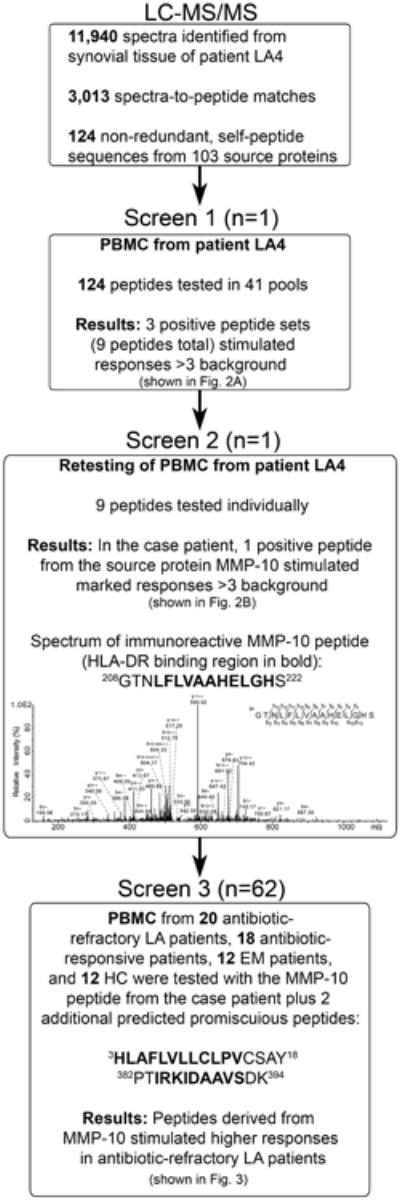
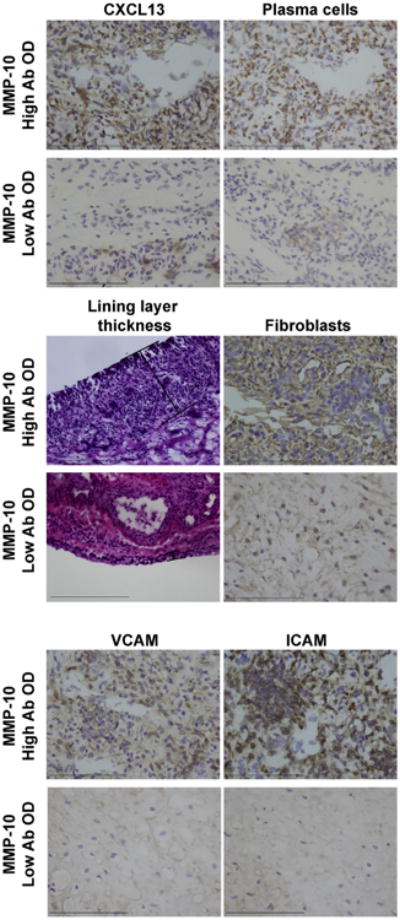
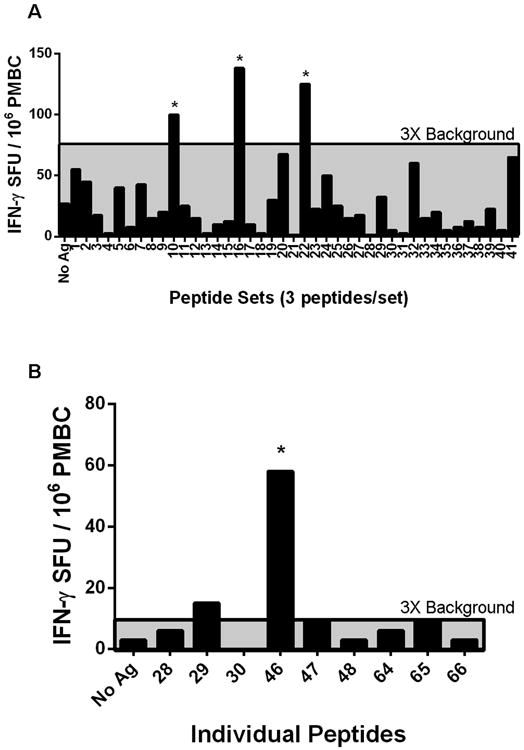
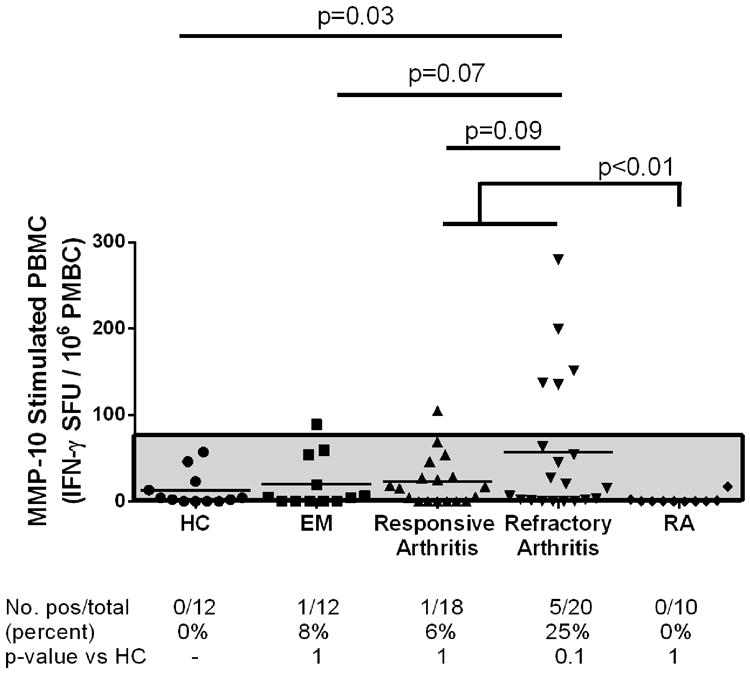
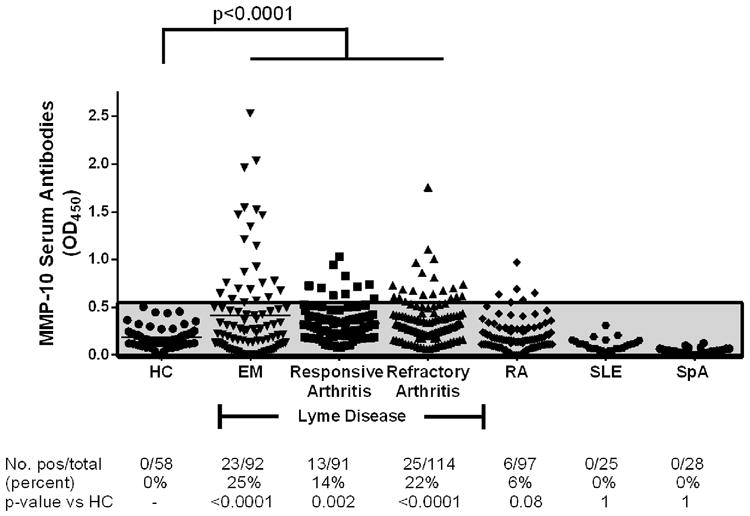
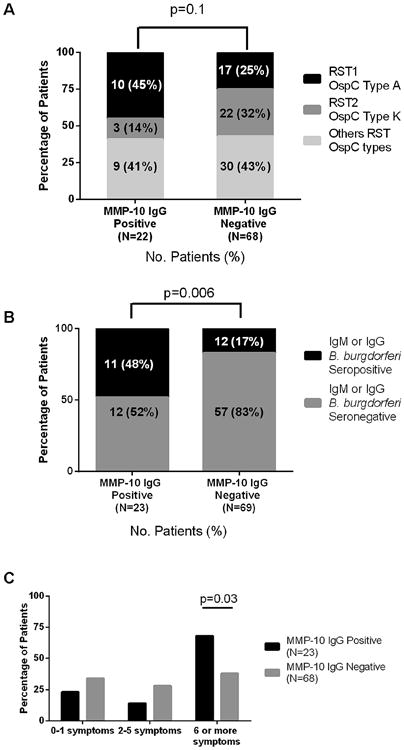
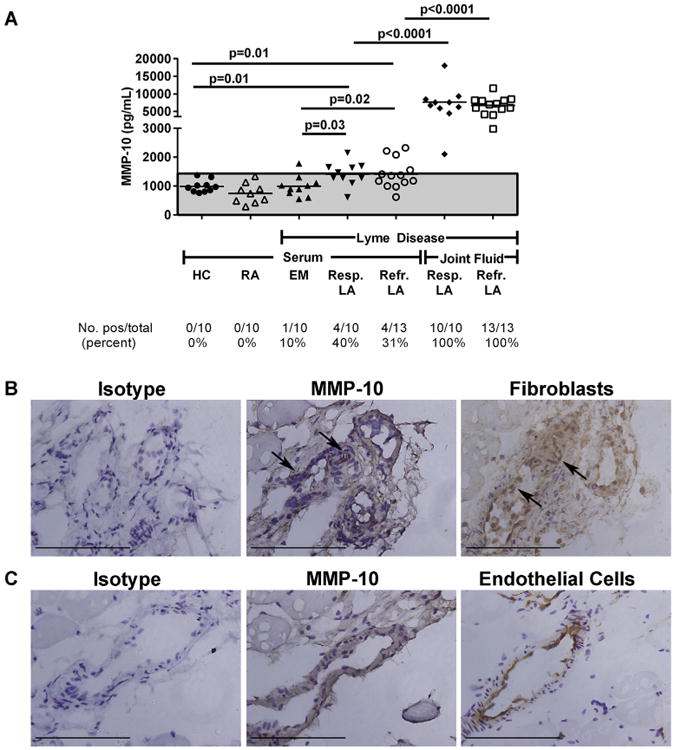
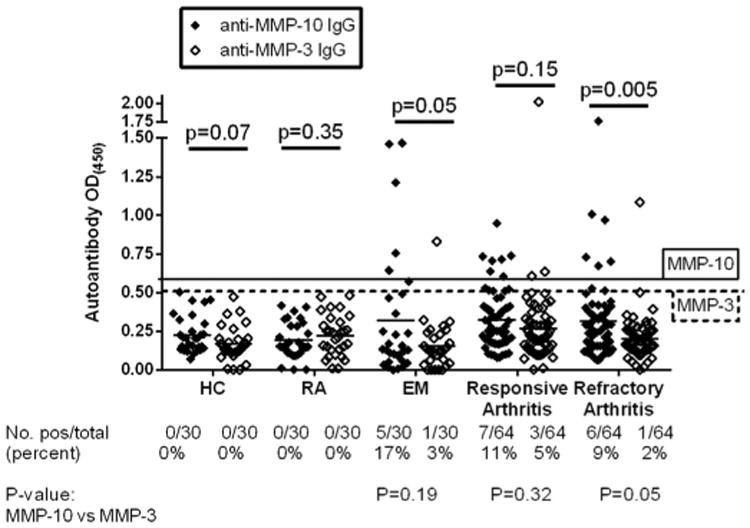
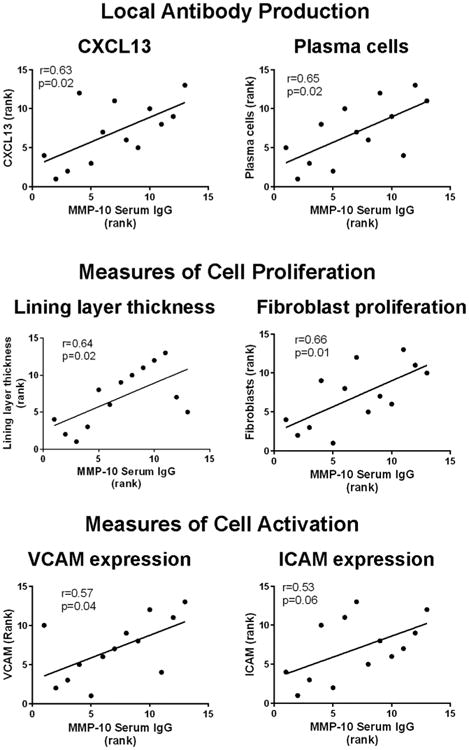
Infection-induced autoimmunity is thought to be a contributing factor in antibiotic-refractory Lyme arthritis, but studies of autoimmunity have been hindered by difficulty in identifying relevant autoantigens. We developed a novel approach that begins with the identification of T cell epitopes in synovial tissue using tandem mass spectrometry. Herein, we identified an immunogenic HLA-DR-presented peptide (T cell epitope) derived from the source protein matrix metalloproteinase-10 (MMP-10) from the synovium of a patient with antibiotic-refractory arthritis. This finding provided a bridge for the identification of autoantibody responses to MMP-10, the "first autoimmune hit" in a subgroup of patients with erythema migrans, the initial skin lesion of the infection. Months later, after priming of the immune response to MMP-10 in early infection, a subset of patients with antibiotic-responsive or antibiotic-refractory arthritis had MMP-10 autoantibodies, but only patients with antibiotic-refractory arthritis had both T and B cell responses to the protein, providing evidence for a "second autoimmune hit". Further support for a biologically relevant autoimmune event was observed by the positive correlation of anti-MMP-10 autoantibodies with distinct synovial pathology. This experience demonstrates the power of new, discovery-based methods to identify relevant autoimmune responses in chronic inflammatory forms of arthritis.
感染诱导的自身免疫被认为是抗生素难治性莱姆关节炎的一个促成因素,但由于难以识别相关自身抗原,自身免疫的研究受到了阻碍。我们开发了一种新方法,该方法首先使用串联质谱法识别滑膜组织中的T细胞表位。在此,我们从一名抗生素难治性关节炎患者的滑膜中鉴定出一种由免疫原性HLA - DR呈递的肽(T细胞表位),其来源于源蛋白基质金属蛋白酶 - 10(MMP - 10)。这一发现为识别针对MMP - 10的自身抗体反应提供了桥梁,MMP - 10是游走性红斑(感染的初始皮肤病变)亚组患者中的“首次自身免疫打击”。数月后,在早期感染中对MMP - 10的免疫反应启动后,一部分对抗生素有反应或抗生素难治性关节炎患者产生了MMP - 10自身抗体,但只有抗生素难治性关节炎患者对该蛋白同时有T细胞和B细胞反应,这为“第二次自身免疫打击”提供了证据。抗MMP - 10自身抗体与明显的滑膜病理呈正相关,这进一步支持了生物学上相关的自身免疫事件。这一经验证明了基于发现的新方法在识别慢性炎症性关节炎中相关自身免疫反应方面的作用。