Svirskaitė Julija, Oksanen Hanna M, Daugelavičius Rimantas, Bamford Dennis H
Department of Biosciences, Institute of Biotechnology, University of Helsinki, Viikinkaari 9, 00014 Helsinki, Finland.
Department of Biochemistry, Vytautas Magnus University, Vileikos g. 8, 44404 Kaunas, Lithuania.
Viruses. 2016 Feb 24;8(3):59. doi: 10.3390/v8030059.
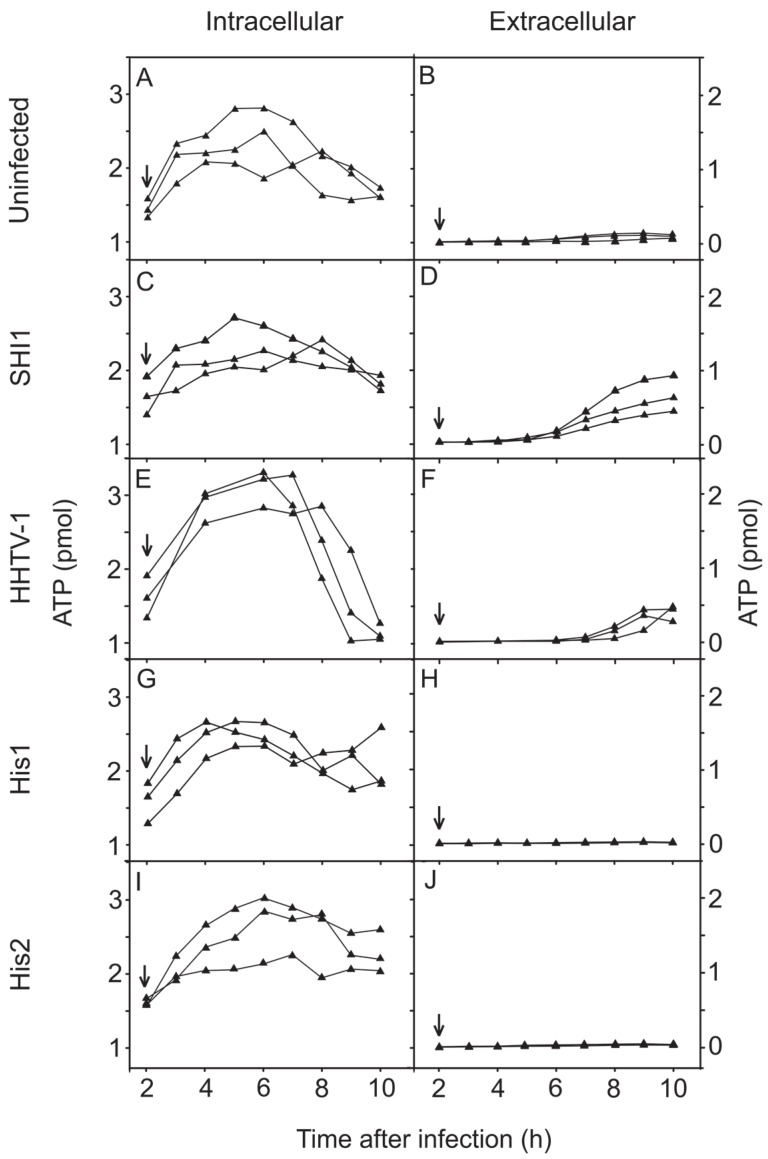
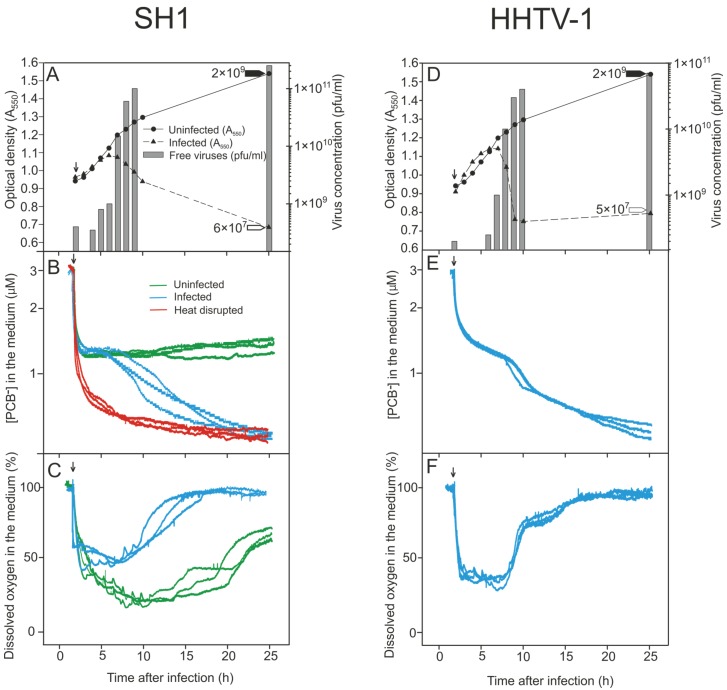
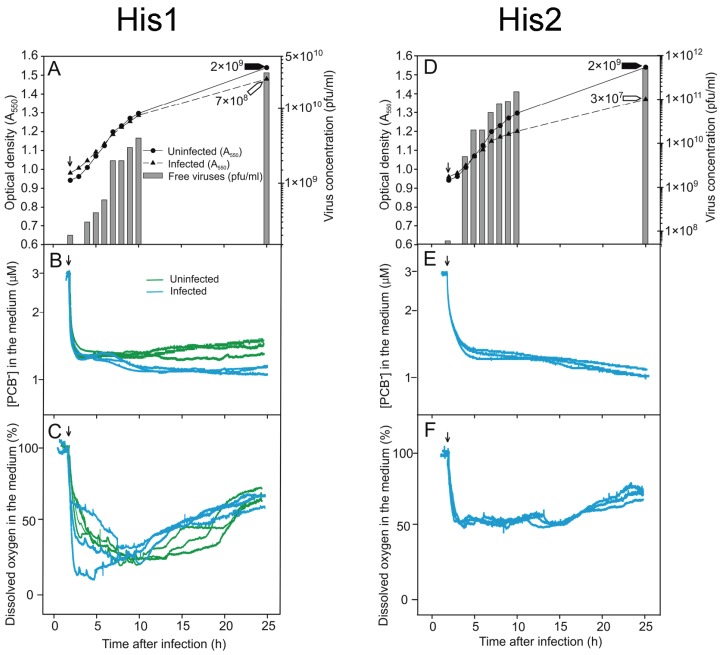
The slow rate of adsorption and non-synchronous release of some archaeal viruses have hindered more thorough analyses of the mechanisms of archaeal virus release. To address this deficit, we utilized four viruses that infect Haloarcula hispanica that represent the four virion morphotypes currently known for halophilic euryarchaeal viruses: (1) icosahedral internal membrane-containing SH1; (2) icosahedral tailed HHTV-1; (3) spindle-shaped His1; and (4) pleomorphic His2. To discern the events occurring as the progeny viruses exit, we monitored culture turbidity, as well as viable cell and progeny virus counts of infected and uninfected cultures. In addition to these traditional metrics, we measured three parameters associated with membrane integrity: the binding of the lipophilic anion phenyldicarbaundecaborane, oxygen consumption, and both intra- and extra-cellular ATP levels.
一些古菌病毒的吸附速率缓慢和释放不同步,这阻碍了对古菌病毒释放机制进行更深入的分析。为了弥补这一不足,我们使用了四种感染西班牙嗜盐嗜碱菌的病毒,它们代表了目前已知的嗜盐广古菌病毒的四种病毒体形态类型:(1)含二十面体内膜的SH1;(2)二十面体有尾的HHTV-1;(3)纺锤形的His1;以及(4)多形性的His2。为了识别子代病毒释放时发生的事件,我们监测了培养物的浊度,以及感染和未感染培养物中的活细胞和子代病毒数量。除了这些传统指标外,我们还测量了与膜完整性相关的三个参数:亲脂性阴离子苯基二碳硼烷的结合、耗氧量以及细胞内和细胞外ATP水平。