Jiang Guoqing, Zhang Long, Zhu Qin, Bai Dousheng, Zhang Chuanyong, Wang Xuehao
Department of Hepatobiliary Surgery, Clinical Medical College of Yangzhou University, Yangzhou, P.R. China.
Key Laboratory of Living Donor Liver Transplantation, Ministry of Public Health; Department of Liver Transplantation Center, The First Affiliated Hospital of Nanjing Medical University, Nanjing, P.R. China.
J Exp Clin Cancer Res. 2016 Feb 29;35:38. doi: 10.1186/s13046-016-0313-3.
Hepatocellular carcinoma (HCC) is the third leading cause of cancer-related mortality worldwide. Recurrence and metastasis after curative resection remain critical obstacles in HCC treatment. CD146 predicted poor prognosis of a variety of cancers including melanoma, breast tumors, prostate cancer, and gastric cancer. However, the role of CD146 in HCC has not yet been systematically explored.
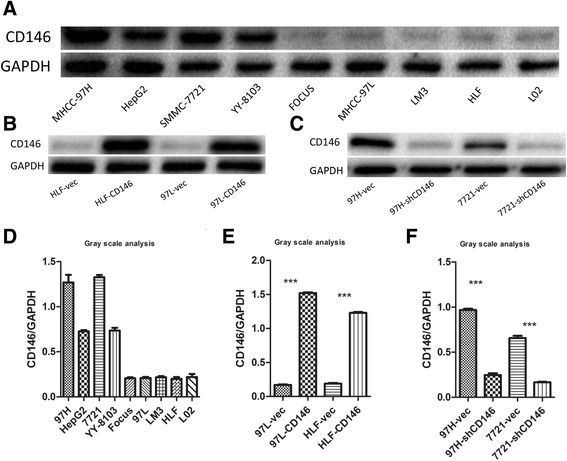
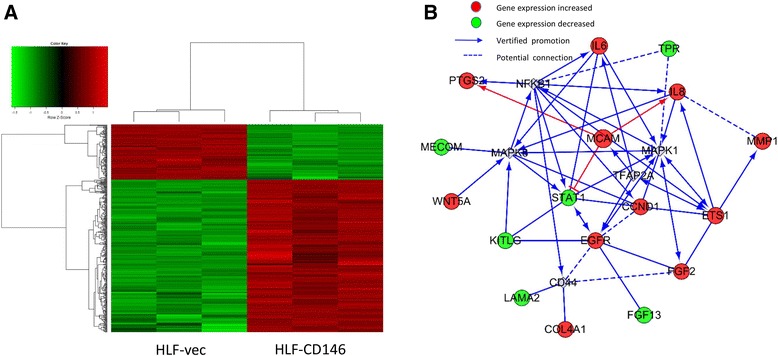
To investigate the role of CD146 in HCC, we evaluated its expression in HCC tissues and HCC cell lines using real-time PCR and western blotting (WB). Second, we established HCC cell lines that stably overexpressed and interfered CD146 and explored the function of CD146 in HCC in vitro and in vivo. Third, we conducted microarray analysis to investigate the potential mechanism by identifying differentially expressed genes. Last, follow ups were conducted to help uncover the connection of CD146 expression and the prognosis of HCC patients.
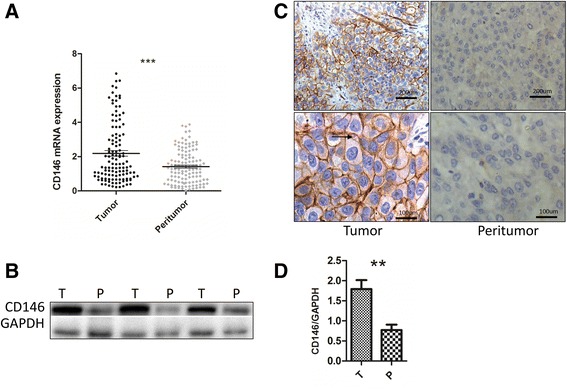
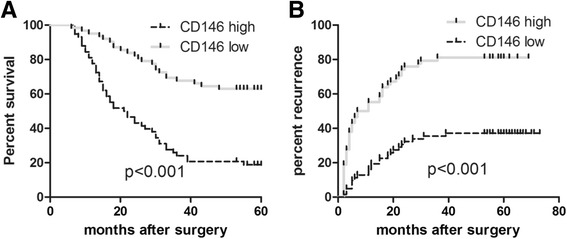
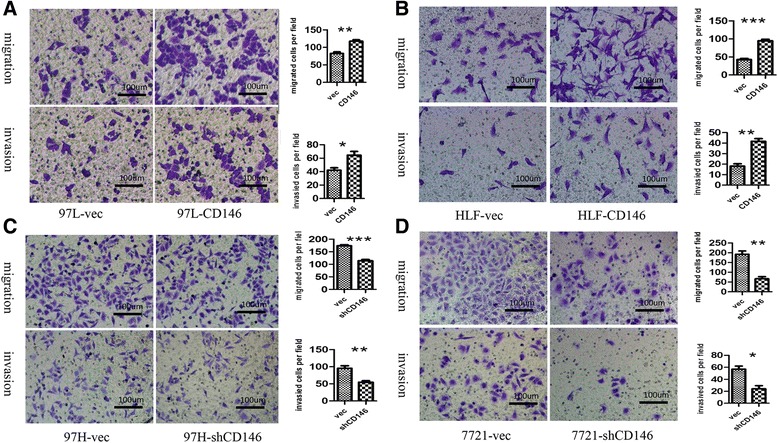
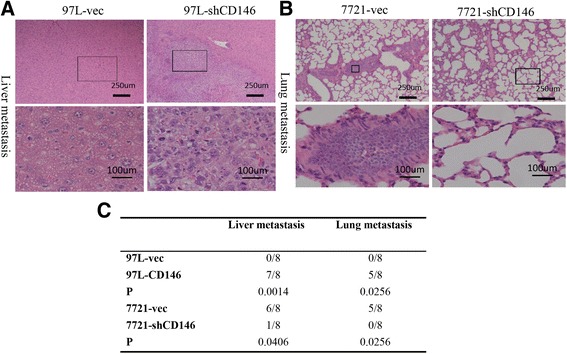
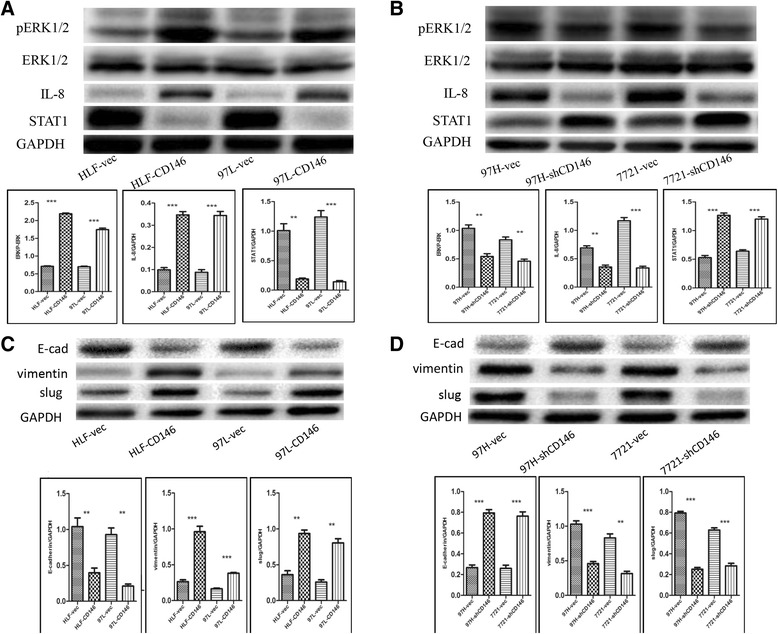
We found that CD146 was overexpressed in HCC tissues and that high CD146 expression predicted poor overall survival time and shorter recurrence period in HCC patients. In vitro and in vivo experiments indicated that CD146 promoted migration and invasion of HCC cell lines. Further study indicated that CD146 promoted epithelial mesenchymal transition (EMT), IL-8 upregulation, and STAT1 downregulation. CD146 was upregulated in HCC tissues and cell lines.
CD146 promoted metastasis of HCC cells and predicted poor prognosis of HCC patients. CD146 induced EMT, and IL-8 upregulation and STAT1 downregulation may be the potential underlying mechanism. The exact mechanism still needs further investigation.
肝细胞癌(HCC)是全球癌症相关死亡的第三大主要原因。根治性切除术后的复发和转移仍然是HCC治疗中的关键障碍。CD146预示包括黑色素瘤、乳腺肿瘤、前列腺癌和胃癌在内的多种癌症预后不良。然而,CD146在HCC中的作用尚未得到系统研究。
为了研究CD146在HCC中的作用,我们使用实时PCR和蛋白质印迹法(WB)评估其在HCC组织和HCC细胞系中的表达。其次,我们建立了稳定过表达和干扰CD146的HCC细胞系,并在体外和体内探索CD146在HCC中的功能。第三,我们进行基因芯片分析以通过鉴定差异表达基因来研究潜在机制。最后,进行随访以帮助揭示CD146表达与HCC患者预后的关系。
我们发现CD146在HCC组织中过表达,并且高CD146表达预示HCC患者总生存时间较差和复发期较短。体外和体内实验表明CD146促进HCC细胞系的迁移和侵袭。进一步研究表明CD146促进上皮间质转化(EMT)、白细胞介素-8上调和信号转导及转录激活因子1(STAT1)下调。CD146在HCC组织和细胞系中上调。
CD146促进HCC细胞转移并预示HCC患者预后不良。CD146诱导EMT,白细胞介素-8上调和信号转导及转录激活因子1下调可能是潜在的机制。确切机制仍需进一步研究。