Mazur Anna, Holthoff Emily, Vadali Shanthi, Kelly Thomas, Post Steven R
Interdisciplinary Biomedical Sciences Program, University of Arkansas for Medical Sciences, Little Rock, Arkansas, United States of America.
Department of Pharmacology and Toxicology, University of Arkansas for Medical Sciences, Little Rock, Arkansas, United States of America.
PLoS One. 2016 Mar 2;11(3):e0150287. doi: 10.1371/journal.pone.0150287. eCollection 2016.
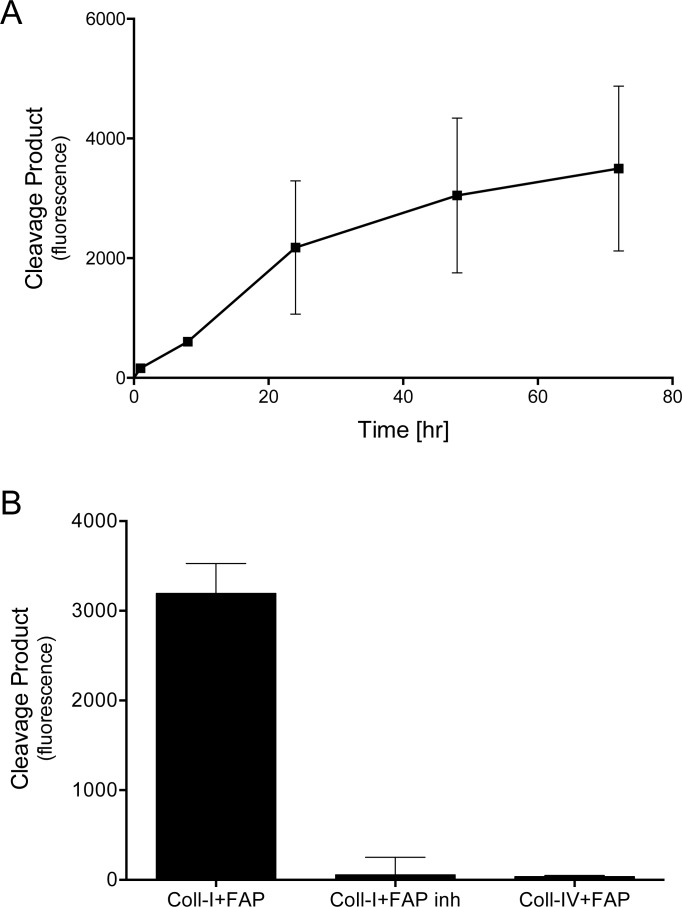
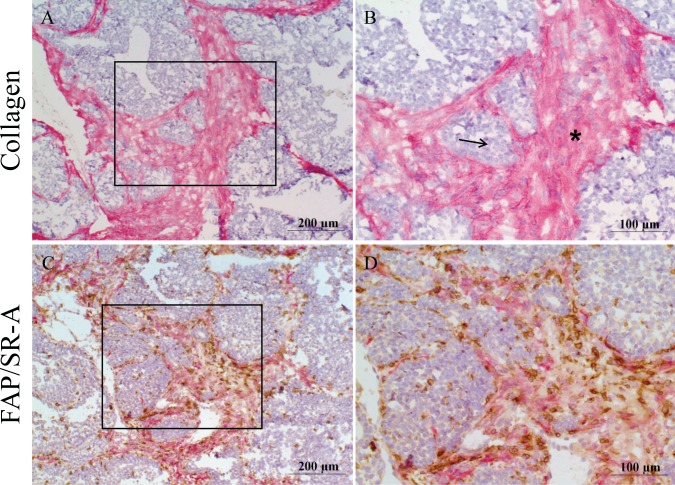
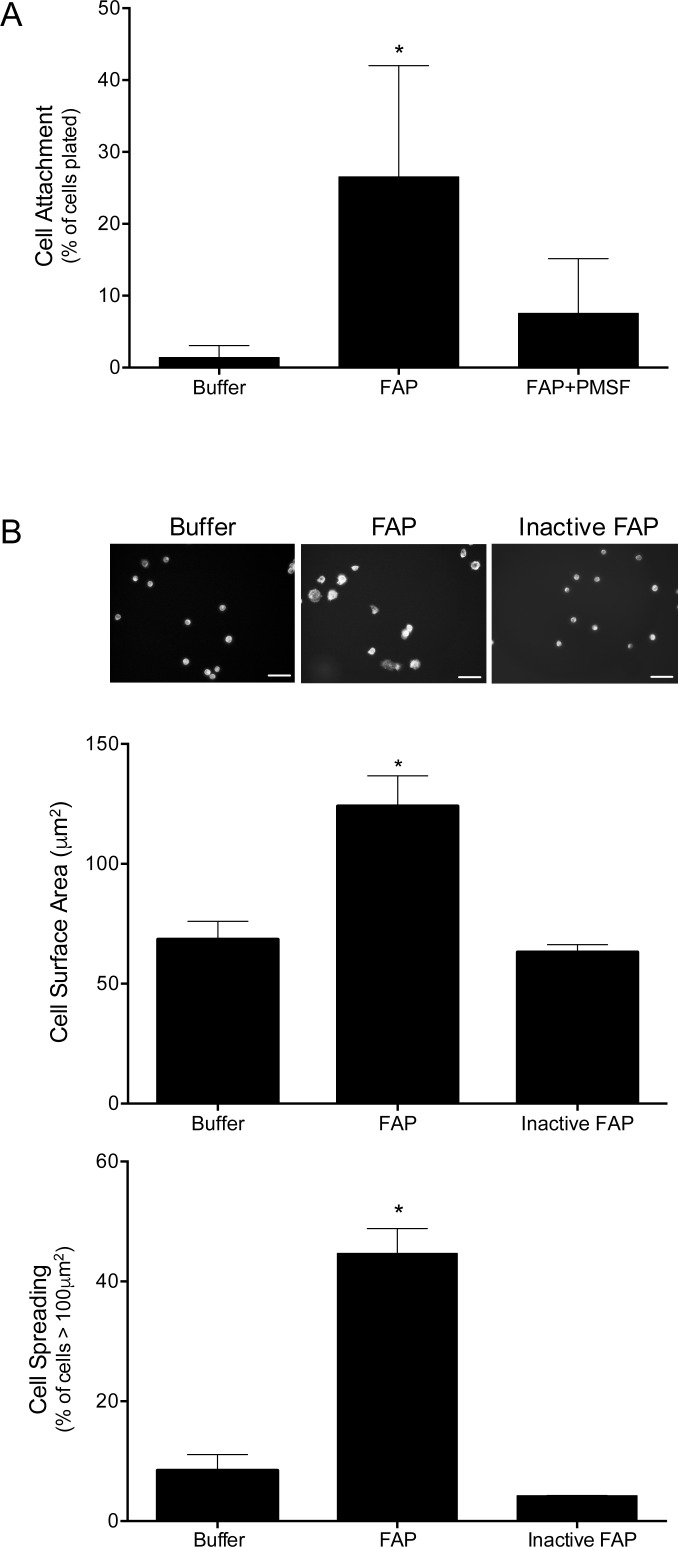
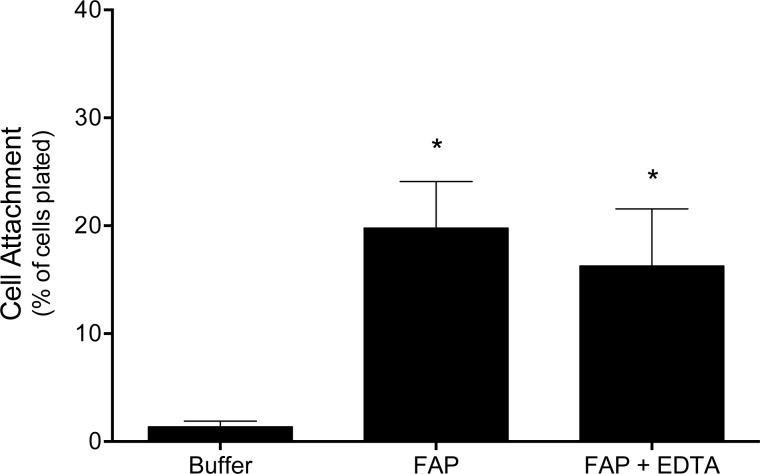
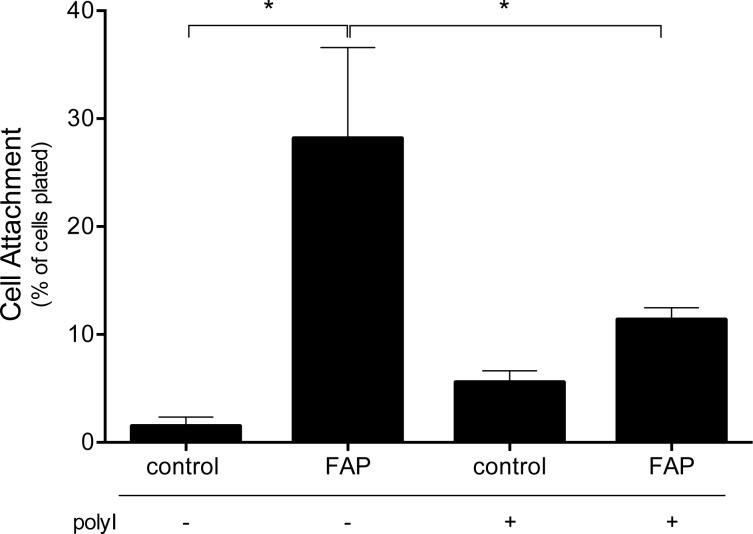
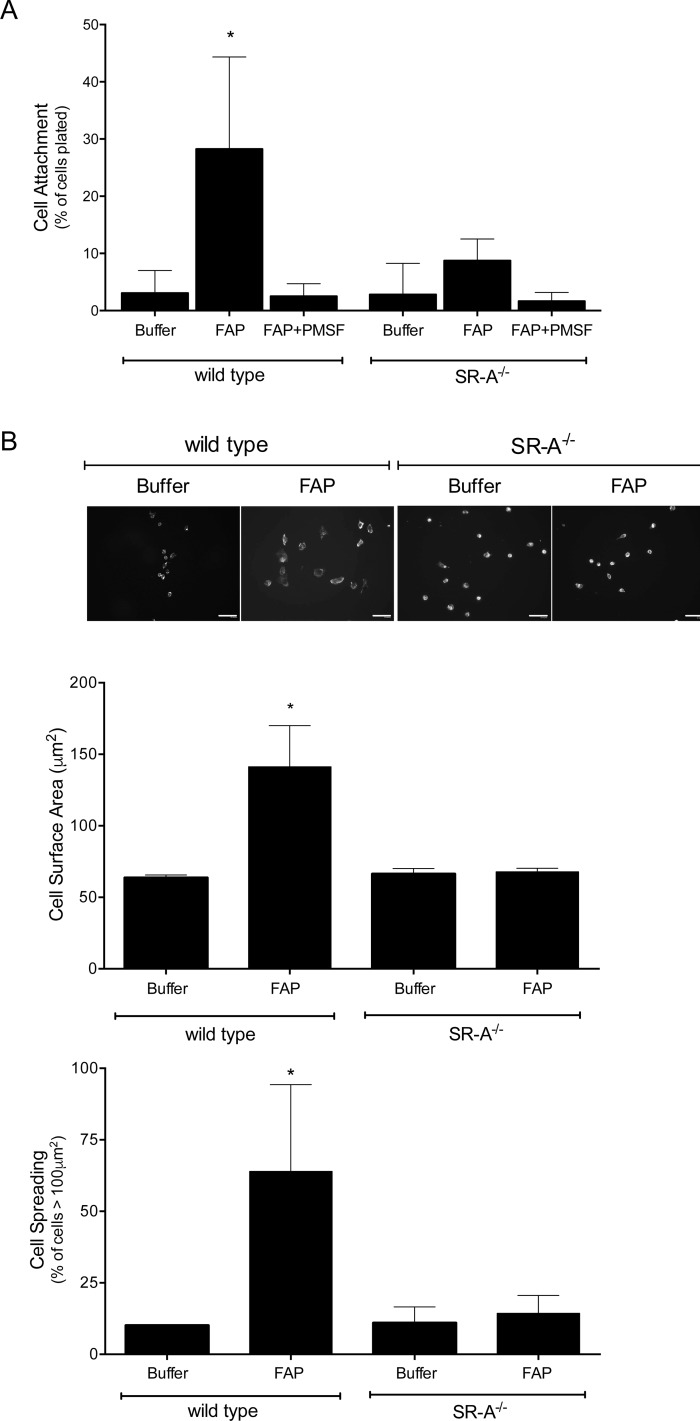
Pathophysiological conditions such as fibrosis, inflammation, and tumor progression are associated with modification of the extracellular matrix (ECM). These modifications create ligands that differentially interact with cells to promote responses that drive pathological processes. Within the tumor stroma, fibroblasts are activated and increase the expression of type I collagen. In addition, activated fibroblasts specifically express fibroblast activation protein-α (FAP), a post-prolyl peptidase. Although FAP reportedly cleaves type I collagen and contributes to tumor progression, the specific pathophysiologic role of FAP is not clear. In this study, the possibility that FAP-mediated cleavage of type I collagen modulates macrophage interaction with collagen was examined using macrophage adhesion assays. Our results demonstrate that FAP selectively cleaves type I collagen resulting in increased macrophage adhesion. Increased macrophage adhesion to FAP-cleaved collagen was not affected by inhibiting integrin-mediated interactions, but was abolished in macrophages lacking the class A scavenger receptor (SR-A/CD204). Further, SR-A expressing macrophages localize with activated fibroblasts in breast tumors of MMTV-PyMT mice. Together, these results demonstrate that FAP-cleaved collagen is a substrate for SR-A-dependent macrophage adhesion, and suggest that by modifying the ECM, FAP plays a novel role in mediating communication between activated fibroblasts and macrophages.
诸如纤维化、炎症和肿瘤进展等病理生理状况与细胞外基质(ECM)的修饰有关。这些修饰产生了与细胞发生不同相互作用的配体,以促进驱动病理过程的反应。在肿瘤基质中,成纤维细胞被激活并增加I型胶原蛋白的表达。此外,活化的成纤维细胞特异性表达成纤维细胞活化蛋白-α(FAP),一种脯氨酰后肽酶。尽管据报道FAP可切割I型胶原蛋白并促进肿瘤进展,但其具体的病理生理作用尚不清楚。在本研究中,使用巨噬细胞黏附试验检测了FAP介导的I型胶原蛋白切割调节巨噬细胞与胶原蛋白相互作用的可能性。我们的结果表明,FAP选择性地切割I型胶原蛋白,导致巨噬细胞黏附增加。巨噬细胞对FAP切割的胶原蛋白的黏附增加不受整合素介导的相互作用抑制的影响,但在缺乏A类清道夫受体(SR-A/CD204)的巨噬细胞中被消除。此外,表达SR-A的巨噬细胞与MMTV-PyMT小鼠乳腺肿瘤中的活化成纤维细胞共定位。总之,这些结果表明,FAP切割的胶原蛋白是SR-A依赖性巨噬细胞黏附的底物,并提示通过修饰ECM,FAP在介导活化的成纤维细胞与巨噬细胞之间的通讯中发挥了新作用。