Kille P, Morgan A J, Powell K, Mosselmans J F W, Hart D, Gunning P, Hayes A, Scarborough D, McDonald I, Charnock J M
Cardiff School of Biosciences, Cardiff University, Park Place, Cardiff CF10 3US, UK.
Cardiff School of Biosciences, Cardiff University, Park Place, Cardiff CF10 3US, UK
Open Biol. 2016 Mar;6(3). doi: 10.1098/rsob.150270.
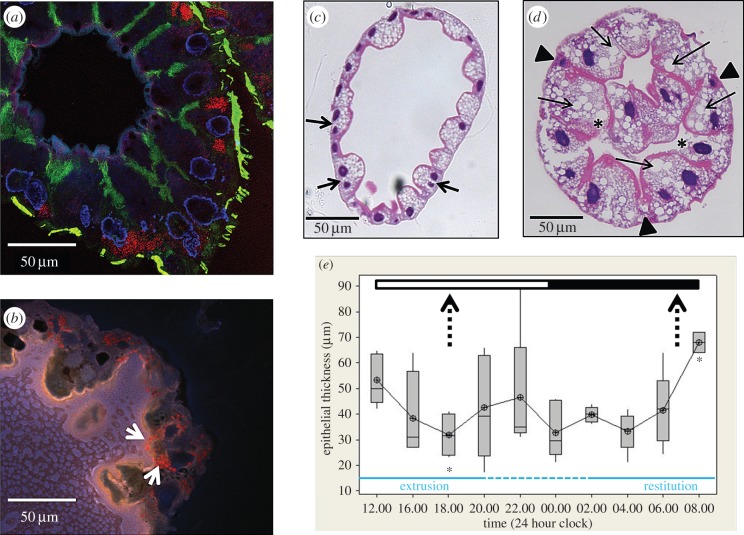
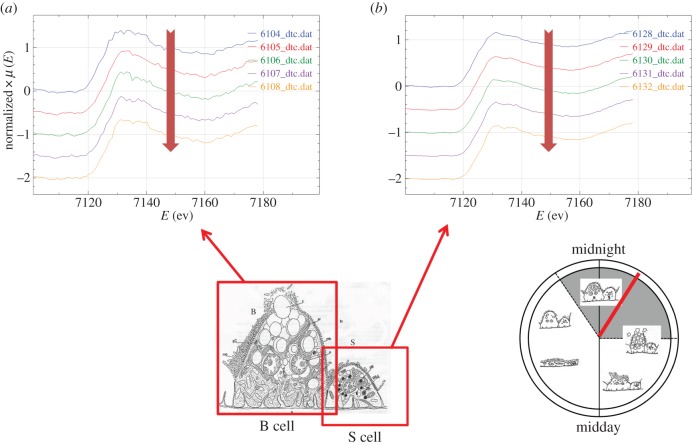
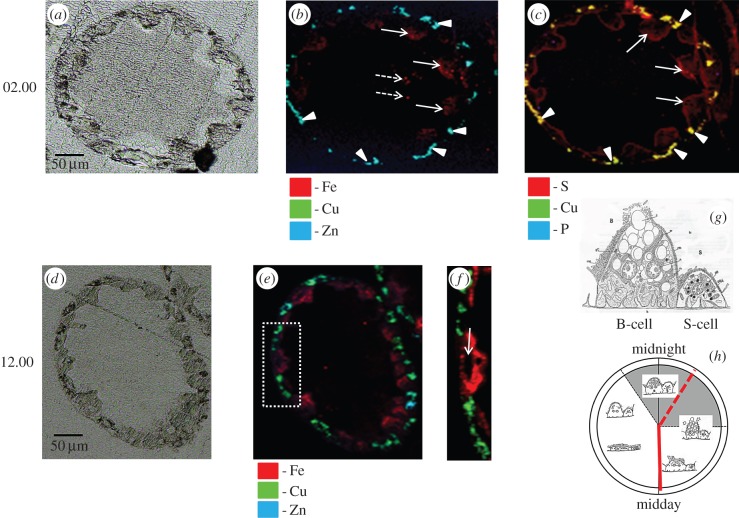
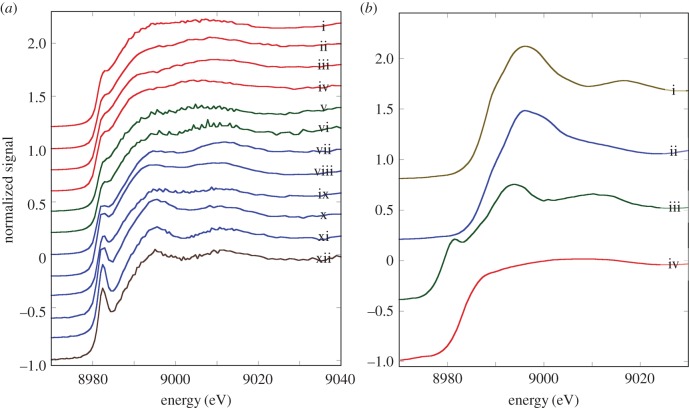
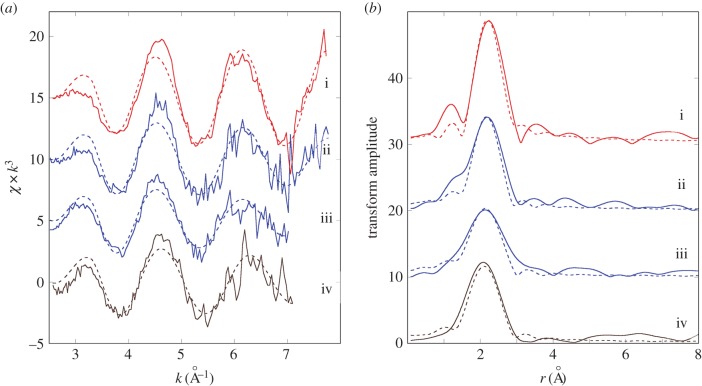
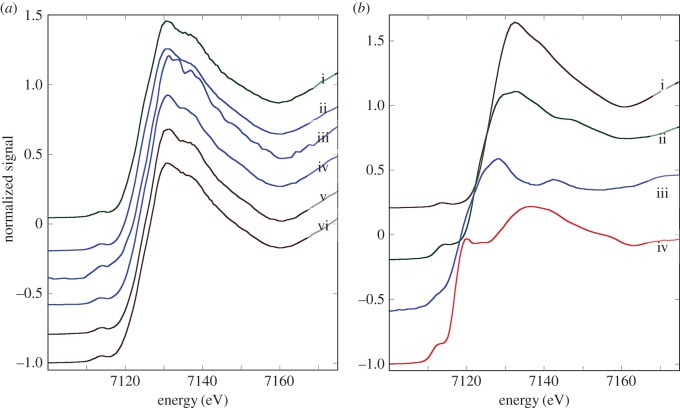
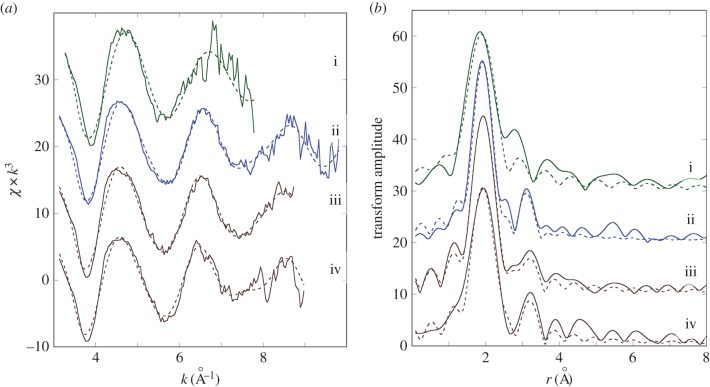
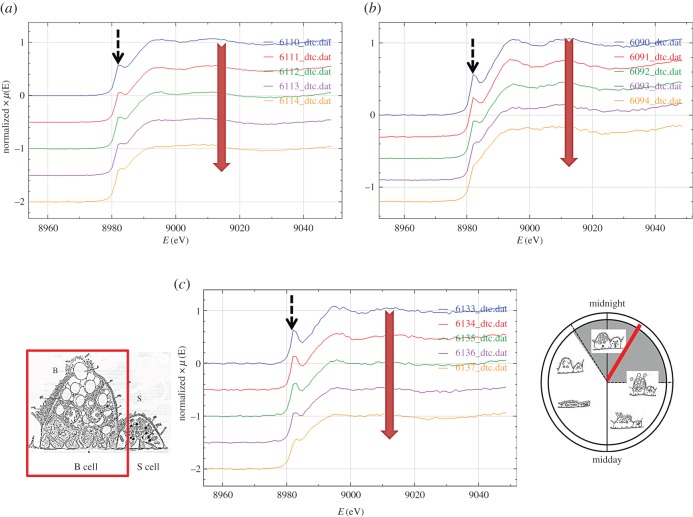
Woodlice efficiently sequester copper (Cu) in 'cuprosomes' within hepatopancreatic 'S' cells. Binuclear 'B' cells in the hepatopancreas form iron (Fe) deposits; these cells apparently undergo an apocrine secretory diurnal cycle linked to nocturnal feeding. Synchrotron-based µ-focus X-ray spectroscopy undertaken on thin sections was used to characterize the ligands binding Cu and Fe in S and B cells of Oniscus asellus (Isopoda). Main findings were: (i) morphometry confirmed a diurnal B-cell apocrine cycle; (ii) X-ray fluorescence (XRF) mapping indicated that Cu was co-distributed with sulfur (mainly in S cells), and Fe was co-distributed with phosphate (mainly in B cells); (iii) XRF mapping revealed an intimate morphological relationship between the basal regions of adjacent S and B cells; (iv) molecular modelling and Fourier transform analyses indicated that Cu in the reduced Cu(+) state is mainly coordinated to thiol-rich ligands (Cu-S bond length 2.3 Å) in both cell types, while Fe in the oxidized Fe(3+) state is predominantly oxygen coordinated (estimated Fe-O bond length of approx. 2 Å), with an outer shell of Fe scatterers at approximately 3.05 Å; and (v) no significant differences occur in Cu or Fe speciation at key nodes in the apocrine cycle. Findings imply that S and B cells form integrated unit-pairs; a functional role for secretions from these cellular units in the digestion of recalcitrant dietary components is hypothesized.
潮虫能有效地将铜(Cu)隔离在肝胰腺“S”细胞内的“铜小体”中。肝胰腺中的双核“B”细胞会形成铁(Fe)沉积物;这些细胞显然经历了一个与夜间进食相关的顶浆分泌昼夜周期。利用基于同步加速器的微聚焦X射线光谱技术对薄片进行分析,以表征普通潮虫(等足目)的S细胞和B细胞中与铜和铁结合的配体。主要发现如下:(i)形态计量学证实了B细胞的顶浆分泌昼夜周期;(ii)X射线荧光(XRF)图谱表明,铜与硫共同分布(主要在S细胞中),铁与磷酸盐共同分布(主要在B细胞中);(iii)XRF图谱显示相邻S细胞和B细胞的基部区域之间存在密切的形态学关系;(iv)分子建模和傅里叶变换分析表明,还原态的Cu(+)中的铜在两种细胞类型中主要与富含硫醇的配体配位(Cu-S键长2.3 Å),而氧化态的Fe(3+)中的铁主要与氧配位(估计Fe-O键长约为2 Å),在约3.05 Å处有一层铁散射体外壳;(v)在顶浆分泌周期的关键节点,铜或铁的形态没有显著差异。这些发现表明,S细胞和B细胞形成了整合的单元对;推测这些细胞单元的分泌物在难消化的饮食成分消化中具有功能作用。