Gruhn Kai Michael, Heyer Christoph Malte, Güttsches Anne-Katrin, Rehmann Robert, Nicolas Volkmar, Schmidt-Wilcke Tobias, Tegenthoff Martin, Vorgerd Matthias, Kley Rudolf Andre
Department of Neurology, Heimer Institute for Muscle Research, University Hospital Bergmannsheil, Ruhr-University, Bochum, Germany.
Institute of Radiology, University Hospital Bergmannsheil, Ruhr-University, Bochum, Germany.
Mol Genet Metab Rep. 2015 Apr 21;3:58-64. doi: 10.1016/j.ymgmr.2015.03.010. eCollection 2015 Jun.
Late-onset Pompe disease (LOPD) is a metabolic myopathy caused by mutations in GAA and characterized by proximal muscle weakness and respiratory insufficiency. There is evidence from clinical studies that enzyme replacement therapy (ERT) with human recombinant alpha-glucosidase improves motor performance and respiratory function in LOPD.
We analyzed quantitative muscle MRI data of lower limbs to evaluate the effects of long-term ERT on muscle parameters.
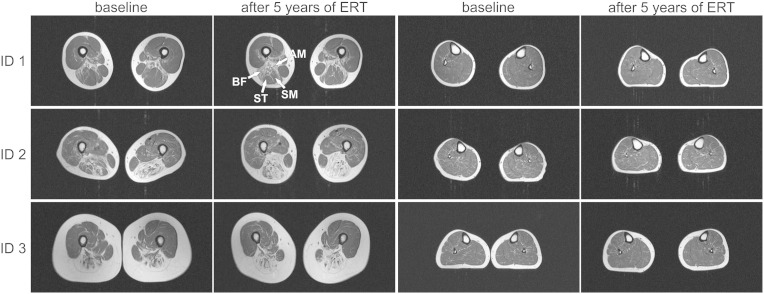
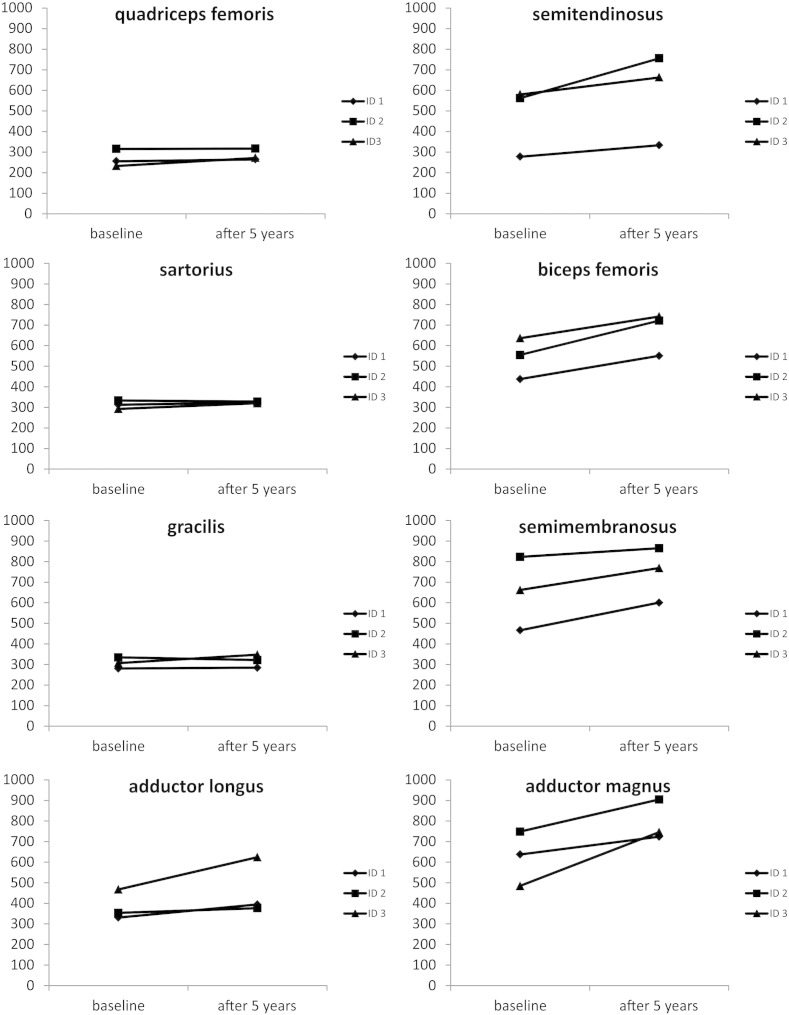
Three symptomatic LOPD patients who received ERT for five years and four untreated presymptomatic LOPD patients were included in the study. T1-weighted MRI images were used to determine volumes of thigh and lower leg muscles. In addition, mean gray values of eight individual thigh muscles were calculated to assess the degree of lipomatous muscle alterations.
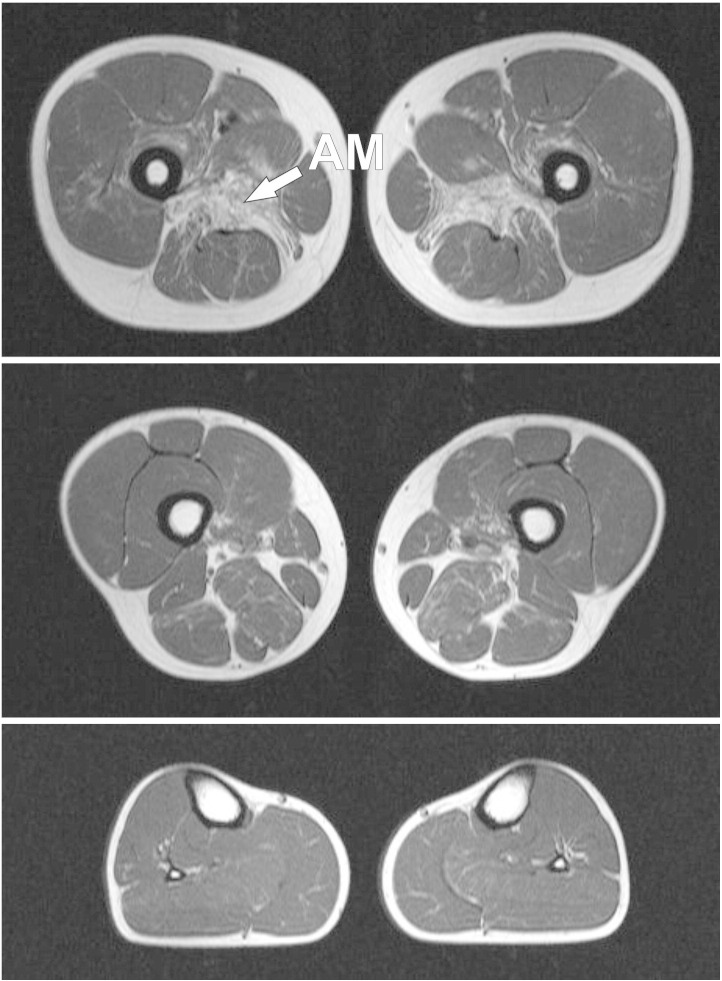
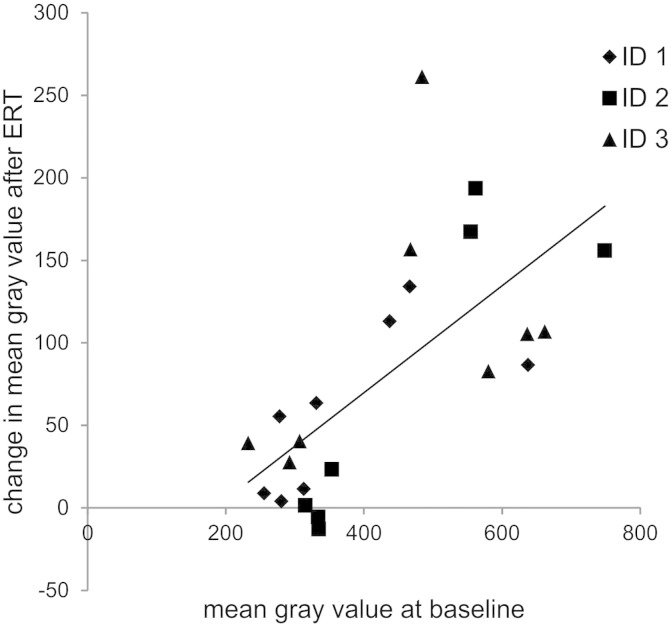
We detected a decrease in thigh muscle volume of 6.7% (p < 0.001) and an increase in lower leg muscle volume of 8.2% (p = 0.049) after five years of ERT. Analysis of individual thigh muscles revealed a positive correlation between the degree of lipomatous muscle alterations at baseline and the increase of gray values after five years of ERT (R(2) = 0.68, p < 0.001). Muscle imaging in presymptomatic patients showed in one case pronounced lipomatous alteration of the adductor magnus muscle and mild to moderate changes in further thigh muscles.
The results demonstrate that fatty muscle degeneration can occur before clinical manifestation of muscle weakness and suggest that mildly affected muscles may respond better to ERT treatment than severely involved muscles. If these findings can be validated by further studies, it should be discussed if muscle alterations detected by muscle MRI may be an objective sign of disease manifestation justifying an early start of ERT in clinically asymptomatic patients in order to improve the long-term outcome.
晚发型庞贝病(LOPD)是一种由酸性α-葡萄糖苷酶(GAA)基因突变引起的代谢性肌病,其特征为近端肌无力和呼吸功能不全。临床研究证据表明,用人重组α-葡萄糖苷酶进行酶替代疗法(ERT)可改善LOPD患者的运动能力和呼吸功能。
我们分析了下肢肌肉的定量MRI数据,以评估长期ERT对肌肉参数的影响。
本研究纳入了3例接受ERT治疗5年的有症状LOPD患者和4例未经治疗的症状前LOPD患者。采用T1加权MRI图像确定大腿和小腿肌肉的体积。此外,计算8块大腿肌肉的平均灰度值,以评估脂肪性肌肉改变的程度。
ERT治疗5年后,我们检测到大腿肌肉体积减少了6.7%(p < 0.001),小腿肌肉体积增加了8.2%(p = 0.049)。对各大腿肌肉的分析显示,基线时脂肪性肌肉改变程度与ERT治疗5年后灰度值增加之间存在正相关(R² = 0.68,p < 0.001)。症状前患者的肌肉成像显示,1例患者的大收肌有明显的脂肪性改变,其他大腿肌肉有轻度至中度改变。
结果表明,脂肪性肌肉退变可在肌无力临床表现之前发生,提示轻度受累肌肉可能比严重受累肌肉对ERT治疗反应更好。如果这些发现能得到进一步研究的验证,那么应讨论肌肉MRI检测到的肌肉改变是否可能是疾病表现的客观标志,从而证明在临床无症状患者中早期开始ERT治疗以改善长期预后是合理的。