Haouzi Philippe, Sonobe Takashi, Judenherc-Haouzi Annick
Division of Pulmonary and Critical Care Medicine, Department of Medicine, College of Medicine, Pennsylvania State University, Hershey, Pennsylvania.
Heart and Vascular Institute, Department of Medicine, College of Medicine, Pennsylvania State University, Hershey, Pennsylvania.
Ann N Y Acad Sci. 2016 Jun;1374(1):29-40. doi: 10.1111/nyas.13015. Epub 2016 Mar 4.
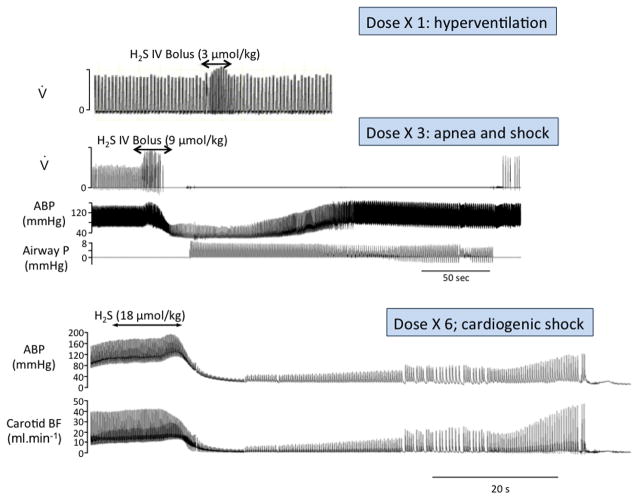
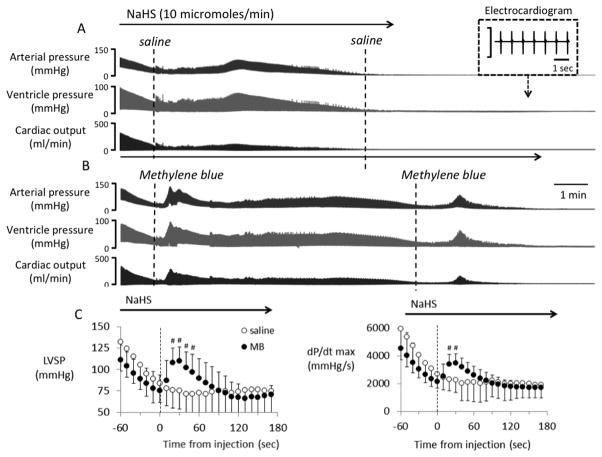
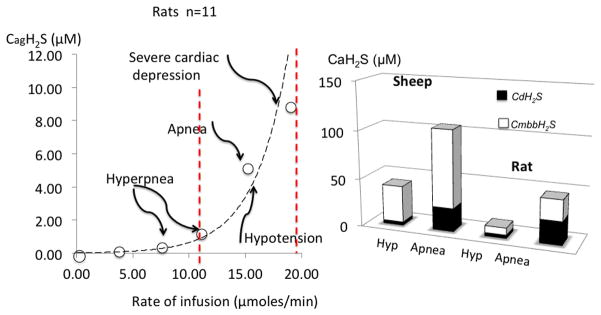
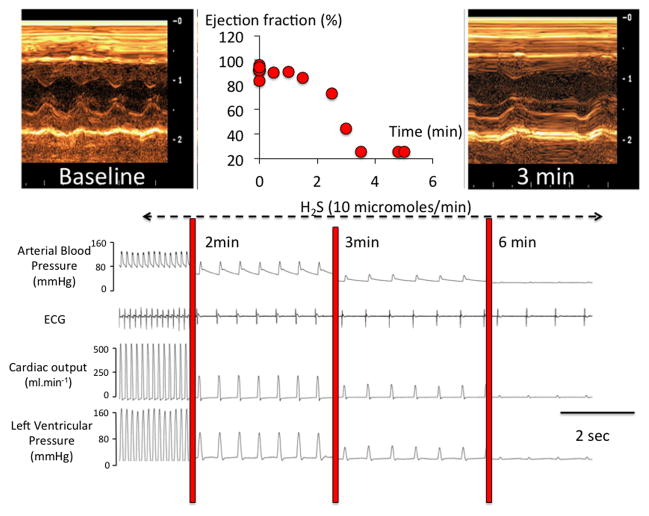
Hydrogen sulfide (H2 S) is a chemical hazard in the gas and farming industry. As it is easy to manufacture from common chemicals, it has also become a method of suicide. H2 S exerts its toxicity through its high affinity with metalloproteins, such as cytochrome c oxidase and possibly via its interactions with cysteine residues of various proteins. The latter was recently proposed to acutely alter ion channels with critical implications for cardiac and brain functions. Indeed, during severe H2 S intoxication, a coma, associated with a reduction in cardiac contractility, develops within minutes or even seconds leading to death by complete electromechanical dissociation of the heart. In addition, long-term neurological deficits can develop owing to the direct toxicity of H2 S on neurons combined with the consequences of a prolonged apnea and circulatory failure. Here, we review the challenges impeding efforts to offer an effective treatment against H2 S intoxication using agents that trap free H2 S, and present novel pharmacological approaches aimed at correcting some of the most harmful consequences of H2 S intoxication.
硫化氢(H₂S)是气体和农业行业中的一种化学危害物。由于它易于用常见化学品制造,它也已成为一种自杀手段。H₂S通过与金属蛋白(如细胞色素c氧化酶)的高亲和力发挥其毒性,并且可能通过其与各种蛋白质的半胱氨酸残基的相互作用发挥毒性。最近有人提出,后者会急性改变离子通道,对心脏和大脑功能产生关键影响。事实上,在严重的H₂S中毒期间,几分钟甚至几秒钟内就会出现与心脏收缩力降低相关的昏迷,最终因心脏完全机电分离而死亡。此外,由于H₂S对神经元的直接毒性以及长时间呼吸暂停和循环衰竭的后果,长期神经功能缺损可能会出现。在此,我们综述了阻碍使用捕获游离H₂S的药物有效治疗H₂S中毒的挑战,并提出了旨在纠正H₂S中毒一些最有害后果的新型药理学方法。