Rosenthal Clive R, Andrews Samantha K, Antoniades Chrystalina A, Kennard Christopher, Soto David
Nuffield Department of Clinical Neurosciences, University of Oxford, Oxford OX3 9DU, England, UK.
Department of Experimental Psychology, University of Oxford, Oxford OX1 3UD, England, UK.
Curr Biol. 2016 Mar 21;26(6):834-41. doi: 10.1016/j.cub.2016.01.040. Epub 2016 Mar 3.
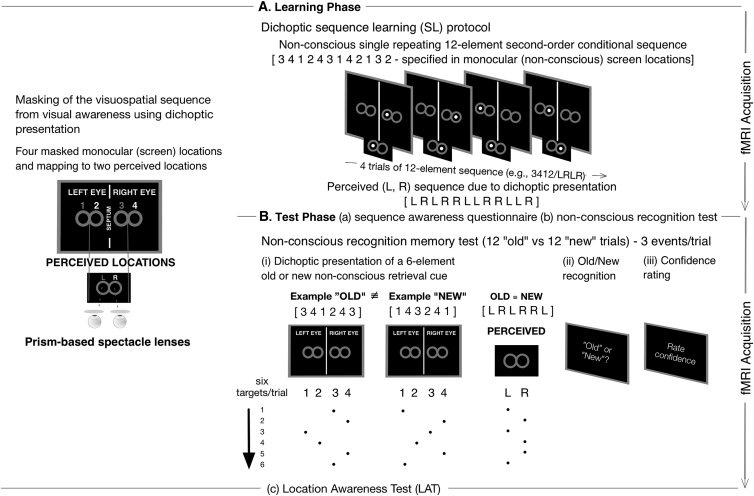
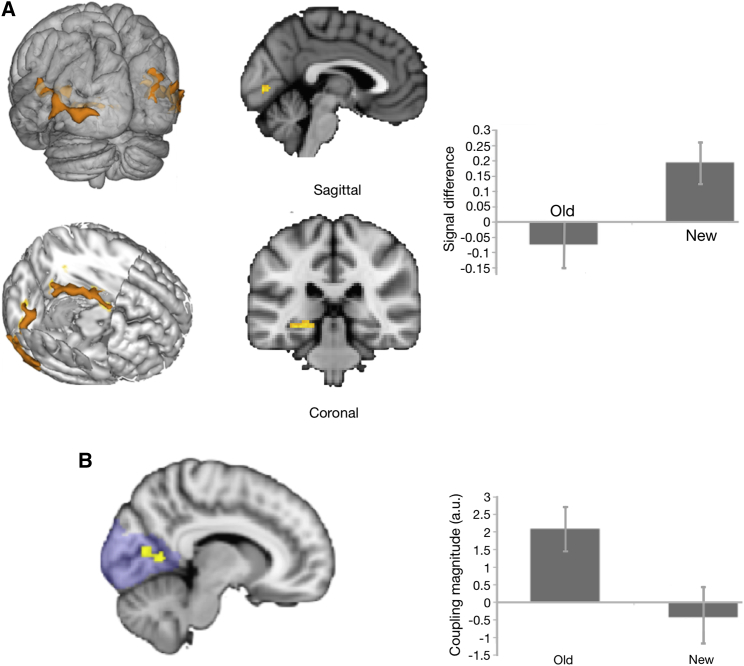
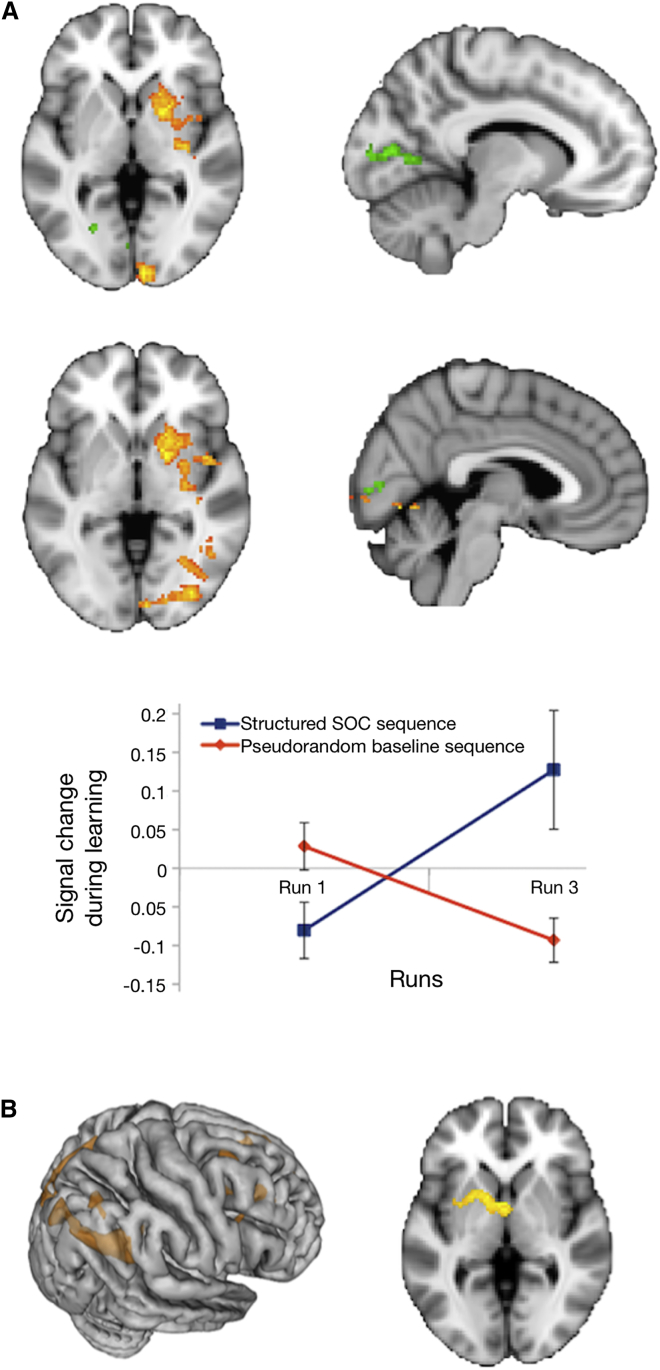
Human primary visual cortex (V1) has long been associated with learning simple low-level visual discriminations [1] and is classically considered outside of neural systems that support high-level cognitive behavior in contexts that differ from the original conditions of learning, such as recognition memory [2, 3]. Here, we used a novel fMRI-based dichoptic masking protocol-designed to induce activity in V1, without modulation from visual awareness-to test whether human V1 is implicated in human observers rapidly learning and then later (15-20 min) recognizing a non-conscious and complex (second-order) visuospatial sequence. Learning was associated with a change in V1 activity, as part of a temporo-occipital and basal ganglia network, which is at variance with the cortico-cerebellar network identified in prior studies of "implicit" sequence learning that involved motor responses and visible stimuli (e.g., [4]). Recognition memory was associated with V1 activity, as part of a temporo-occipital network involving the hippocampus, under conditions that were not imputable to mechanisms associated with conscious retrieval. Notably, the V1 responses during learning and recognition separately predicted non-conscious recognition memory, and functional coupling between V1 and the hippocampus was enhanced for old retrieval cues. The results provide a basis for novel hypotheses about the signals that can drive recognition memory, because these data (1) identify human V1 with a memory network that can code complex associative serial visuospatial information and support later non-conscious recognition memory-guided behavior (cf. [5]) and (2) align with mouse models of experience-dependent V1 plasticity in learning and memory [6].
长期以来,人类初级视觉皮层(V1)一直与学习简单的低层次视觉辨别相关联[1],并且传统上被认为不属于在与原始学习条件不同的情境中支持高层次认知行为的神经系统,比如识别记忆[2,3]。在此,我们采用了一种基于功能磁共振成像(fMRI)的新型双眼分视掩蔽方案——旨在在不受到视觉意识调制的情况下诱发V1的活动——来测试人类V1是否参与人类观察者快速学习并随后(15 - 20分钟)识别一个无意识且复杂的(二阶)视觉空间序列。学习与V1活动的变化相关,这是颞枕叶和基底神经节网络的一部分,这与先前关于“内隐”序列学习的研究中所确定的皮质 - 小脑网络不同,那些研究涉及运动反应和可见刺激(例如[4])。在与有意识检索相关机制无关的条件下,识别记忆与V1活动相关,这是一个涉及海马体的颞枕叶网络的一部分。值得注意的是,学习和识别过程中的V1反应分别预测了无意识识别记忆,并且对于旧的检索线索,V1与海马体之间的功能耦合增强。这些结果为关于能够驱动识别记忆的信号的新假设提供了基础,因为这些数据(1)将人类V1与一个能够编码复杂联想序列视觉空间信息并支持随后无意识识别记忆引导行为的记忆网络联系起来(参见[5]),并且(2)与学习和记忆中依赖经验的V1可塑性的小鼠模型相一致[6]。