Sheen Seungsoo, Lee Keu Sung, Chung Wou Young, Nam Saeil, Kang Dae Ryong
Department of Pulmonary and Critical Care Medicine, Ajou University School of Medicine, Suwon, Republic of Korea.
Department of Humanities and Social Medicine, Ajou University School of Medicine, Suwon, Republic of Korea.
Ann Occup Environ Med. 2016 Mar 3;28:9. doi: 10.1186/s40557-016-0094-3. eCollection 2016.
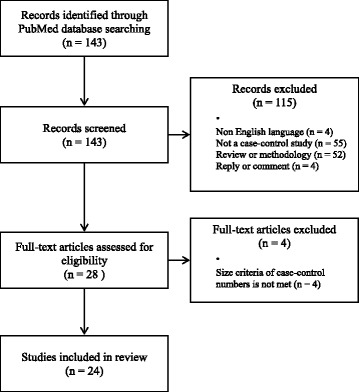
Lung cancer is a leading cause of cancer-related death in the world. Smoking is definitely the most important risk factor for lung cancer. Radon ((222)Rn) is a natural gas produced from radium ((226)Ra) in the decay series of uranium ((238)U). Radon exposure is the second most common cause of lung cancer and the first risk factor for lung cancer in never-smokers. Case-control studies have provided epidemiological evidence of the causative relationship between indoor radon exposure and lung cancer. Twenty-four case-control study papers were found by our search strategy from the PubMed database. Among them, seven studies showed that indoor radon has a statistically significant association with lung cancer. The studies performed in radon-prone areas showed a more positive association between radon and lung cancer. Reviewed papers had inconsistent results on the dose-response relationship between indoor radon and lung cancer risk. Further refined case-control studies will be required to evaluate the relationship between radon and lung cancer. Sufficient study sample size, proper interview methods, valid and precise indoor radon measurement, wide range of indoor radon, and appropriate control of confounders such as smoking status should be considered in further case-control studies.
肺癌是全球癌症相关死亡的主要原因之一。吸烟无疑是肺癌最重要的风险因素。氡((222)Rn)是铀((238)U)衰变系列中镭((226)Ra)产生的一种天然气。接触氡是肺癌的第二大常见病因,也是从不吸烟者患肺癌的首要风险因素。病例对照研究提供了室内氡暴露与肺癌之间因果关系的流行病学证据。通过我们的检索策略,从PubMed数据库中找到了24篇病例对照研究论文。其中,7项研究表明室内氡与肺癌存在统计学上的显著关联。在氡易发地区进行的研究显示氡与肺癌之间的关联更为明显。综述的论文在室内氡与肺癌风险的剂量反应关系上结果不一致。需要进一步开展更精细的病例对照研究来评估氡与肺癌之间的关系。在进一步的病例对照研究中,应考虑足够的研究样本量、恰当的访谈方法、有效且精确的室内氡测量、广泛的室内氡范围以及对吸烟状况等混杂因素的适当控制。