Boutin Alisa, Neumann Susanne, Gershengorn Marvin C
Laboratory of Endocrinology and Receptor Biology, National Institute of Diabetes and Digestive and Kidney Diseases, National Institutes of Health, Bethesda, Maryland 20892.
Endocrinology. 2016 May;157(5):2173-81. doi: 10.1210/en.2015-2040. Epub 2016 Mar 7.
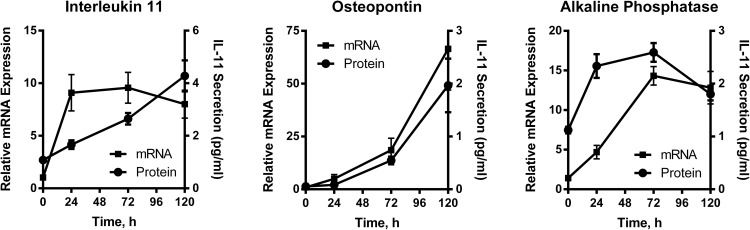
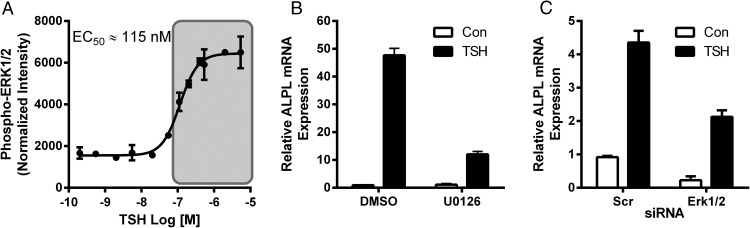
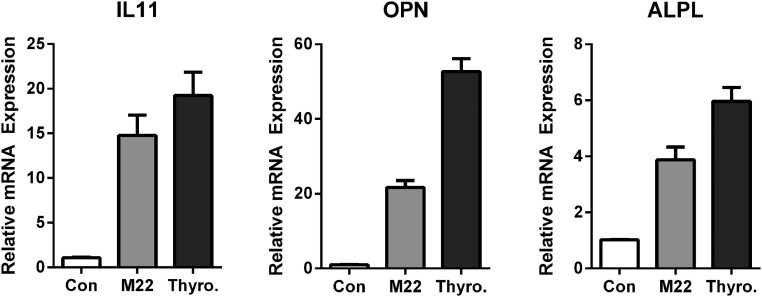
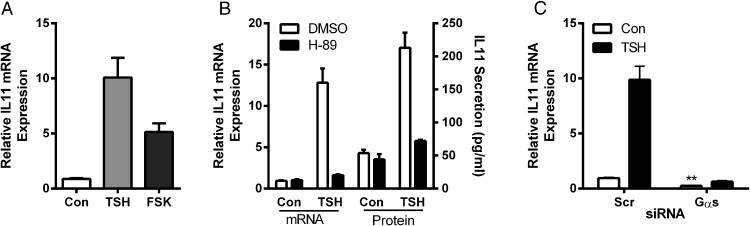
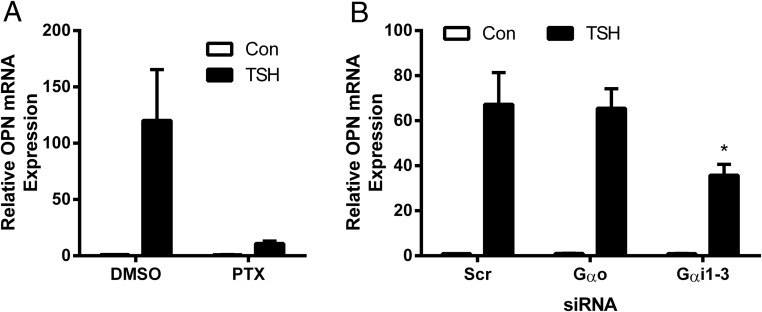
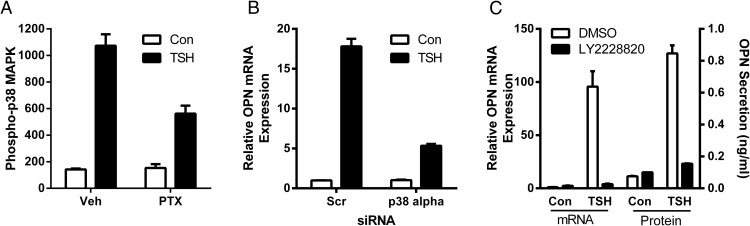
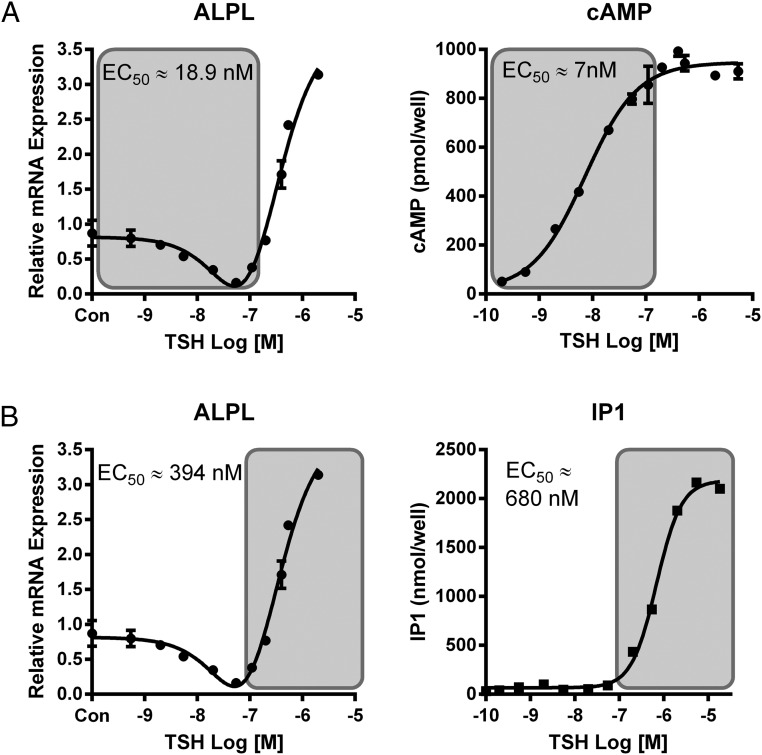
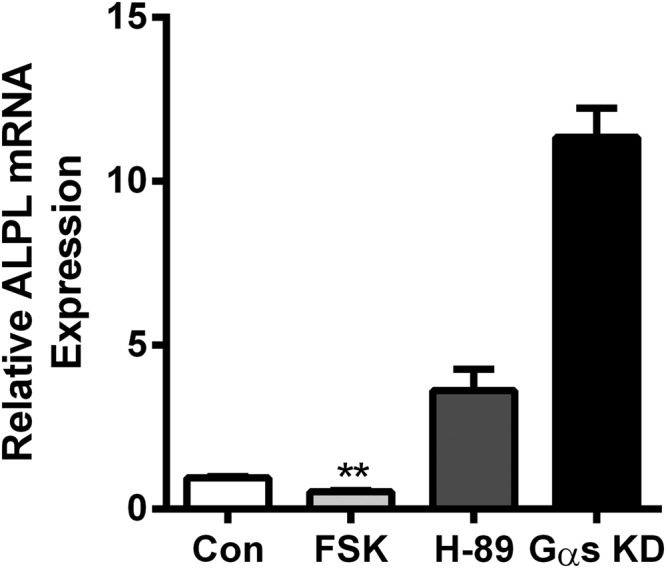
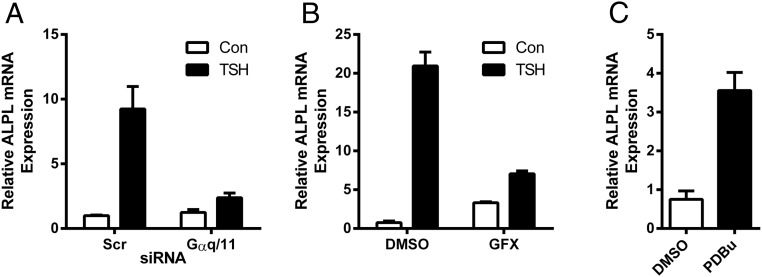
It has been shown that the TSH receptor (TSHR) couples to a number of different signaling pathways, although the Gs-cAMP pathway has been considered primary. Here, we measured the effects of TSH on bone marker mRNA and protein expression in preosteoblast-like U2OS cells stably expressing TSHRs. We determined which signaling cascades are involved in the regulation of IL-11, osteopontin (OPN), and alkaline phosphatase (ALPL). We demonstrated that TSH-induced up-regulation of IL-11 is primarily mediated via the Gs pathway as IL-11 was up-regulated by forskolin (FSK), an adenylyl cyclase activator, and inhibited by protein kinase A inhibitor H-89 and by silencing of Gαs by small interfering RNA. OPN levels were not affected by FSK, but its up-regulation was inhibited by TSHR/Gi-uncoupling by pertussis toxin. Pertussis toxin decreased p38 MAPK kinase phosphorylation, and a p38 inhibitor and small interfering RNA knockdown of p38α inhibited OPN induction by TSH. Up-regulation of ALPL expression required high doses of TSH (EC50 = 395nM), whereas low doses (EC50 = 19nM) were inhibitory. FSK-stimulated cAMP production decreased basal ALPL expression, whereas protein kinase A inhibition by H-89 and silencing of Gαs increased basal levels of ALPL. Knockdown of Gαq/11 and a protein kinase C inhibitor decreased TSH-stimulated up-regulation of ALPL, whereas a protein kinase C activator increased ALPL levels. A MAPK inhibitor and silencing of ERK1/2 inhibited TSH-stimulated ALPL expression. We conclude that TSH regulates expression of different bone markers via distinct signaling pathways.
已表明促甲状腺激素受体(TSHR)可与多种不同的信号通路偶联,尽管Gs - cAMP通路被认为是主要的。在此,我们检测了促甲状腺激素(TSH)对稳定表达TSHR的前成骨细胞样U2OS细胞中骨标志物mRNA和蛋白表达的影响。我们确定了哪些信号级联参与白细胞介素11(IL - 11)、骨桥蛋白(OPN)和碱性磷酸酶(ALPL)的调节。我们证明TSH诱导的IL - 11上调主要通过Gs通路介导,因为IL - 11被腺苷酸环化酶激活剂福斯可林(FSK)上调,并被蛋白激酶A抑制剂H - 89以及通过小干扰RNA沉默Gαs所抑制。OPN水平不受FSK影响,但其上调被百日咳毒素使TSHR与Gi解偶联所抑制。百日咳毒素降低p38丝裂原活化蛋白激酶激酶的磷酸化,并且p38抑制剂和p38α的小干扰RNA敲低抑制TSH诱导的OPN表达。ALPL表达的上调需要高剂量的TSH(半数有效浓度[EC50] = 395nM),而低剂量(EC50 = 19nM)则具有抑制作用。FSK刺激的环磷酸腺苷(cAMP)产生降低了基础ALPL表达,而H - 89抑制蛋白激酶A以及沉默Gαs则增加了ALPL的基础水平。敲低Gαq / 11和蛋白激酶C抑制剂降低了TSH刺激的ALPL上调,而蛋白激酶C激活剂增加了ALPL水平。丝裂原活化蛋白激酶抑制剂和ERK1 / 2的沉默抑制了TSH刺激的ALPL表达。我们得出结论,TSH通过不同的信号通路调节不同骨标志物的表达。