Cruz Mariluze P, Andrade Cassya M F, Silva Kelle O, de Souza Erika P, Yatsuda Regiane, Marques Lucas M, David Juceni P, David Jorge M, Napimoga Marcelo H, Clemente-Napimoga Juliana T
Instituto Multidisciplinar em Saúde, Universidade Federal da Bahia, Vitória da Conquista, BA, Brazil.
Instituto de Química, Universidade Federal da Bahia, Salvador, BA, Brazil.
PLoS One. 2016 Mar 8;11(3):e0150839. doi: 10.1371/journal.pone.0150839. eCollection 2016.
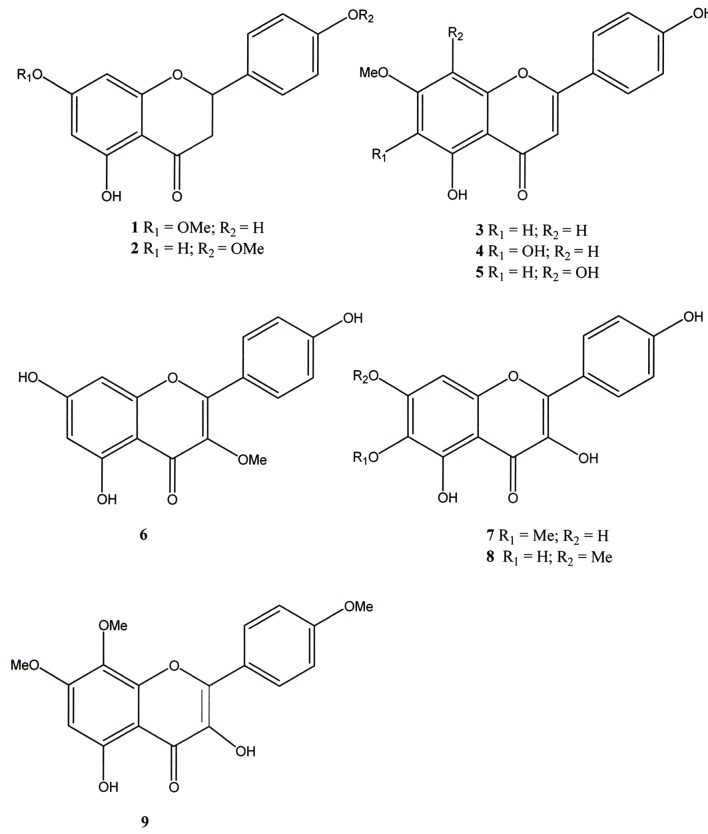
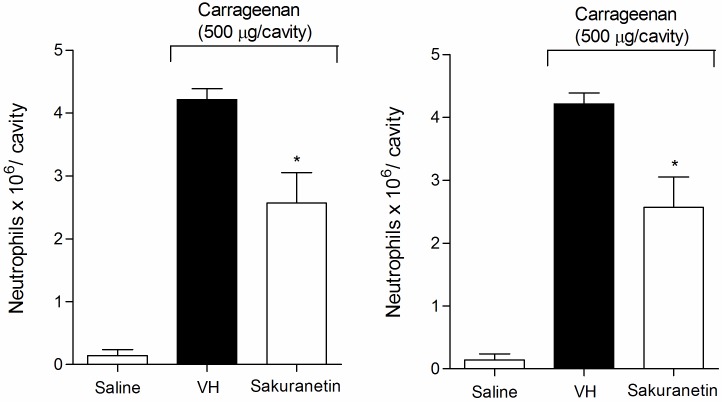
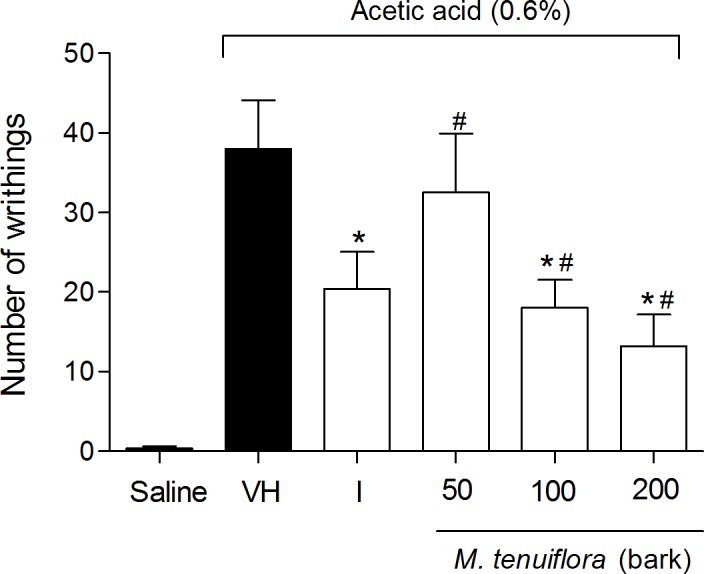
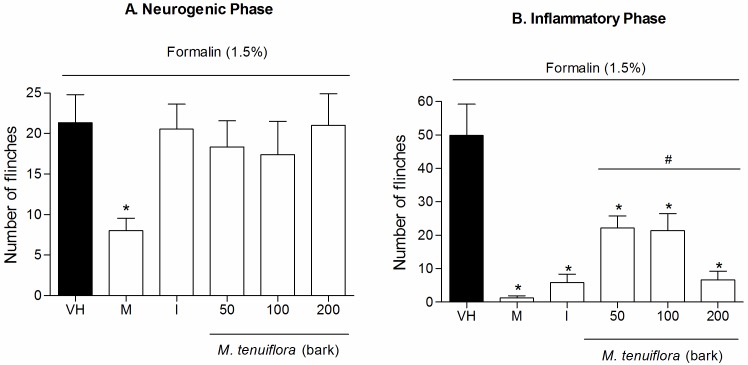
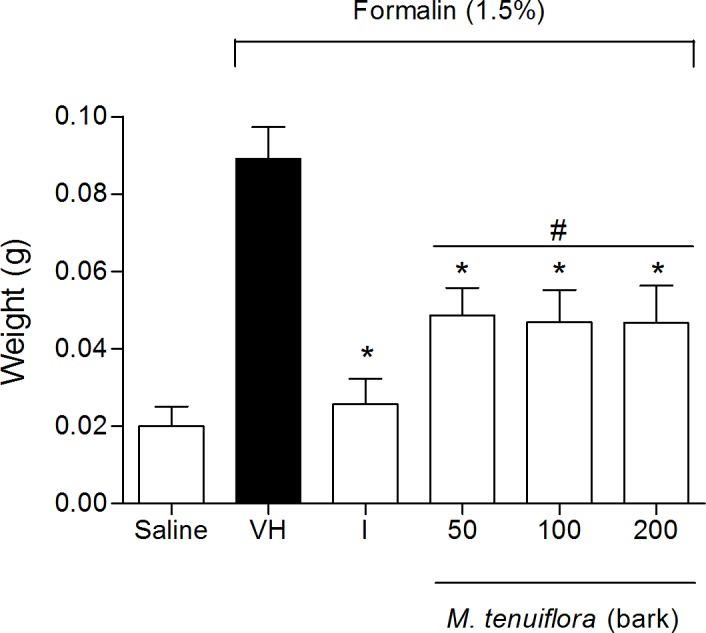
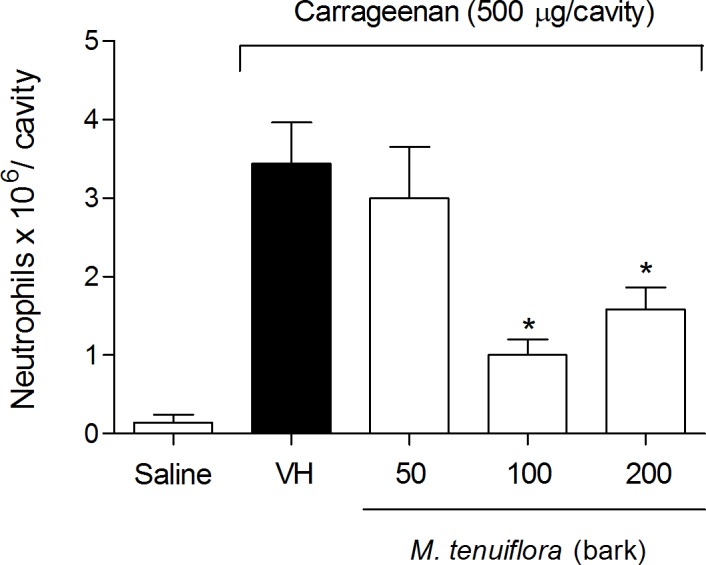
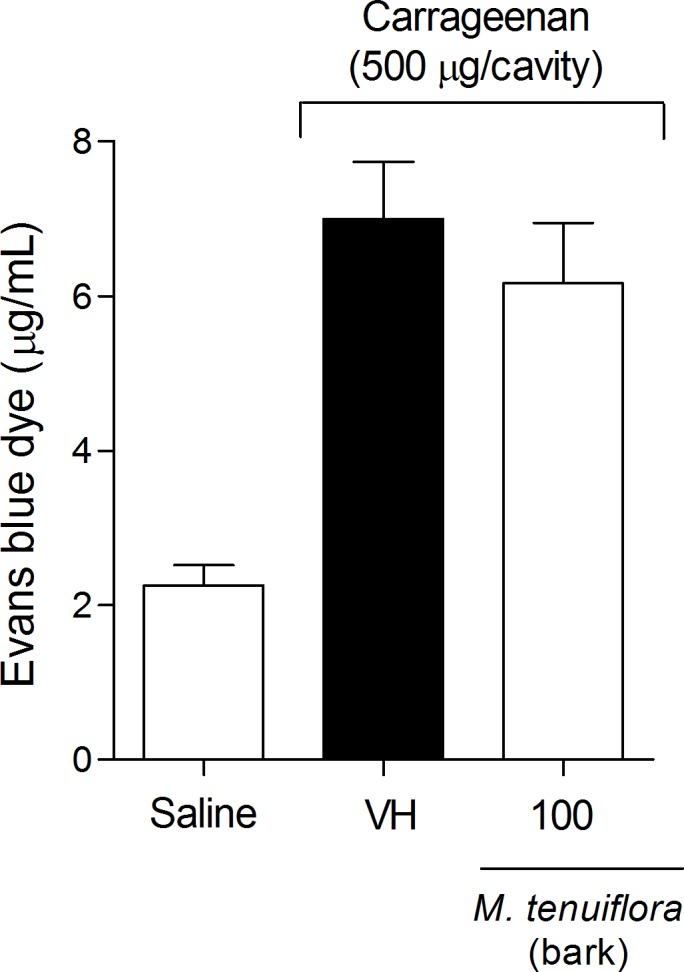
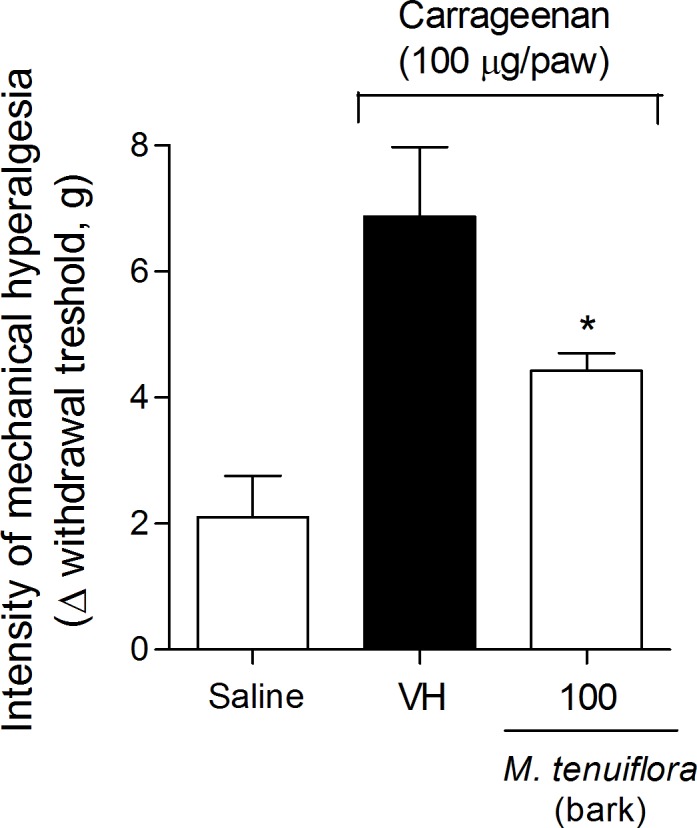
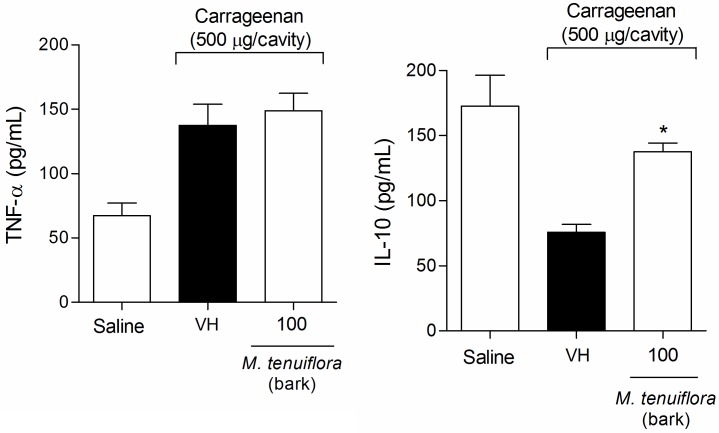
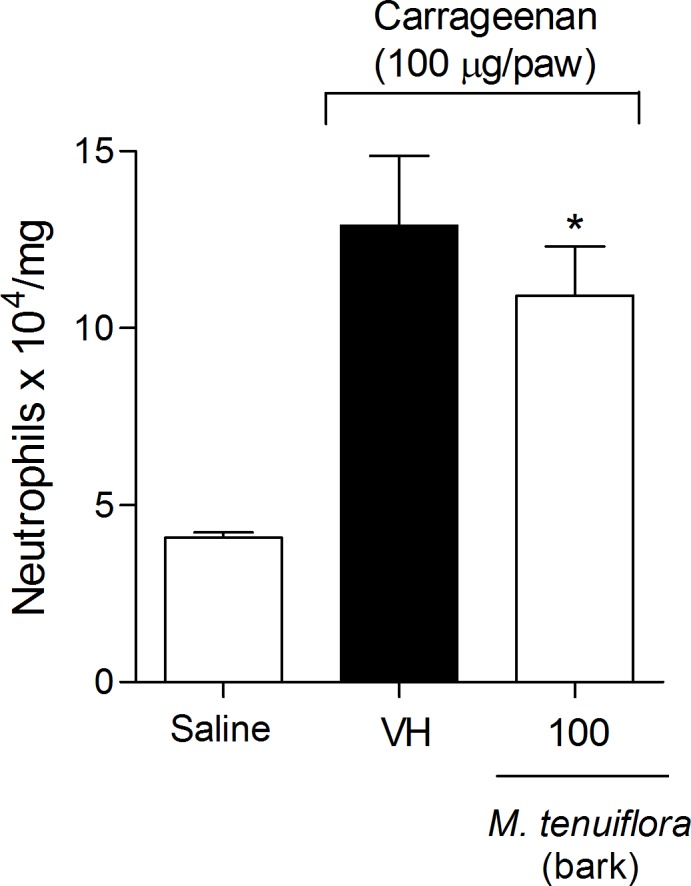
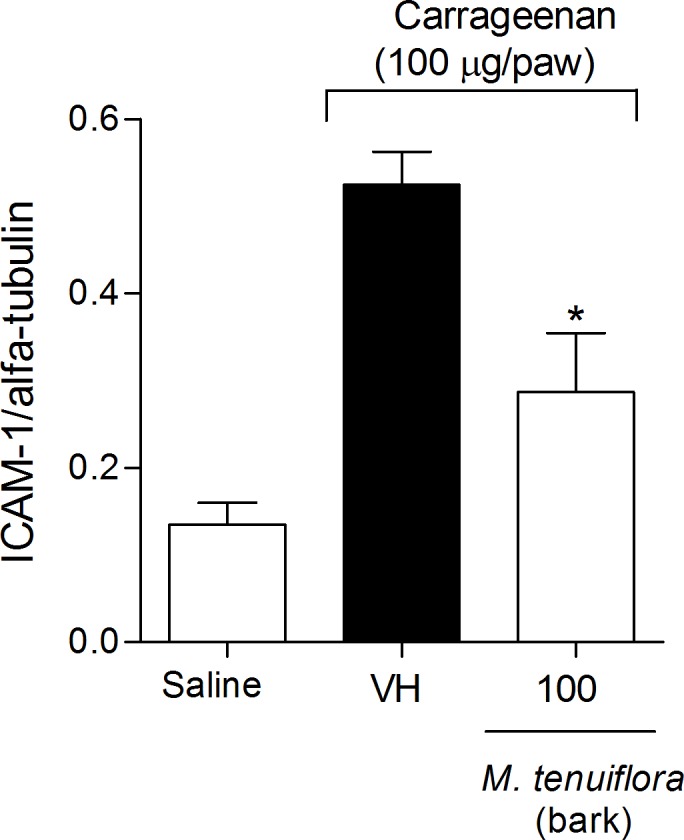
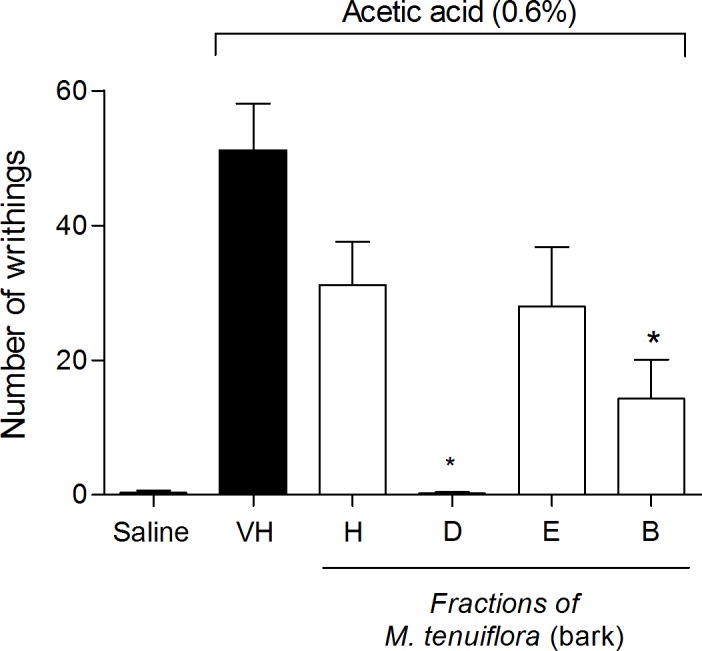
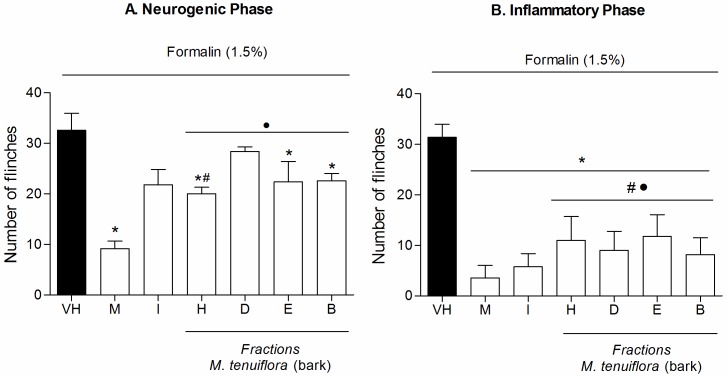
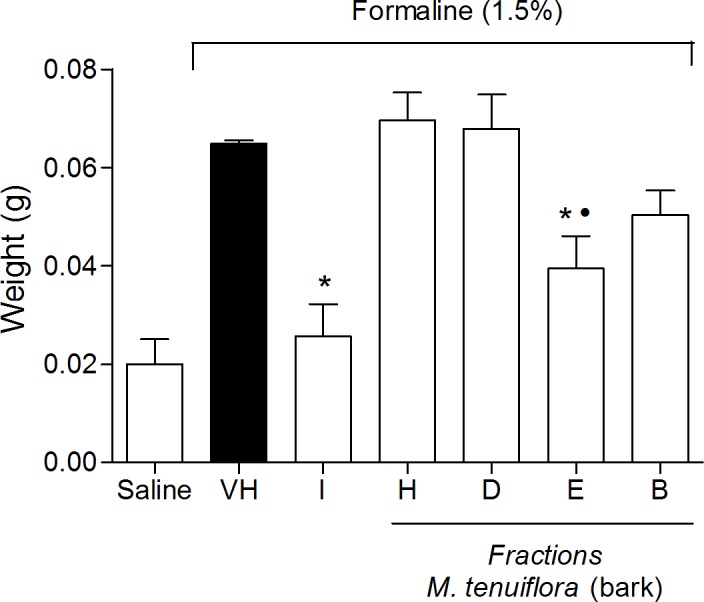
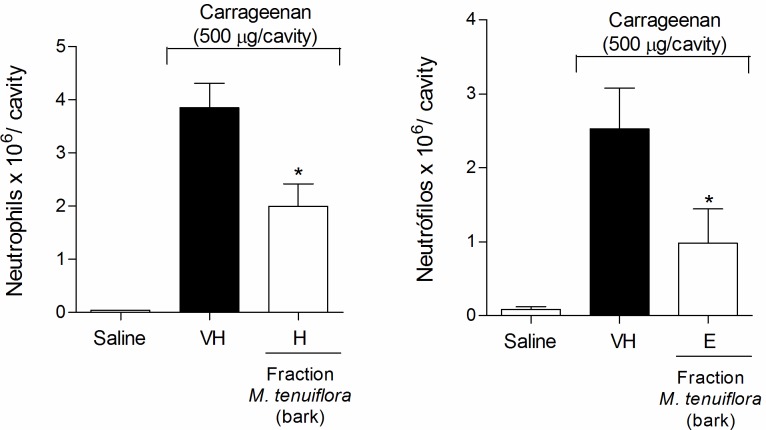
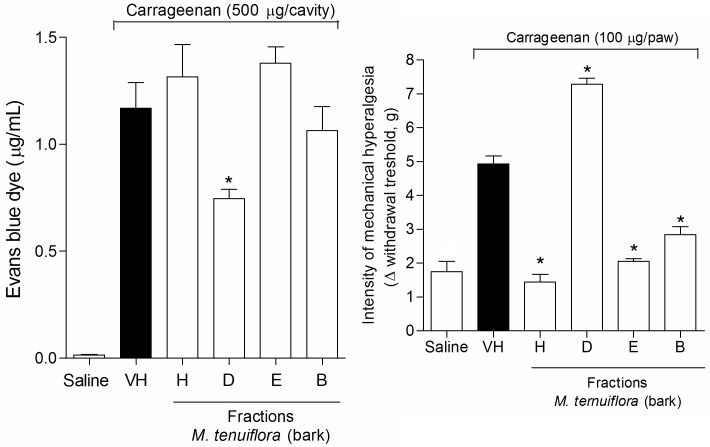
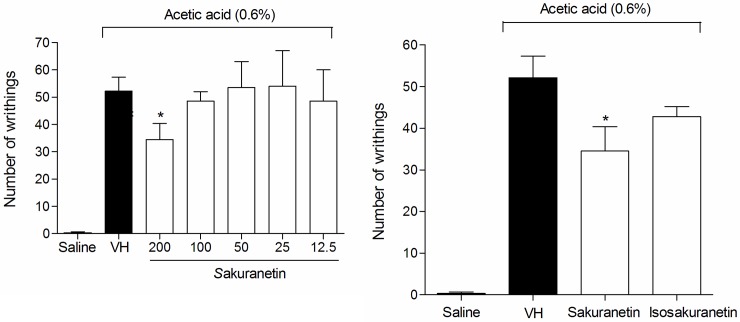
The bark of Mimosa tenuiflora (Willd.) Poiret (Leguminosae family), popularly known as "jurema preta" in Brazil, is used by the population of Contendas of Sincorá (Bahia State, Brazil) for the treatment of coughs and wound healing. Thus, the aim of this study was to evaluate the antinociceptive and anti-inflammatory activities of the bark ethanol extract (EEMT) and solvent soluble fractions (hexane-H, DCM-D, EtOAc-E and BuOH-B) of the extract in vivo. Additionally, we synthesized 5,7-dihidroxy-4'-methoxyflavanone (isosakuranetin) and isolated the compound sakuranetin, and both compounds were also tested. The anti-inflammatory and antinociceptive assays performed were: writhing test; nociception induced by intraplantar formalin injection; leukocyte recruitment to the peritoneal cavity; evaluation of vascular permeability (Evans blue test); and evaluation of mechanical hypernociception (von Frey test). Production of TNF-α, IL-10, myeloperoxidase and the expression of ICAM-1 were also evaluated. Statistical analysis was performed by one-way ANOVA followed by the Bonferroni post-test (n = 8), with P < 0.05. The EEMT showed antinociceptive activities in writhing test (100-200 mg/kg), in the second phase of the formalin test (50-200 mg/kg), and in mechanical hypernociception (100 mg/kg). EEMT showed an anti-inflammatory effect by reducing neutrophil migration to the peritoneal cavity and in the plantar tissue detected by the reduction of myeloperoxidase activity (100 mg/kg), reduction of IL-10 levels and expression of ICAM-1 in the peritoneal exudate and the mesentery (100 mg/kg), respectively. The four soluble EEMT fractions showed good results in tests for antinociceptive (H, D, E, B) and anti-inflammation (H, D, E). Only sakuranetin showed reduction of the writhing and neutrophil migration (200 mg/kg). Thus, the EEMT and soluble fractions of M. tenuiflora bark demonstrated great antinociceptive and anti-inflammatory activities, as also sakuranetin. More studies should be conducted to elucidate the mechanism of action of this compound. To the best of our knowledge, this is the first report on the antinociceptive activity of the M. tenuiflora fractions and the bioactive isolated compound sakuranetin in vivo.
含羞草(Mimosa tenuiflora (Willd.) Poiret,豆科)的树皮在巴西俗称“黑朱利马”,巴西辛科拉的孔滕达斯地区居民用它来治疗咳嗽和促进伤口愈合。因此,本研究旨在评估该树皮乙醇提取物(EEMT)及其溶剂可溶部分(己烷-H、二氯甲烷-D、乙酸乙酯-E和正丁醇-B)在体内的抗伤害感受和抗炎活性。此外,我们合成了5,7-二羟基-4'-甲氧基黄酮(异樱花素)并分离出樱花素,对这两种化合物也进行了测试。所进行的抗炎和抗伤害感受试验包括:扭体试验;足底注射福尔马林诱导的伤害感受;白细胞向腹腔的募集;血管通透性评估(伊文思蓝试验);以及机械性痛觉过敏评估(von Frey试验)。还评估了肿瘤坏死因子-α(TNF-α)、白细胞介素-10(IL-10)、髓过氧化物酶的产生以及细胞间黏附分子-1(ICAM-1)的表达。采用单因素方差分析,随后进行Bonferroni事后检验(n = 8)进行统计分析,P < 0.05。EEMT在扭体试验(100 - 200 mg/kg)、福尔马林试验的第二阶段(50 - 200 mg/kg)以及机械性痛觉过敏(100 mg/kg)中表现出抗伤害感受活性。EEMT通过减少中性粒细胞向腹腔的迁移以及通过降低髓过氧化物酶活性(100 mg/kg)、降低腹腔渗出液和肠系膜中IL-10水平以及ICAM-1的表达(100 mg/kg),分别在足底组织中检测到,从而显示出抗炎作用。EEMT的四个可溶部分在抗伤害感受(H、D、E、B)和抗炎(H、D、E)试验中显示出良好结果。只有樱花素显示出扭体次数减少和中性粒细胞迁移减少(200 mg/kg)。因此,含羞草树皮的EEMT及其可溶部分以及樱花素均表现出很强的抗伤害感受和抗炎活性。应开展更多研究以阐明该化合物的作用机制。据我们所知,这是关于含羞草各部分及生物活性分离化合物樱花素在体内抗伤害感受活性的首次报道。