Hosseini Seyed A, Hajirezaei Mohammad R, Seiler Christiane, Sreenivasulu Nese, von Wirén Nicolaus
Molecular Plant Nutrition Group, Physiology and Cell Biology, Leibniz-Institute of Plant Genetics and Crop Plant Research Gatersleben, Germany.
Abiotic Stress Genomics Group, Molecular Genetics, Leibniz-Institute of Plant Genetics and Crop Plant Research Gatersleben, Germany.
Front Plant Sci. 2016 Feb 26;7:206. doi: 10.3389/fpls.2016.00206. eCollection 2016.
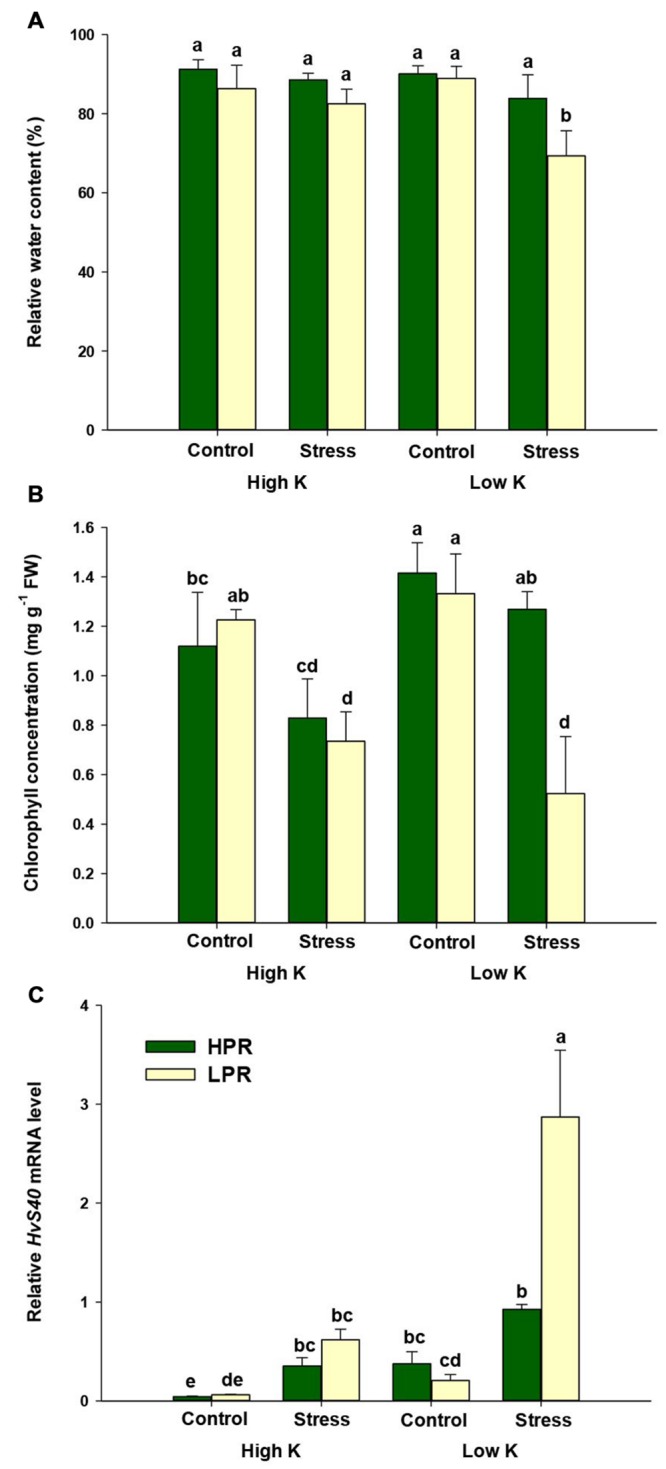
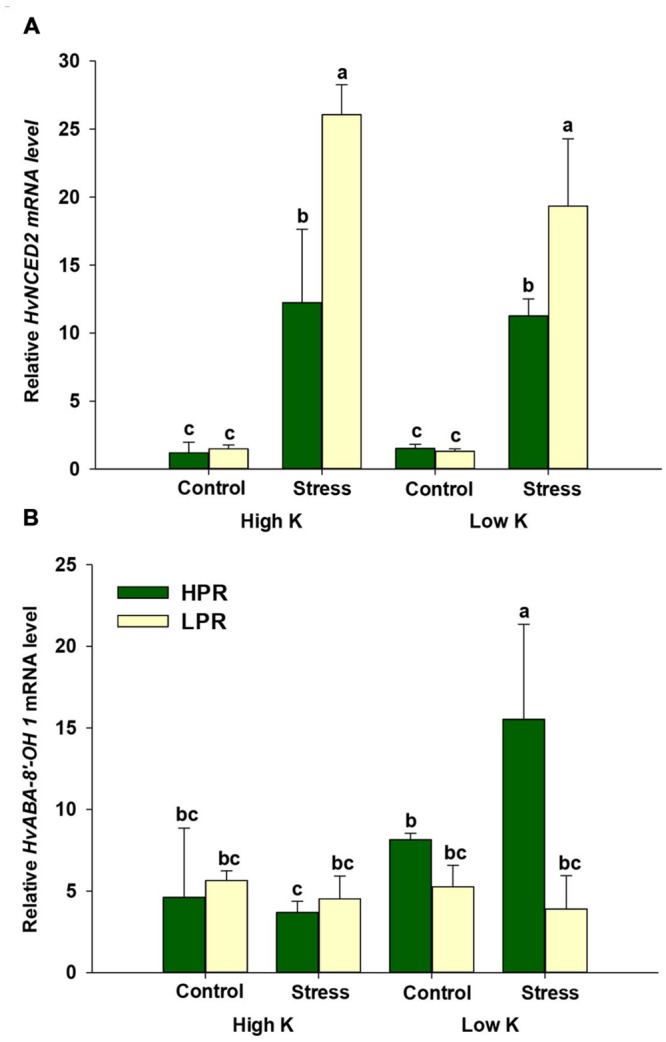
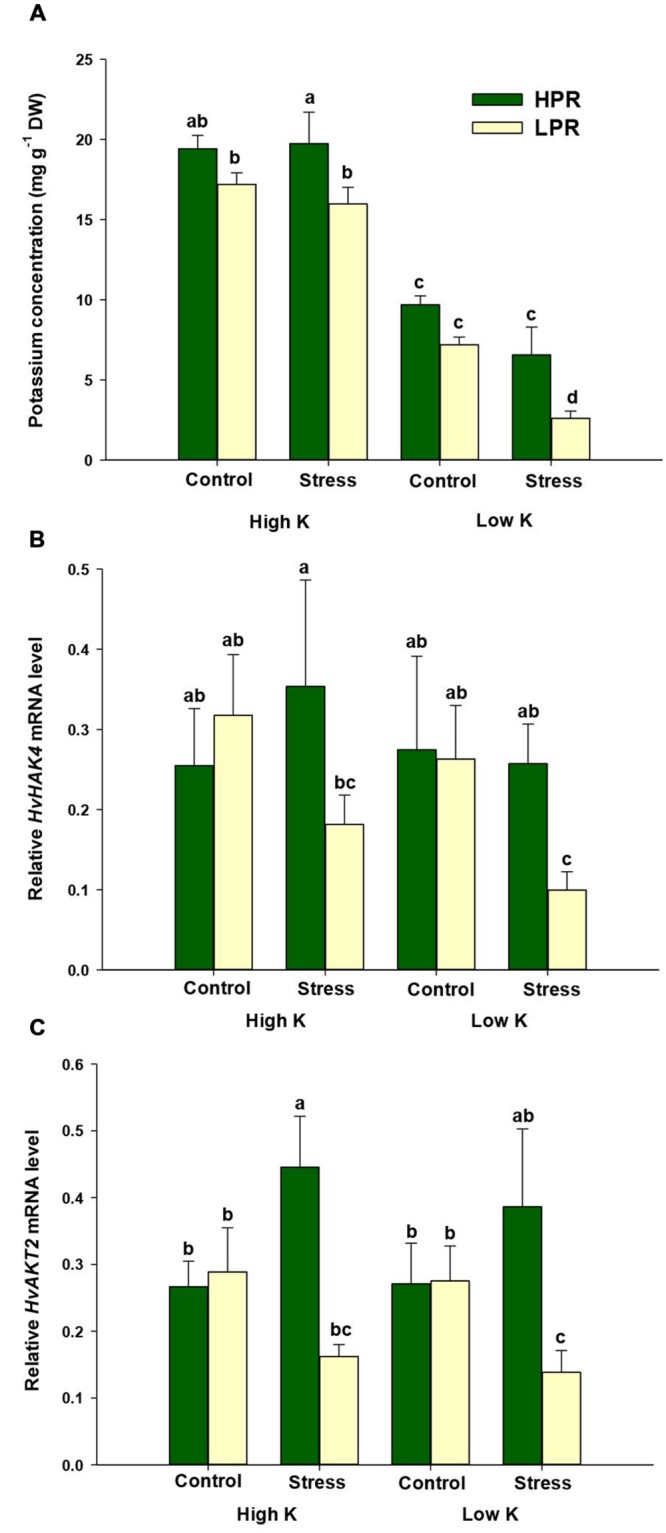
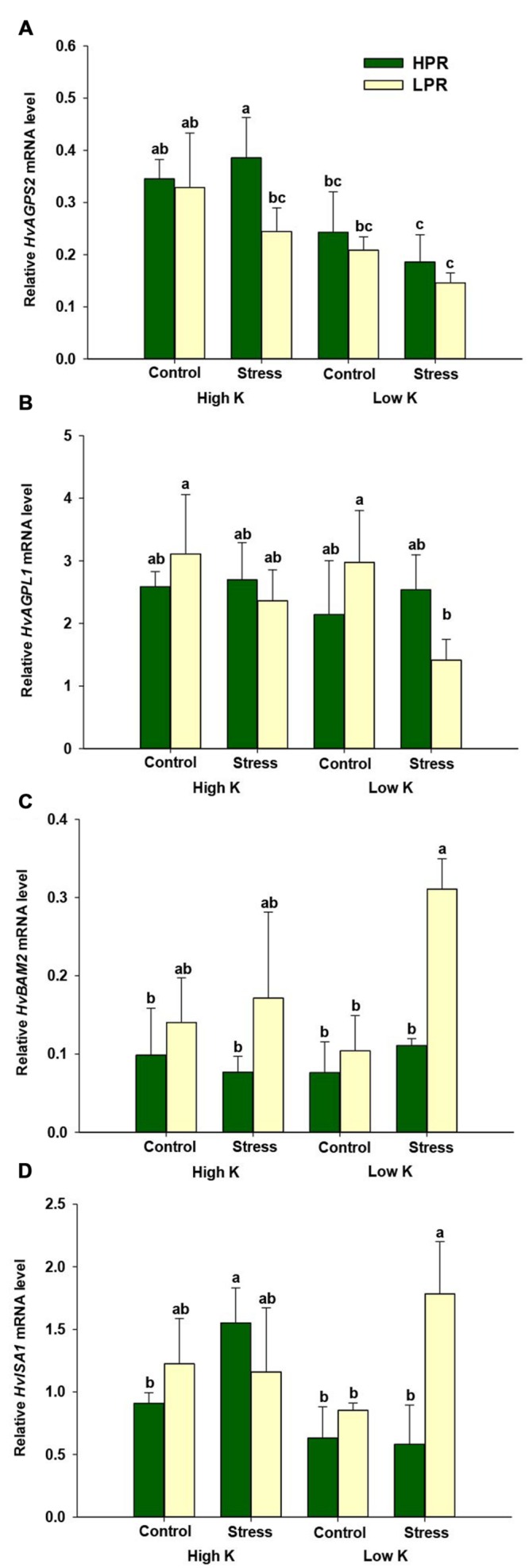
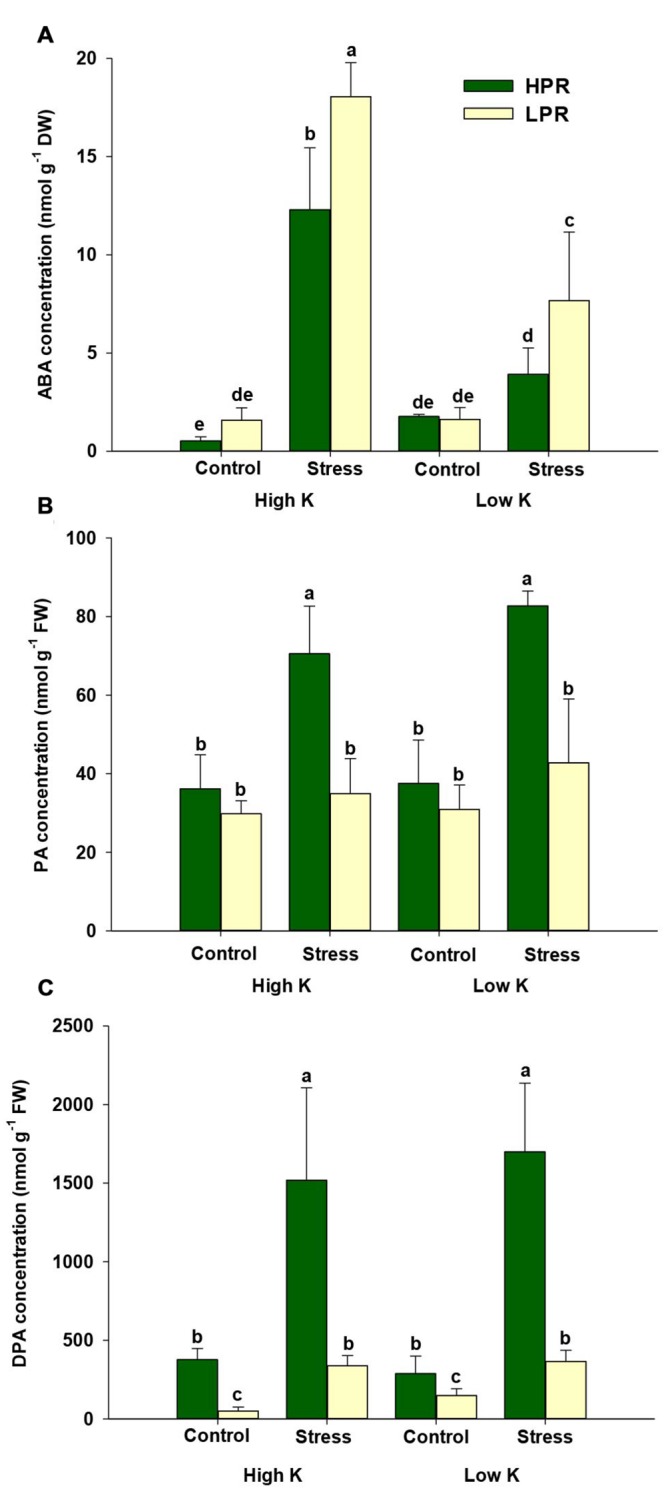
Terminal drought stress decreases crop yields by inducing abscisic acid (ABA) and premature leaf senescence. As potassium (K) is known to interfere with ABA homeostasis we addressed the question whether there is genetic variability regarding the role of K nutrition in ABA homeostasis and drought tolerance. To compare their response to drought stress, two barley lines contrasting in drought-induced leaf senescence were grown in a pot experiment under high and low K supply for the analysis of flag leaves from the same developmental stage. Relative to the drought-sensitive line LPR, the line HPR retained more K in its flag leaves under low K supply and showed delayed flag leaf senescence under terminal drought stress. High K retention was further associated with a higher leaf water status, a higher concentration of starch and other primary carbon metabolites. With regard to ABA homeostasis, HPR accumulated less ABA but higher levels of the ABA degradation products phaseic acid (PA) and dehydro-PA. Under K deficiency this went along with higher transcript levels of ABA8'-HYDROXYLASE, encoding a key enzyme in ABA degradation. The present study provides evidence for a positive impact of the K nutritional status on ABA homeostasis and carbohydrate metabolism under drought stress. We conclude that genotypes with a high K nutritional status in the flag leaf show superior drought tolerance by promoting ABA degradation but attenuating starch degradation which delays flag leaf senescence. Flag leaf K levels may thus represent a useful trait for the selection of drought-tolerant barley cultivars.
终端干旱胁迫通过诱导脱落酸(ABA)和叶片过早衰老降低作物产量。由于已知钾(K)会干扰ABA稳态,我们探讨了关于钾营养在ABA稳态和耐旱性中作用的遗传变异性问题。为了比较它们对干旱胁迫的反应,在盆栽试验中,在高钾和低钾供应条件下种植了两个在干旱诱导叶片衰老方面存在差异的大麦品系,以分析同一发育阶段的旗叶。相对于干旱敏感品系LPR,品系HPR在低钾供应下其旗叶中保留了更多的钾,并且在终端干旱胁迫下旗叶衰老延迟。高钾保留还与较高的叶片水分状况、较高浓度的淀粉和其他主要碳代谢产物相关。关于ABA稳态,HPR积累的ABA较少,但ABA降解产物脱落酸(PA)和脱氢PA的水平较高。在钾缺乏的情况下,这伴随着编码ABA降解关键酶的ABA8'-羟化酶转录水平的升高。本研究为钾营养状况对干旱胁迫下ABA稳态和碳水化合物代谢的积极影响提供了证据。我们得出结论,旗叶中钾营养状况高的基因型通过促进ABA降解但减弱淀粉降解来延迟旗叶衰老,从而表现出卓越的耐旱性。因此,旗叶钾水平可能是选择耐旱大麦品种的一个有用性状。