Krone Cassandra L, Oja Anna E, van de Groep Kirsten, Sanders Elisabeth A M, Bogaert Debby, Trzciński Krzysztof
Pediatric Immunology and Infectious Diseases, Wilhelmina Children's Hospital, University Medical Center Utrecht, 3508 AB Utrecht, The Netherlands.
Int J Mol Sci. 2016 Mar 5;17(3):343. doi: 10.3390/ijms17030343.
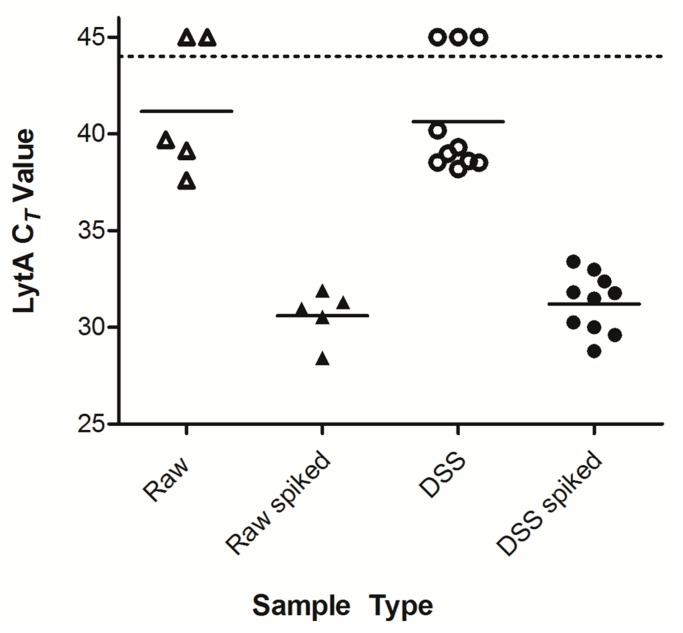
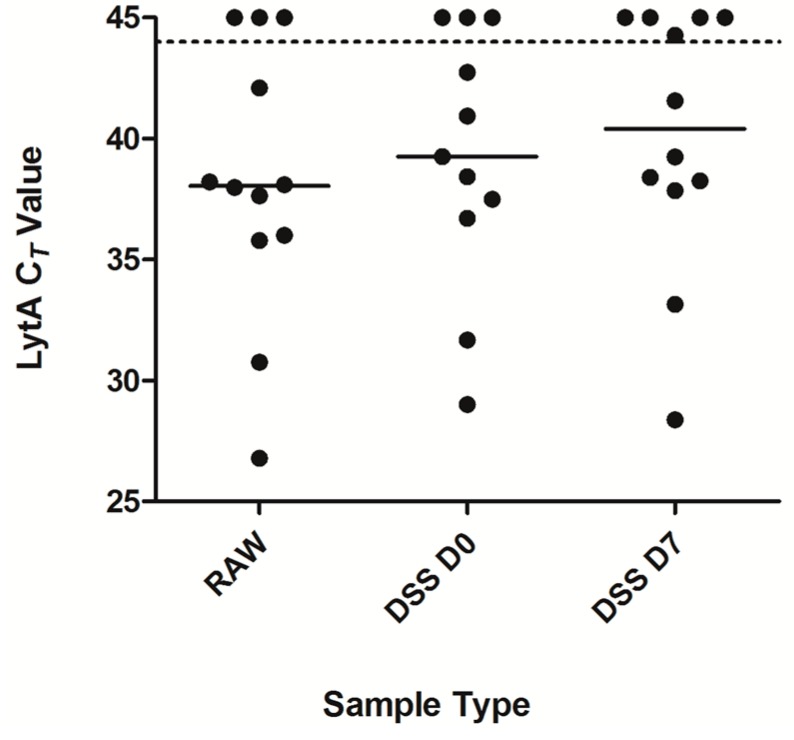
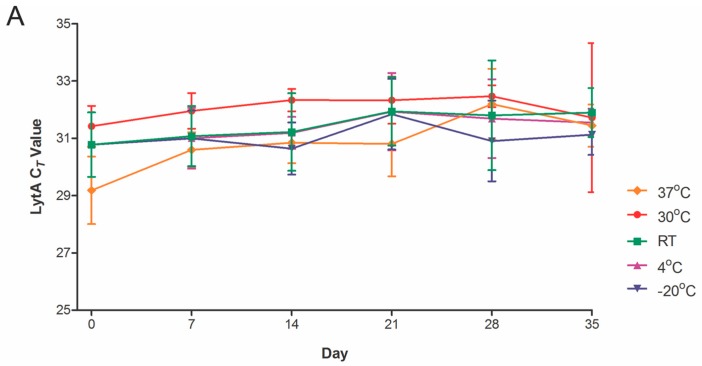
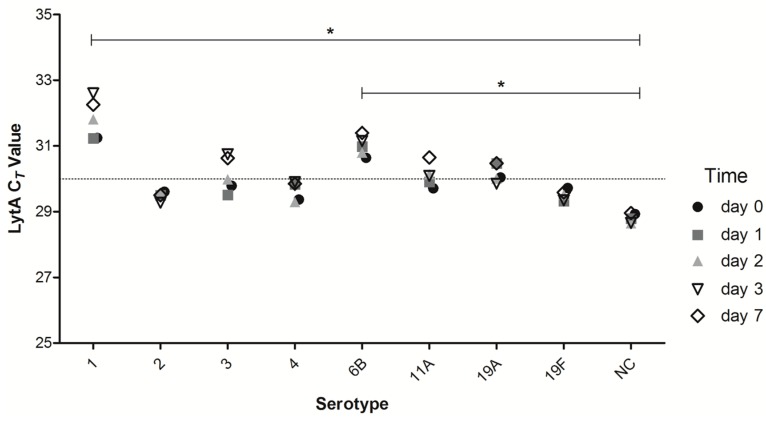
The earliest studies in the late 19th century on Streptococcus pneumoniae (S. pneumoniae) carriage used saliva as the primary specimen. However, interest in saliva declined after the sensitive mouse inoculation method was replaced by conventional culture, which made isolation of pneumococci from the highly polymicrobial oral cavity virtually impossible. Here, we tested the feasibility of using dried saliva spots (DSS) for studies on pneumococcal carriage. Saliva samples from children and pneumococcus-spiked saliva samples from healthy adults were applied to paper, dried, and stored, with and without desiccant, at temperatures ranging from -20 to 37 °C for up to 35 days. DNA extracted from DSS was tested with quantitative-PCR (qPCR) specifically for S. pneumoniae. When processed immediately after drying, the quantity of pneumococcal DNA detected in spiked DSS from adults matched the levels in freshly spiked raw saliva. Furthermore, pneumococcal DNA was stable in DSS stored with desiccant for up to one month over a broad range of temperatures. There were no differences in the results when spiking saliva with varied pneumococcal strains. The collection of saliva can be a particularly useful in surveillance studies conducted in remote settings, as it does not require trained personnel, and DSS are resilient to various transportation conditions.
19世纪末对肺炎链球菌(S. pneumoniae)携带情况的最早研究以唾液作为主要标本。然而,在敏感的小鼠接种方法被传统培养法取代后,人们对唾液的兴趣降低了,因为传统培养法使得从高度微生物多样化的口腔中分离肺炎球菌几乎不可能。在此,我们测试了使用干唾液斑(DSS)进行肺炎球菌携带情况研究的可行性。将儿童的唾液样本以及健康成年人接种肺炎球菌的唾液样本涂在纸上,干燥后,在有和没有干燥剂的情况下,于-20至37°C的温度下储存长达35天。从DSS中提取的DNA用针对肺炎链球菌的定量PCR(qPCR)进行检测。干燥后立即处理时,在成年人接种肺炎球菌的DSS中检测到的肺炎球菌DNA数量与新鲜接种的原始唾液中的水平相当。此外,在有干燥剂的情况下,肺炎球菌DNA在广泛的温度范围内于DSS中可稳定保存长达一个月。用不同肺炎球菌菌株接种唾液时结果没有差异。唾液采集在偏远地区进行的监测研究中可能特别有用,因为它不需要训练有素的人员,而且DSS对各种运输条件都有耐受性。