Lyons Elizabeth J, Baranowski Tom, Basen-Engquist Karen M, Lewis Zakkoyya H, Swartz Maria C, Jennings Kristofer, Volpi Elena
Department of Nutrition and Metabolism, The University of Texas Medical Branch, 301 University Blvd, Galveston, TX, 77555-1124, USA.
USDA/ARS Children's Nutrition Research Center, Baylor College of Medicine, 1100 Bates St, Houston, TX, 77030, USA.
BMC Cancer. 2016 Mar 9;16:202. doi: 10.1186/s12885-016-2244-y.
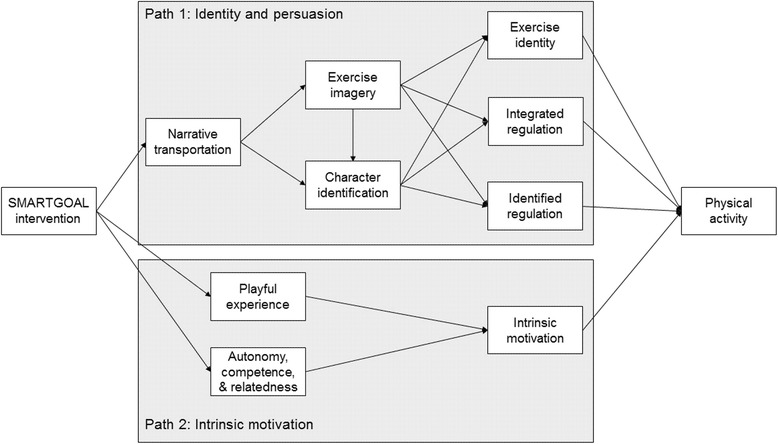
Physical activity reduces risk for numerous negative health outcomes, but postmenopausal breast cancer survivors do not reach recommended levels. Many interventions encourage self-monitoring of steps, which can increase physical activity in the short term. However, these interventions appear insufficient to increase motivation for sustained change. There is a need for innovative strategies to increase physical activity motivation in this population. Narratives are uniquely persuasive, and video games show promise for increasing motivation. This study will determine the effectiveness of an intervention that combines narrative and gaming to encourage sustained physical activity.
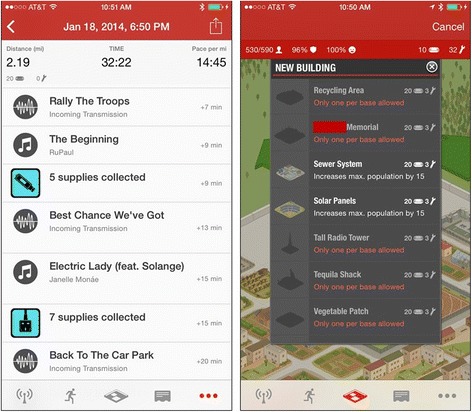
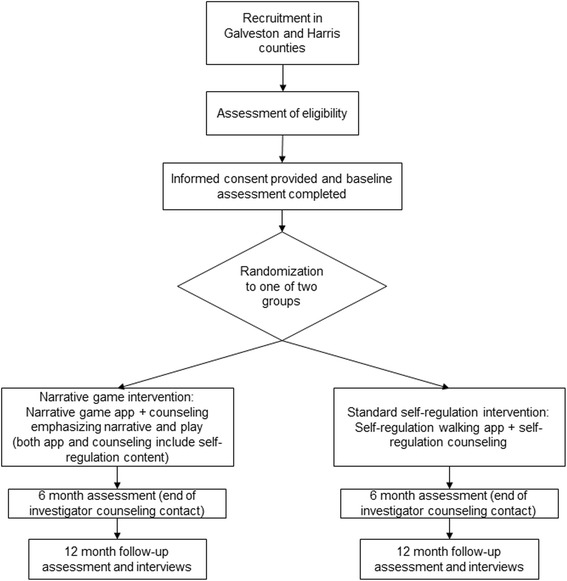
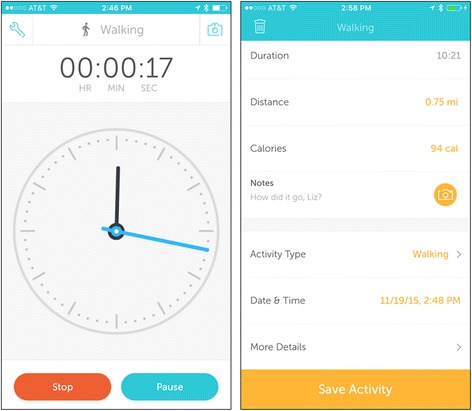
METHODS/DESIGN: SMARTGOAL (Self-Monitoring Activity: a Randomized Trial of Game-Oriented AppLications) is a randomized controlled intervention trial. The intervention period is six months, followed by a six month maintenance period. Participants (overweight, sedentary postmenopausal breast cancer survivors aged 45-75) will be randomized to a self-monitoring group or an enhanced narrative game group. The self-monitoring group will be encouraged to use a mobile application for self-monitoring and feedback and will receive 15 counseling phone calls emphasizing self-regulation. The narrative game group will be encouraged to use a mobile application that includes self-monitoring and feedback as well as a narrative-based active video game. The 15 calls for this group will emphasize concepts related to the game storyline. Counseling calls in both groups will occur weekly in months 1 - 3 and monthly in months 4 - 6. No counseling calls will occur after month 6, but both groups will be encouraged to continue using their apps. The primary outcome of the study is minutes of moderate to vigorous physical activity at six months. Other objectively measured outcomes include fitness and physical function. Self-reported outcomes include quality of life, depression, and motivation.
This protocol will result in implementation and evaluation of two technology-based physical activity interventions among breast cancer survivors. Both interventions hold promise for broad dissemination. Understanding the potential benefit of adding narrative and game elements to interventions will provide critical information to interventionists, researchers, clinicians, and policymakers. This study is uniquely suited to investigate not just whether but how and why game elements may improve breast cancer survivors' health.
clinicaltrials.gov NCT02341235 (January 9, 2015).
体育活动可降低多种不良健康后果的风险,但绝经后乳腺癌幸存者未达到推荐的活动水平。许多干预措施鼓励自我监测步数,这在短期内可增加体育活动量。然而,这些干预措施似乎不足以增强持续改变的动力。需要创新策略来提高这一人群进行体育活动的动力。叙事具有独特的说服力,电子游戏有望提高动力。本研究将确定一种结合叙事和游戏以鼓励持续体育活动的干预措施的有效性。
方法/设计:SMARTGOAL(自我监测活动:面向游戏的应用程序随机试验)是一项随机对照干预试验。干预期为六个月,随后是六个月的维持期。参与者(年龄在45 - 75岁、超重、久坐不动的绝经后乳腺癌幸存者)将被随机分为自我监测组或强化叙事游戏组。自我监测组将被鼓励使用一款用于自我监测和反馈的移动应用程序,并将接到15个强调自我调节的咨询电话。叙事游戏组将被鼓励使用一款包含自我监测和反馈以及一款基于叙事的主动式电子游戏的移动应用程序。该组的15个电话将强调与游戏故事情节相关的概念。两组的咨询电话在第1 - 3个月每周进行一次,在第4 - 6个月每月进行一次。第6个月之后不再进行咨询电话,但鼓励两组继续使用他们的应用程序。该研究的主要结局是六个月时中等至剧烈体育活动的分钟数。其他客观测量的结局包括体能和身体功能。自我报告的结局包括生活质量、抑郁和动力。
本方案将促成对乳腺癌幸存者中两种基于技术的体育活动干预措施的实施和评估。两种干预措施都有望广泛传播。了解在干预措施中添加叙事和游戏元素的潜在益处将为干预者、研究人员、临床医生和政策制定者提供关键信息。本研究特别适合不仅调查游戏元素是否,而且调查如何以及为何可能改善乳腺癌幸存者的健康状况。
clinicaltrials.gov NCT02341235(2015年1月9日)。