Zhao Hanshu, Carney Karen E, Falgoust Lindsay, Pan Jullie W, Sun Dandan, Zhang Zhongling
Department of Neurology, The First Affiliated Hospital of the Harbin Medical University, Harbin, China.
Department of Neurology, University of Pittsburgh, Pittsburgh, PA 15213, USA.
Prog Neurobiol. 2016 Mar-May;138-140:19-35. doi: 10.1016/j.pneurobio.2016.02.002. Epub 2016 Mar 8.
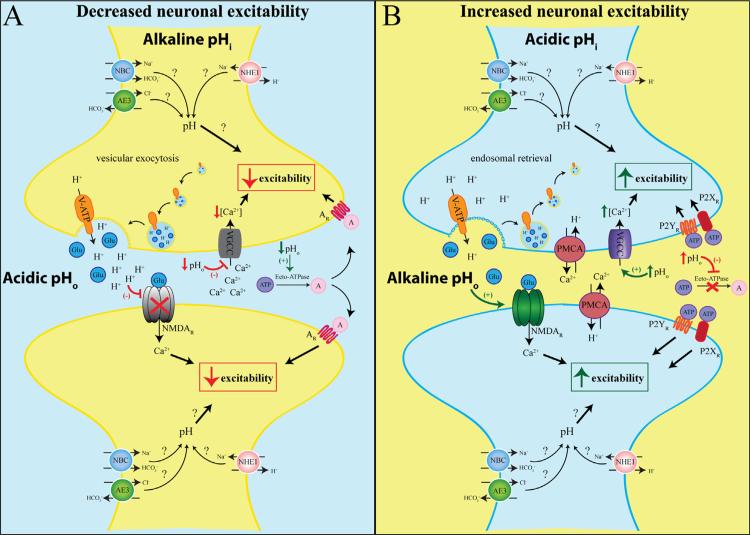
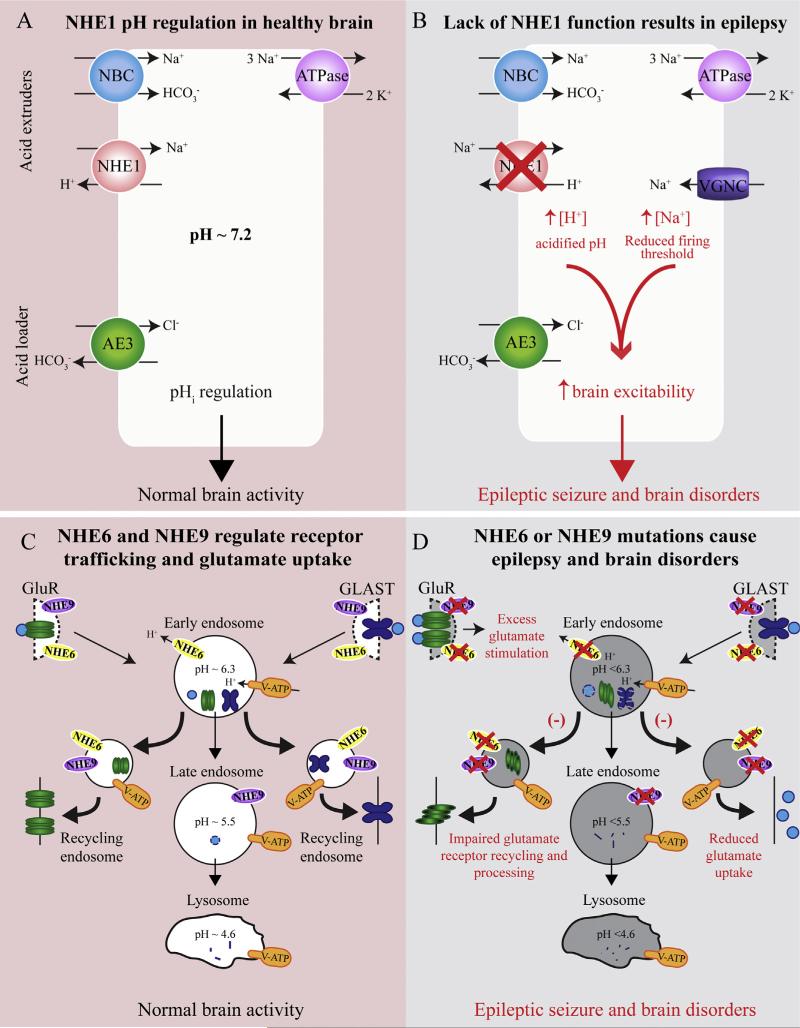
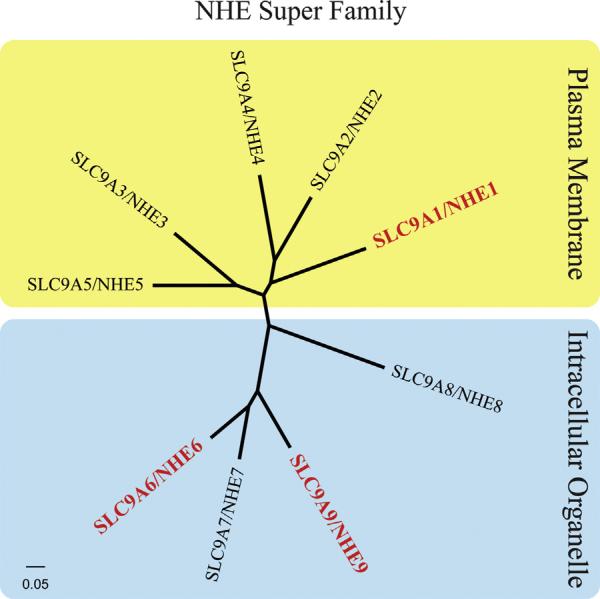
Epilepsy is a common central nervous system (CNS) disease characterized by recurrent transient neurological events occurring due to abnormally excessive or synchronous neuronal activity in the brain. The CNS is affected by systemic acid-base disorders, and epileptic seizures are sensitive indicators of underlying imbalances in cellular pH regulation. Na(+)/H(+) exchangers (NHEs) are a family of membrane transporter proteins actively involved in regulating intracellular and organellar pH by extruding H(+) in exchange for Na(+) influx. Altering NHE function significantly influences neuronal excitability and plays a role in epilepsy. This review gives an overview of pH regulatory mechanisms in the brain with a special focus on the NHE family and the relationship between epilepsy and dysfunction of NHE isoforms. We first discuss how cells translocate acids and bases across the membrane and establish pH homeostasis as a result of the concerted effort of enzymes and ion transporters. We focus on the specific roles of the NHE family by detailing how the loss of NHE1 in two NHE mutant mice results in enhanced neuronal excitability in these animals. Furthermore, we highlight new findings on the link between mutations of NHE6 and NHE9 and developmental brain disorders including epilepsy, autism, and attention deficit hyperactivity disorder (ADHD). These studies demonstrate the importance of NHE proteins in maintaining H(+) homeostasis and their intricate roles in the regulation of neuronal function. A better understanding of the mechanisms underlying NHE1, 6, and 9 dysfunctions in epilepsy formation may advance the development of new epilepsy treatment strategies.
癫痫是一种常见的中枢神经系统(CNS)疾病,其特征是由于大脑中异常过度或同步的神经元活动而反复出现短暂的神经事件。中枢神经系统会受到全身酸碱平衡紊乱的影响,癫痫发作是细胞pH调节潜在失衡的敏感指标。钠氢交换体(NHEs)是一类膜转运蛋白家族,通过排出H⁺以交换Na⁺内流,积极参与调节细胞内和细胞器的pH。改变NHE功能会显著影响神经元兴奋性,并在癫痫中发挥作用。本综述概述了大脑中的pH调节机制,特别关注NHE家族以及癫痫与NHE亚型功能障碍之间的关系。我们首先讨论细胞如何通过膜转运酸碱,并由于酶和离子转运体的协同作用建立pH稳态。我们通过详细说明两种NHE突变小鼠中NHE1的缺失如何导致这些动物神经元兴奋性增强,来关注NHE家族的具体作用。此外,我们强调了关于NHE6和NHE9突变与包括癫痫、自闭症和注意力缺陷多动障碍(ADHD)在内的发育性脑疾病之间联系的新发现。这些研究证明了NHE蛋白在维持H⁺稳态中的重要性及其在神经元功能调节中的复杂作用。更好地理解癫痫形成过程中NHE1、6和9功能障碍的潜在机制可能会推动新的癫痫治疗策略的发展。