Steinmetz Tilman, Schröder Jan, Plath Margarete, Link Hartmut, Vogt Michèle, Frank Melanie, Marschner Norbert
Outpatient Clinic for Hematology and Oncology, Sachsenring 69, 50677 Cologne, Germany.
Outpatient Clinic for Oncology, Kettwiger Strasse 62, 45468 Mülheim an der Ruhr, Germany.
Anemia. 2016;2016:8057650. doi: 10.1155/2016/8057650. Epub 2016 Feb 4.
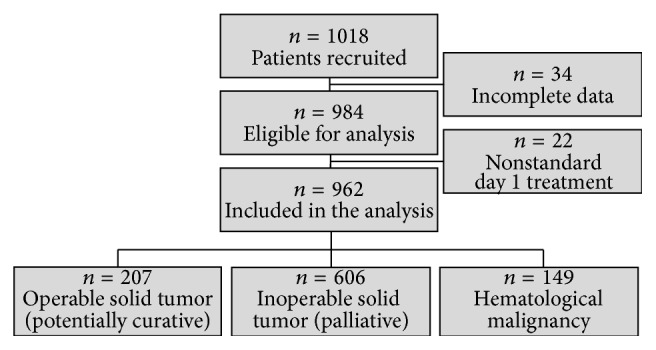
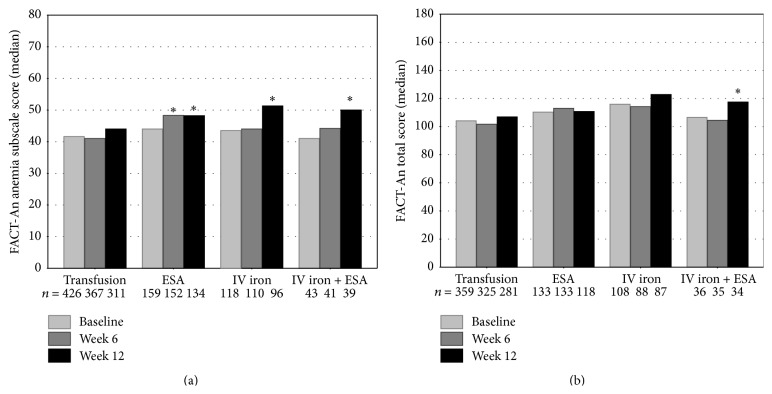
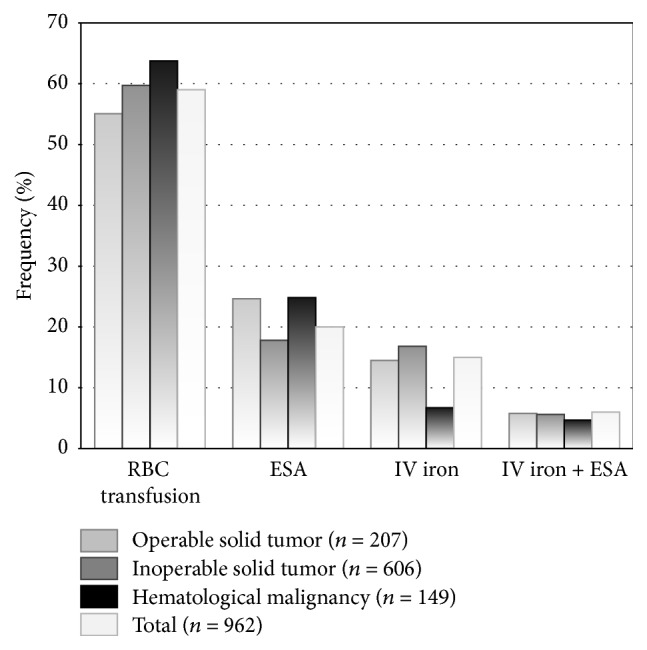
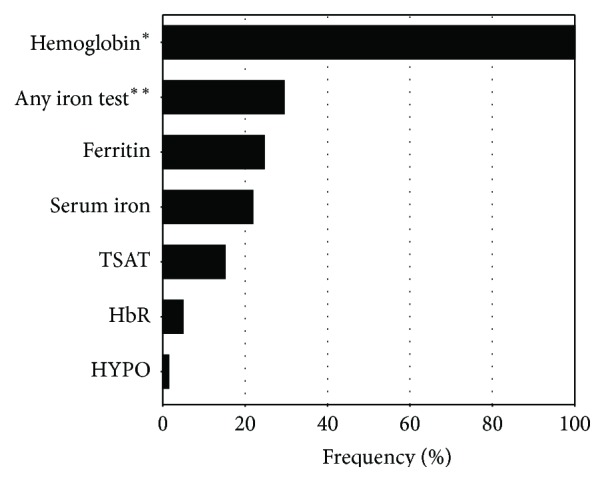
The aim of this prospective cohort study was to assess current antianemic treatment of cancer patients in German routine practice, including diagnostics, treatments, and quality of life (QoL). 88 study sites recruited 1018 patients at the start of antianemic treatment with hemoglobin (Hb) levels <11 g/dL (females) or <12 g/dL (males). Patients were followed up for 12 weeks. 63% of the patients had inoperable solid tumors, 22% operable solid tumors, and 15% hematological malignancies. Over 85% received chemotherapy. Median age was 67 years; 48% were male. Red blood cell transfusions (RBCTx) were given to 59% of all patients and to 55% of the patients with Hb ≥8 g/dL on day 1 of the observation period (day 1 treatment). Erythropoiesis-stimulating agents (ESAs) were the second most frequently applied day 1 treatment (20%), followed by intravenous (IV) iron (15%) and ESA + IV iron (6%). Only about a third of patients were tested for blood serum iron parameters at the start of treatment. Overall, more than half of the patients had long-term responses to antianemic therapy. Our data suggest that in routine practice diagnostics for treatable causes of anemia are underused. A high proportion of cancer patients receive RBCTx. It should be discussed whether thorough diagnostics and earlier intervention could decrease the need for RBCTx. This trial is registered with NCT01795690.
这项前瞻性队列研究的目的是评估德国常规医疗中癌症患者当前的抗贫血治疗情况,包括诊断、治疗及生活质量(QoL)。88个研究地点在血红蛋白(Hb)水平低于11 g/dL(女性)或低于12 g/dL(男性)的抗贫血治疗开始时招募了1018名患者。对患者进行了12周的随访。63%的患者患有不可切除的实体瘤,22%患有可切除的实体瘤,15%患有血液系统恶性肿瘤。超过85%的患者接受了化疗。中位年龄为67岁;48%为男性。在观察期第1天(治疗第1天),59%的所有患者以及55% Hb≥8 g/dL的患者接受了红细胞输血(RBCTx)。促红细胞生成素(ESA)是第1天治疗中第二常用的药物(20%),其次是静脉注射铁剂(15%)和ESA + 静脉注射铁剂(6%)。只有约三分之一的患者在治疗开始时接受了血清铁参数检测。总体而言,超过一半的患者对抗贫血治疗有长期反应。我们的数据表明,在常规医疗中,对可治疗贫血病因的诊断未得到充分利用。高比例的癌症患者接受RBCTx。是否彻底诊断和早期干预可以减少RBCTx的需求值得探讨。该试验已在NCT01795690注册。