Sallam Hesham M, Seiffert Erik R
Vertebrate Paleontology, Department of Geology, Faculty of Science, Mansoura University, Mansoura, Egypt; Department of Evolutionary Anthropology, Duke University, Durham, NC, United States.
Department of Anatomical Sciences, Stony Brook University , Stony Brook, NY, United States , USA.
PeerJ. 2016 Mar 1;4:e1717. doi: 10.7717/peerj.1717. eCollection 2016.
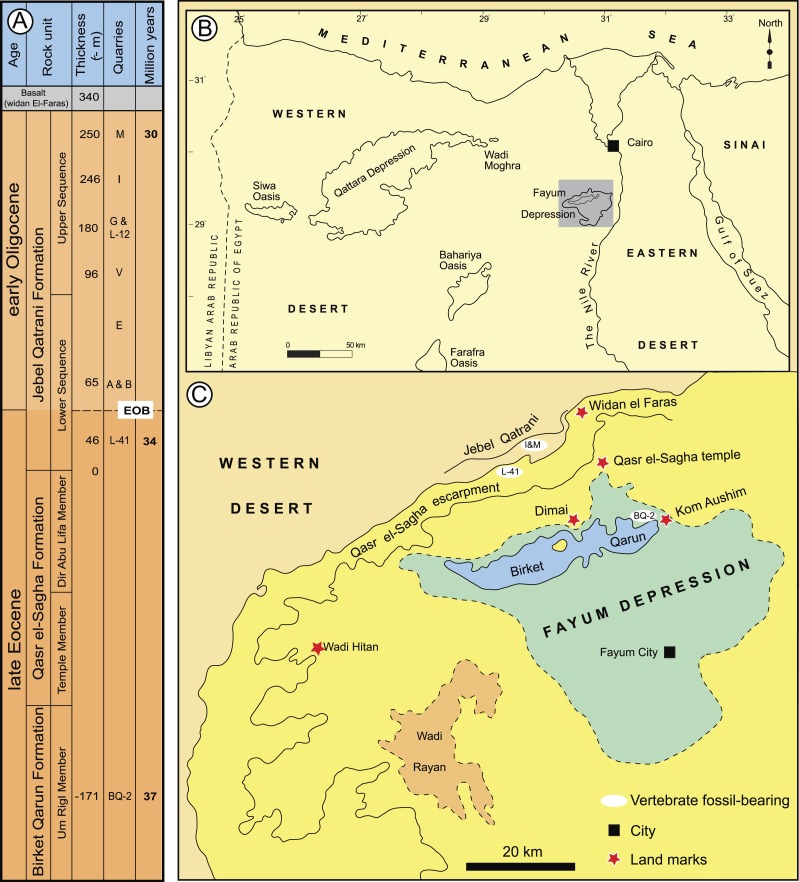
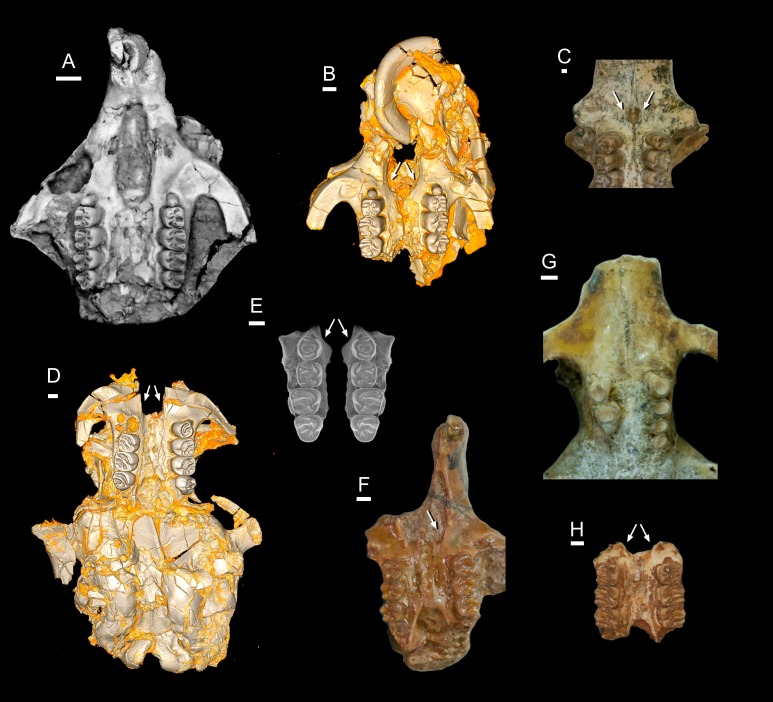
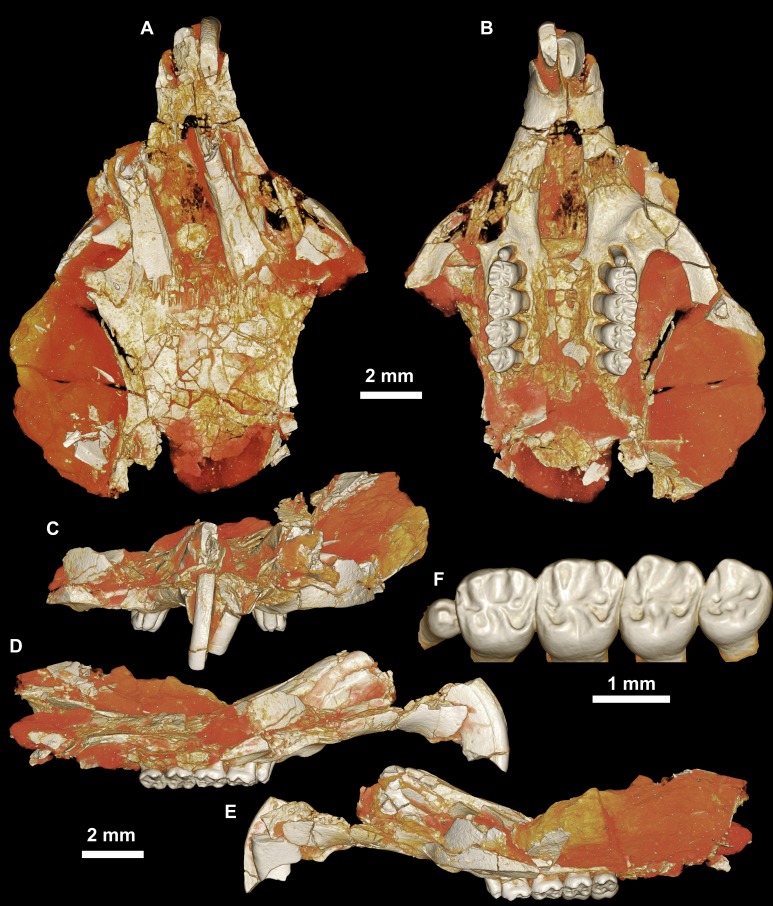
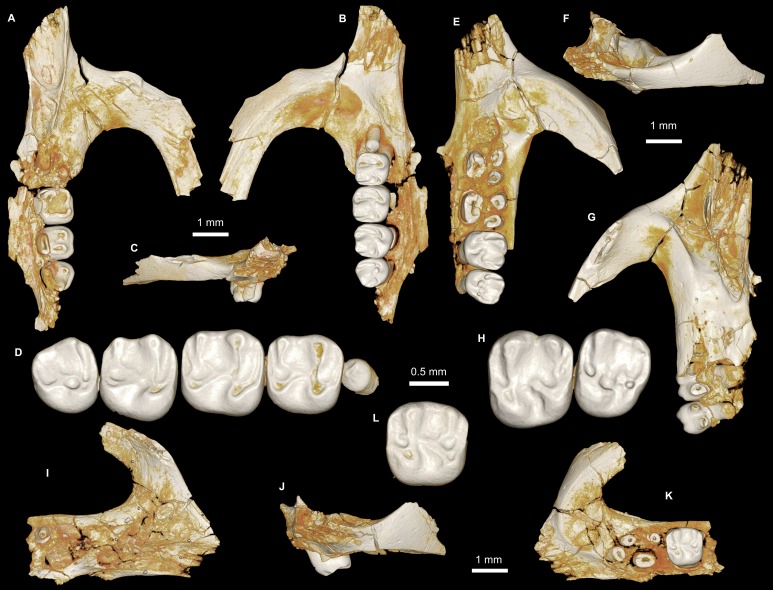
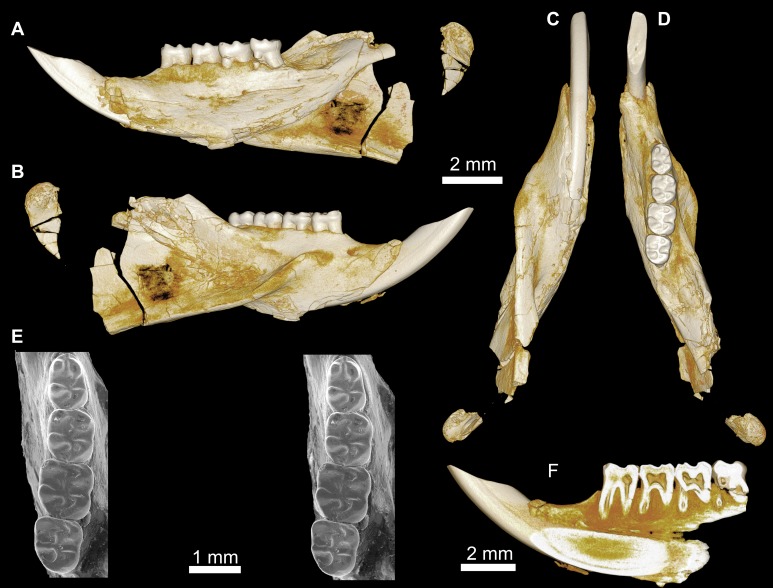
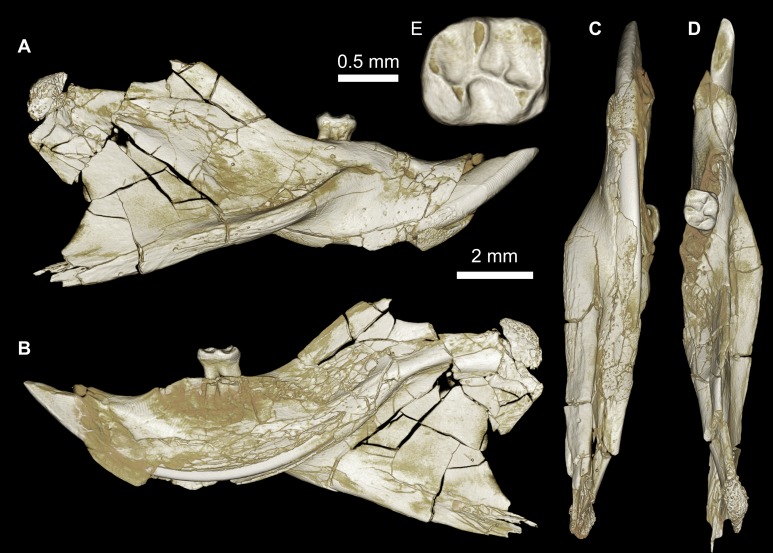
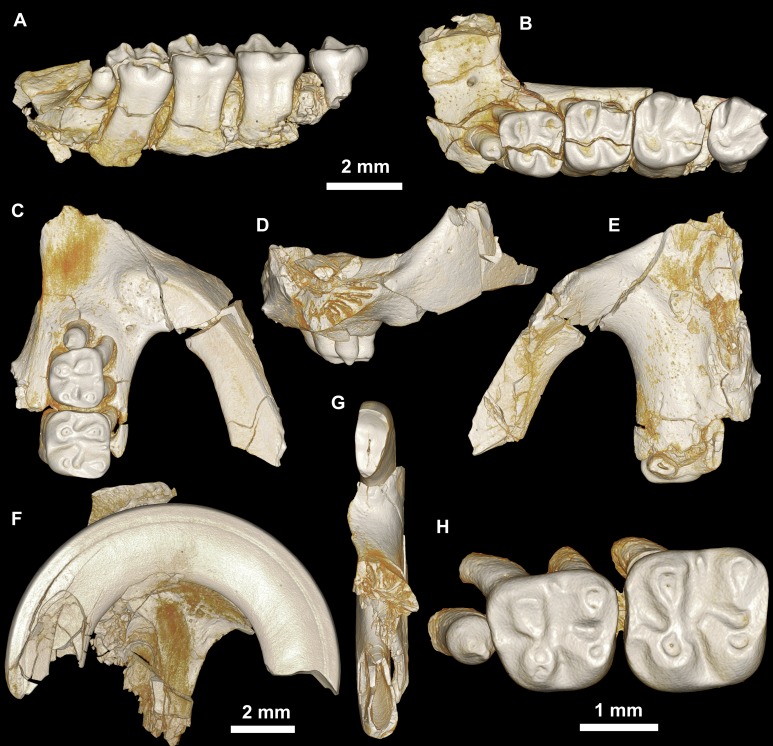
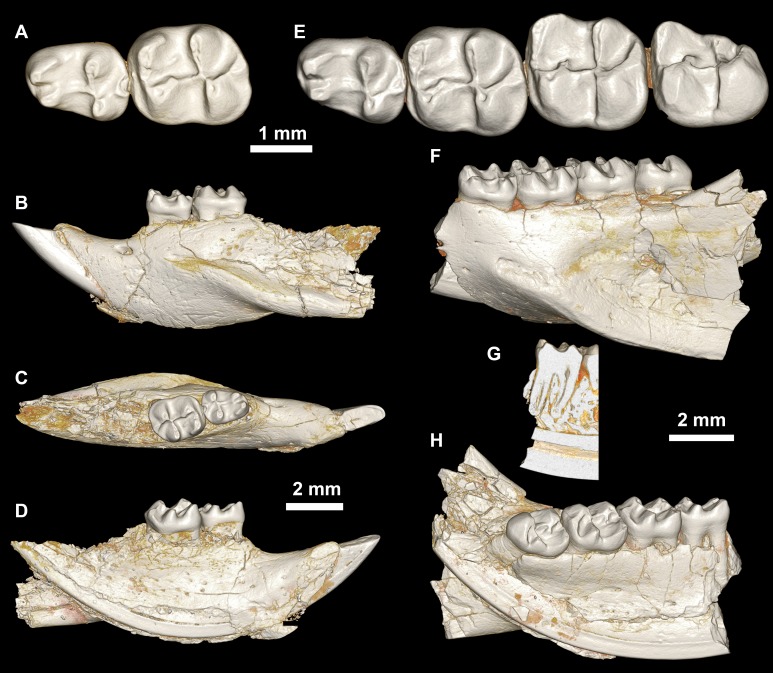
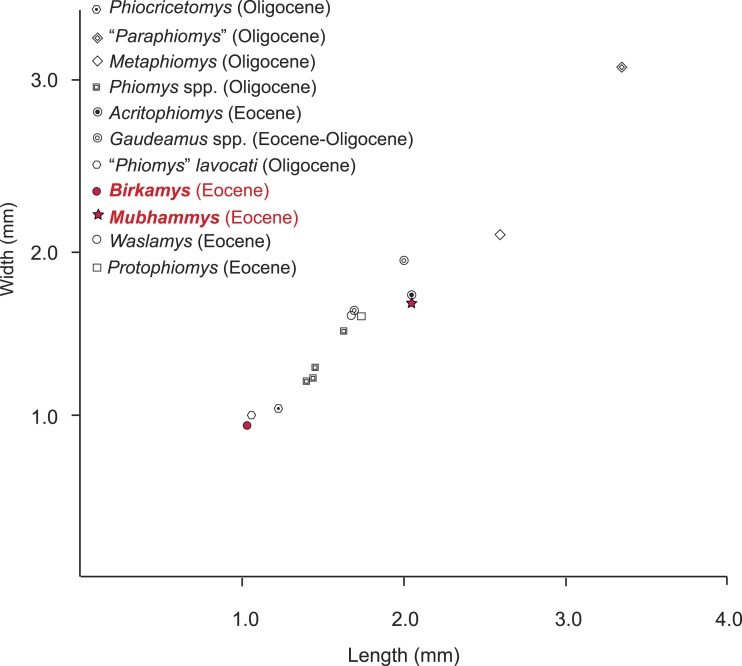
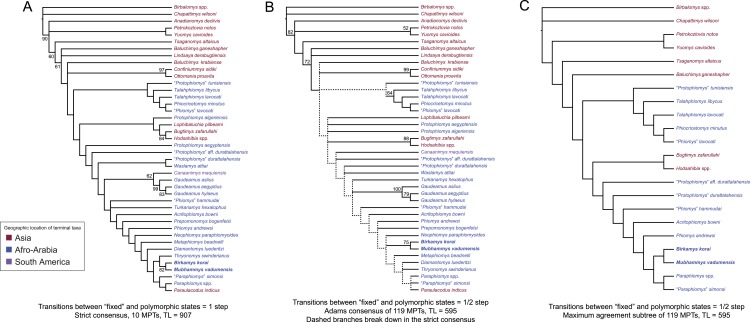
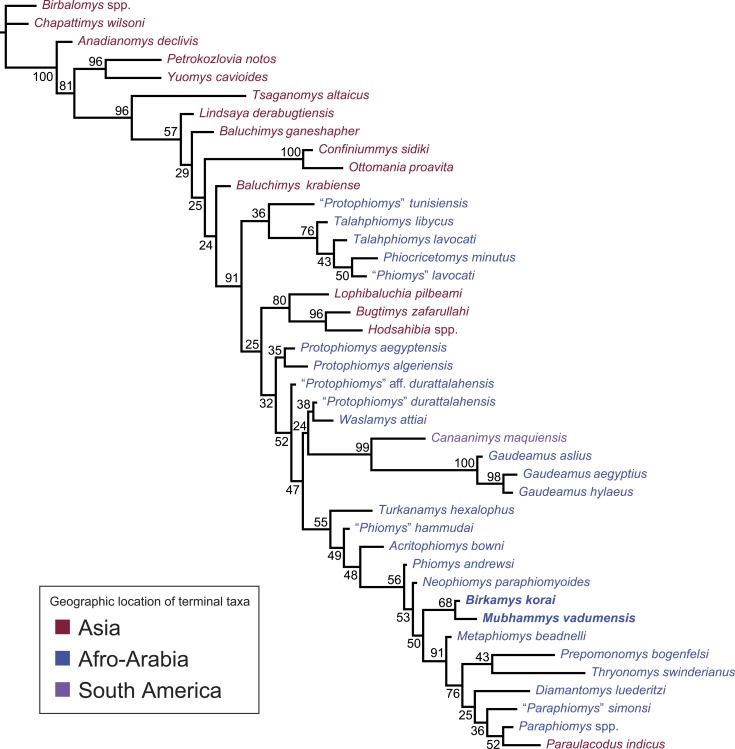
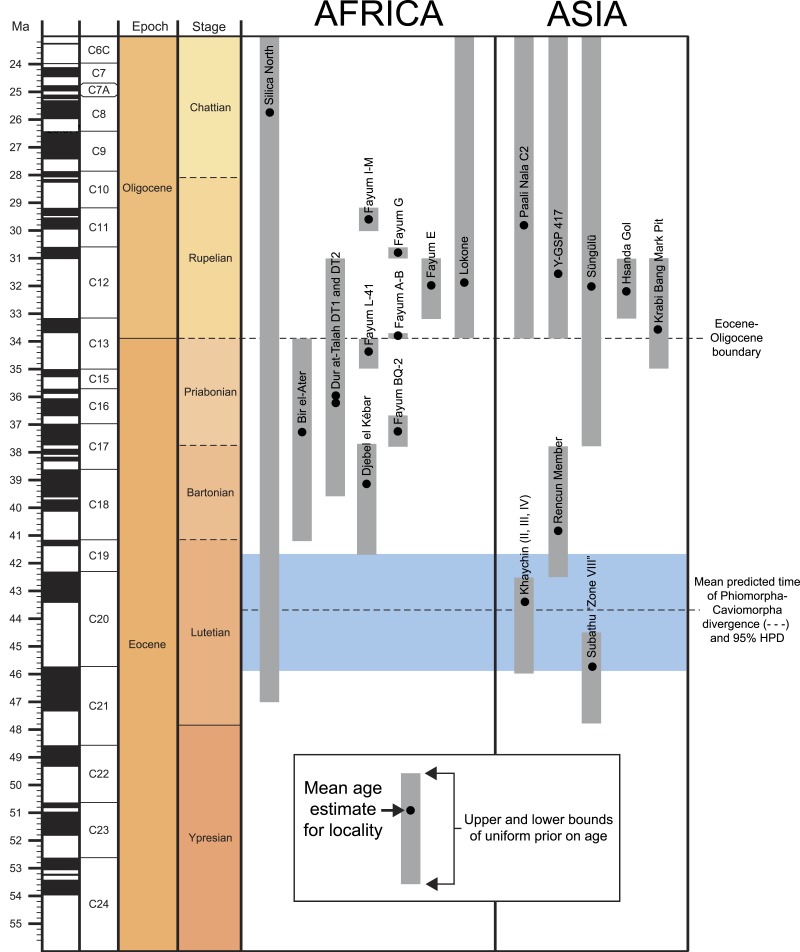
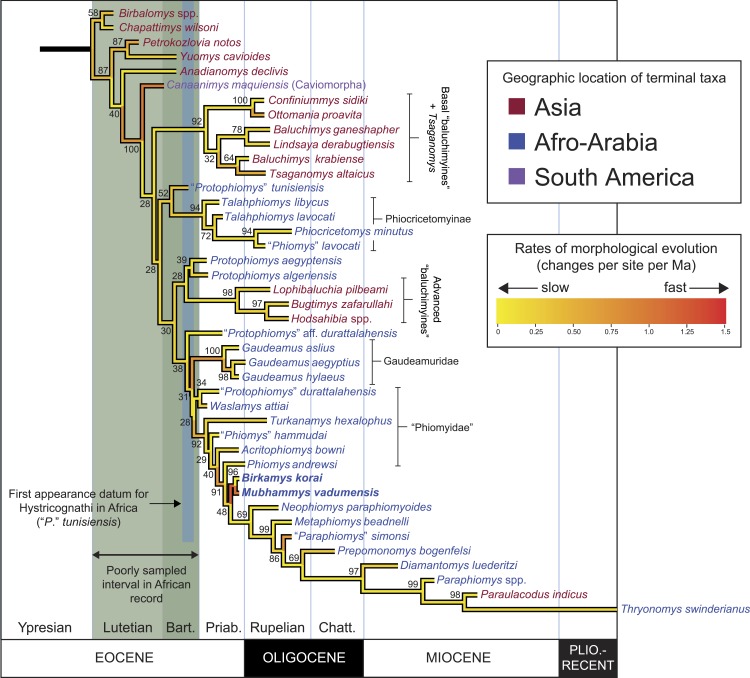
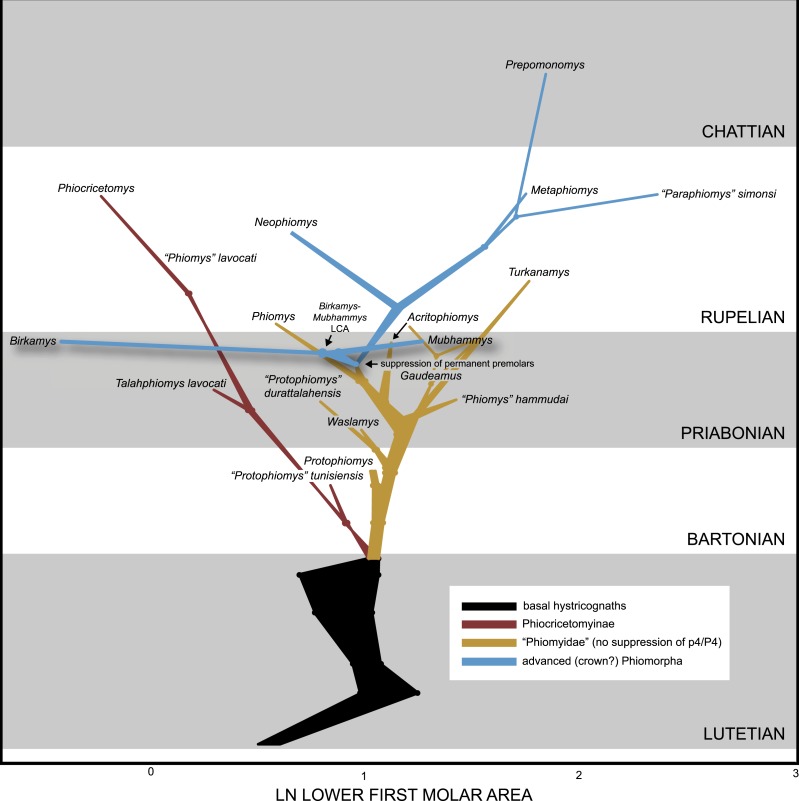
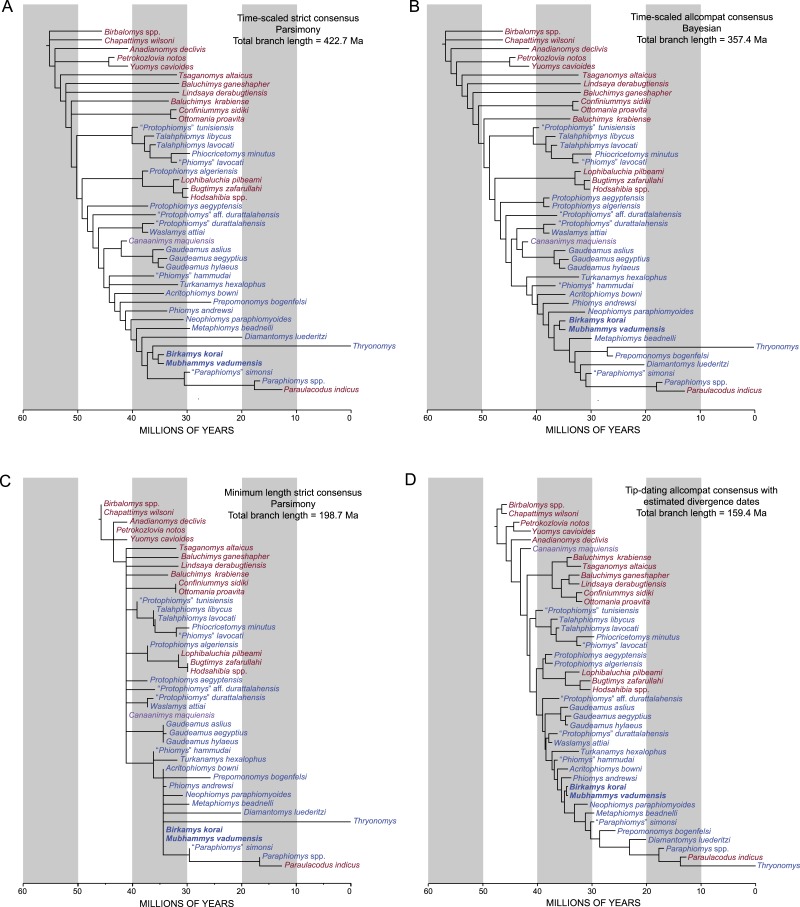
The Fayum Depression of Egypt has yielded fossils of hystricognathous rodents from multiple Eocene and Oligocene horizons that range in age from ∼37 to ∼30 Ma and document several phases in the early evolution of crown Hystricognathi and one of its major subclades, Phiomorpha. Here we describe two new genera and species of basal phiomorphs, Birkamys korai and Mubhammys vadumensis, based on rostra and maxillary and mandibular remains from the terminal Eocene (∼34 Ma) Fayum Locality 41 (L-41). Birkamys is the smallest known Paleogene hystricognath, has very simple molars, and, like derived Oligocene-to-Recent phiomorphs (but unlike contemporaneous and older taxa) apparently retained dP(4)∕4 late into life, with no evidence for P(4)∕4 eruption or formation. Mubhammys is very similar in dental morphology to Birkamys, and also shows no evidence for P(4)∕4 formation or eruption, but is considerably larger. Though parsimony analysis with all characters equally weighted places Birkamys and Mubhammys as sister taxa of extant Thryonomys to the exclusion of much younger relatives of that genus, all other methods (standard Bayesian inference, Bayesian "tip-dating," and parsimony analysis with scaled transitions between "fixed" and polymorphic states) place these species in more basal positions within Hystricognathi, as sister taxa of Oligocene-to-Recent phiomorphs. We also employ tip-dating as a means for estimating the ages of early hystricognath-bearing localities, many of which are not well-constrained by geological, geochronological, or biostratigraphic evidence. By simultaneously taking into account phylogeny, evolutionary rates, and uniform priors that appropriately encompass the range of possible ages for fossil localities, dating of tips in this Bayesian framework allows paleontologists to move beyond vague and assumption-laden "stage of evolution" arguments in biochronology to provide relatively rigorous age assessments of poorly-constrained faunas. This approach should become increasingly robust as estimates are combined from multiple independent analyses of distantly related clades, and is broadly applicable across the tree of life; as such it is deserving of paleontologists' close attention. Notably, in the example provided here, hystricognathous rodents from Libya and Namibia that are controversially considered to be of middle Eocene age are instead estimated to be of late Eocene and late Oligocene age, respectively. Finally, we reconstruct the evolution of first lower molar size among Paleogene African hystricognaths using a Bayesian approach; the results of this analysis reconstruct a rapid latest Eocene dwarfing event along the lineage leading to Birkamys.
埃及的法尤姆凹陷已出土了来自多个始新世和渐新世地层的豪猪亚目啮齿动物化石,其年代范围约为3700万至3000万年前,记录了冠豪猪亚目及其主要亚分支之一——梳趾鼠亚目的早期演化的几个阶段。在此,我们基于来自始新世晚期(约3400万年前)法尤姆41号地点(L - 41)的吻部以及上颌骨和下颌骨残骸,描述了两种新的基础梳趾鼠亚目属种,即科氏比尔卡鼠(Birkamys korai)和瓦杜姆穆巴鼠(Mubhammys vadumensis)。比尔卡鼠是已知最小的古近纪豪猪亚目动物,臼齿非常简单,并且像衍生的渐新世至现代的梳趾鼠亚目动物一样(但与同时期及更古老的类群不同),显然在生命后期仍保留了dP(4)∕4,没有P(4)∕4萌出或形成的证据。穆巴鼠在牙齿形态上与比尔卡鼠非常相似,也没有P(4)∕4形成或萌出的证据,但体型要大得多。尽管对所有性状同等加权的简约分析将比尔卡鼠和穆巴鼠置于现存水豚的姐妹分类单元位置,排除了该属更年轻的亲属,但所有其他方法(标准贝叶斯推断、贝叶斯“末端定年”以及对“固定”和多态状态之间进行比例转换的简约分析)都将这些物种置于豪猪亚目更基础的位置,作为渐新世至现代梳趾鼠亚目的姐妹分类单元。我们还采用末端定年法来估计早期含豪猪亚目动物地点的年代,其中许多地点在地质、地质年代学或生物地层学证据方面约束不足。通过同时考虑系统发育、进化速率以及适当涵盖化石地点可能年龄范围的均匀先验概率,在这个贝叶斯框架下对末端进行定年,使古生物学家能够超越生物年代学中模糊且充满假设的“演化阶段”论点,为约束不足的动物群提供相对严谨的年龄评估。随着对远缘类群的多个独立分析的估计结果相结合,这种方法应该会变得越来越稳健,并且广泛适用于整个生命树;因此值得古生物学家密切关注。值得注意的是,在此提供的例子中,来自利比亚和纳米比亚的豪猪亚目啮齿动物,此前有争议地被认为是中始新世年龄,而现在估计分别为晚始新世和晚渐新世年龄。最后,我们使用贝叶斯方法重建古近纪非洲豪猪亚目动物中第一下臼齿大小的演化;该分析结果重建了沿着导致比尔卡鼠的谱系在始新世晚期发生的一次快速侏儒化事件。