Zhao Hua, Heimberger Amy B, Lu Zhimin, Wu Xifeng, Hodges Tiffany R, Song Renduo, Shen Jie
Department of Epidemiology, The University of Texas MD Anderson Cancer Center, Houston, TX 77030, USA.
Division of Neuro-Surgery, The University of Texas MD Anderson Cancer Center, Houston, TX 77030, USA.
Oncotarget. 2016 Apr 12;7(15):20486-95. doi: 10.18632/oncotarget.7974.
Tumor-based molecular biomarkers have redefined in the classification gliomas. However, the association of systemic metabolomics with glioma phenotype has not been explored yet.
In this study, we conducted two-step (discovery and validation) metabolomic profiling in plasma samples from 87 glioma patients. The metabolomics data were tested for correlation with glioma grade (high vs low), glioblastoma (GBM) versus malignant gliomas, and IDH mutation status.
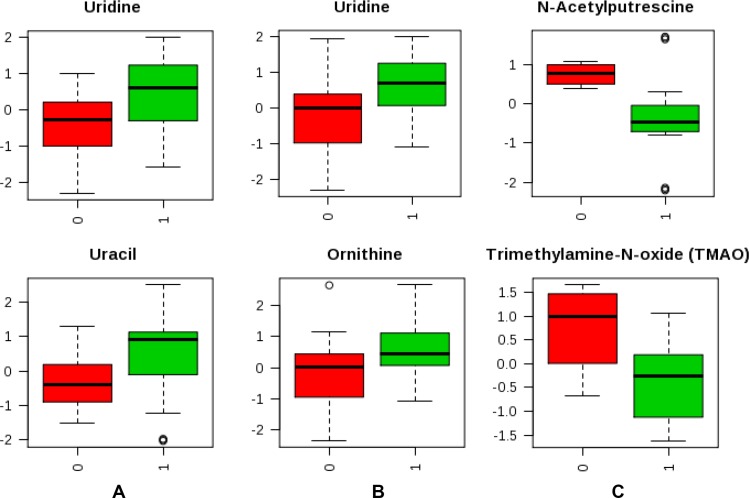
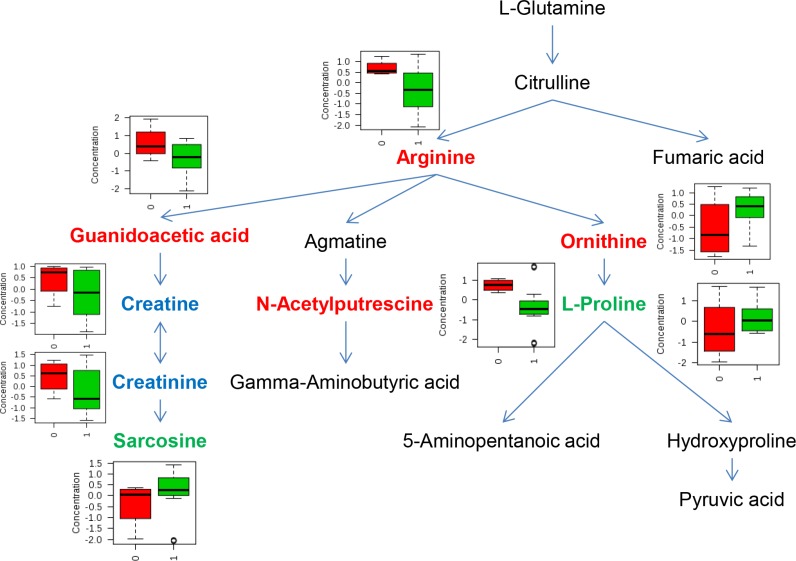
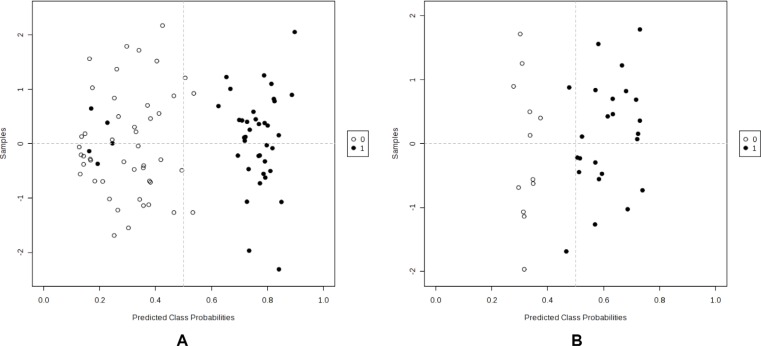
Five metabolites, namely uracil, arginine, lactate, cystamine, and ornithine, significantly differed between high- and low-grade glioma patients in both the discovery and validation cohorts. When the discovery and validation cohorts were combined, we identified 29 significant metabolites with 18 remaining significant after adjusting for multiple comparisons. Those 18 significant metabolites separated high- from low-grade glioma patients with 91.1% accuracy. In the pathway analysis, a total of 18 significantly metabolic pathways were identified. Similarly, we identified 2 and 6 metabolites that significantly differed between GBM and non-GBM, and IDH mutation positive and negative patients after multiple comparison adjusting. Those 6 significant metabolites separated IDH1 mutation positive from negative glioma patients with 94.4% accuracy. Three pathways were identified to be associated with IDH mutation status. Within arginine and proline metabolism, levels of intermediate metabolites in creatine pathway were all significantly lower in IDH mutation positive than in negative patients, suggesting an increased activity of creatine pathway in IDH mutation positive tumors.
Our findings identified metabolites and metabolic pathways that differentiated tumor phenotypes. These may be useful as host biomarker candidates to further help glioma molecular classification.
基于肿瘤的分子生物标志物重新定义了胶质瘤的分类。然而,全身代谢组学与胶质瘤表型之间的关联尚未得到探索。
在本研究中,我们对87例胶质瘤患者的血浆样本进行了两步(发现和验证)代谢组学分析。对代谢组学数据进行测试,以确定其与胶质瘤分级(高分级与低分级)、胶质母细胞瘤(GBM)与恶性胶质瘤以及异柠檬酸脱氢酶(IDH)突变状态的相关性。
在发现队列和验证队列中,尿嘧啶、精氨酸、乳酸、胱胺和鸟氨酸这五种代谢物在高分级和低分级胶质瘤患者之间存在显著差异。当将发现队列和验证队列合并时,我们鉴定出29种显著代谢物,在进行多重比较校正后,仍有18种显著。这18种显著代谢物以91.1%的准确率区分高分级和低分级胶质瘤患者。在通路分析中,共鉴定出18条显著的代谢通路。同样,在进行多重比较校正后,我们鉴定出2种和6种在GBM与非GBM以及IDH突变阳性和阴性患者之间存在显著差异的代谢物。这6种显著代谢物以94.4%的准确率区分IDH1突变阳性和阴性的胶质瘤患者。鉴定出三条与IDH突变状态相关的通路。在精氨酸和脯氨酸代谢中,IDH突变阳性患者中肌酸通路中间代谢物的水平均显著低于阴性患者,这表明IDH突变阳性肿瘤中肌酸通路的活性增加。
我们的研究结果鉴定出了区分肿瘤表型的代谢物和代谢通路。这些可能作为宿主生物标志物候选物来进一步帮助胶质瘤的分子分类。