Mohamed Mona Ali, Siddig Emmanuel Edwar, Elaagip Arwa Hassan, Edris Ali Mahmoud Mohammed, Nasr Awad Ahmed
Department of Parasitology and Medical Entomology, Faculty of Medical Laboratory Sciences, University of Khartoum, Khartoum, Sudan.
Nile College, Khartoum, Sudan.
Ann Clin Microbiol Antimicrob. 2016 Mar 11;15:17. doi: 10.1186/s12941-016-0133-5.
Fresh vegetables are considered as vital nutrients of a healthy diet as they supply the body with essential supplements. The consumption of raw vegetables is the main way for transmission of intestinal parasitic organisms. This study was aimed at detecting the parasitic contamination in fresh vegetables sold in two central open-aired markets in Khartoum state, Sudan.
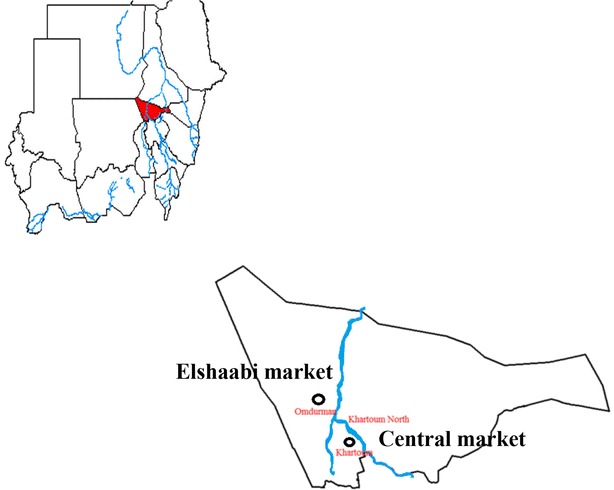
In this prospective cross-sectional study, a total of 260 fresh vegetable samples and 50 water samples used to sprinkle vegetable(s) were collected from two central open-aired markets (namely; Elshaabi and Central markets) during November 2011 to May 2012. The samples were microscopically examined for detection of parasitic life forms using standardized parasitological techniques for protozoans and helminthes worms.
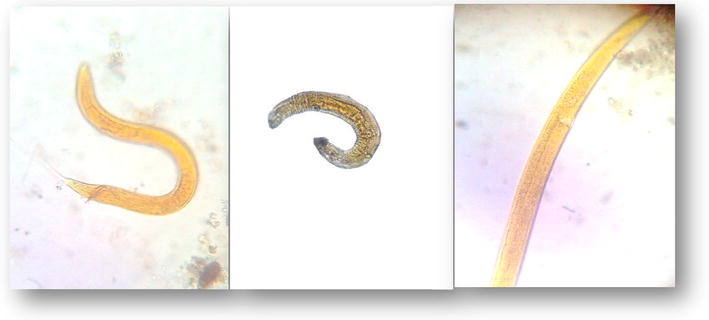
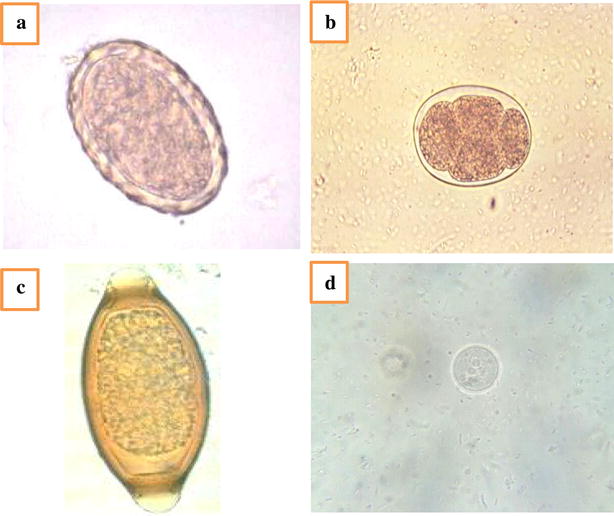
Of the 260 fresh vegetable samples, 35 (13.5 %) were microscopically positive for intestinal parasites whereas 7/50 (14 %) of water samples used to sprinkle vegetable(s) were found positives. Remarkably, high level of contamination in fresh vegetable samples was recorded in lettuce (Lactuca sativa) 36.4 % (4/11) while cayenne pepper (Capsicum annuum) and cucumber (Cucumis sativus) were not contaminated. The identified protozoans and helminthes were Entamoeba histolytica/dispar, Entamoeba coli, Giardia lamblia, Ascaris lumbricoides, Strongyloides stercoralis, T. trichiura and hookworms. The most predominant parasite encountered was E. histolytica/dispar (42.9 %) whereas both T. trichiura and A. lumbricoides (2.9 %) were the least detected parasites. None of the fresh vegetables had single parasitic contamination. The highest percentages found in water samples used to sprinkle vegetable(s) was for Strongyloides larvae 60 % (3/5). It is worth-mentioned that the rate of contamination in Elshaabi market was higher compared with Central market. However, there was no significant correlation between the type of vegetables and existence of parasites in both markets and a high significant relationship was observed between the type of parasite and total prevalence in fresh vegetables (p = 0.000).
The study has identified a moderate rate of fresh vegetables contaminated with protozoan and helminthes. Contaminated fresh vegetables in central markets of Khartoum state may play a significant role in transmission of intestinal parasitic infections to humans, and the water used by greengrocers to sprinkle vegetable(s) can be implicated in vegetable contamination.
新鲜蔬菜被视为健康饮食的重要营养来源,因为它们为身体提供必需的营养成分。生食蔬菜是肠道寄生虫传播的主要途径。本研究旨在检测苏丹喀土穆州两个中央露天市场销售的新鲜蔬菜中的寄生虫污染情况。
在这项前瞻性横断面研究中,于2011年11月至2012年5月期间,从两个中央露天市场(即埃尔沙比市场和中央市场)共采集了260份新鲜蔬菜样本和50份用于喷洒蔬菜的水样。使用针对原生动物和蠕虫的标准化寄生虫学技术对样本进行显微镜检查,以检测寄生虫的生命形式。
在260份新鲜蔬菜样本中,35份(13.5%)在显微镜下检测出肠道寄生虫呈阳性,而用于喷洒蔬菜的50份水样中有7份(14%)呈阳性。值得注意的是,生菜(Lactuca sativa)的新鲜蔬菜样本污染水平较高,为36.4%(4/11),而辣椒(Capsicum annuum)和黄瓜(Cucumis sativus)未受污染。鉴定出的原生动物和蠕虫有溶组织内阿米巴/迪斯帕内阿米巴、结肠内阿米巴、蓝氏贾第鞭毛虫、蛔虫、粪类圆线虫、鞭虫和钩虫。最常见的寄生虫是溶组织内阿米巴/迪斯帕内阿米巴(42.9%),而鞭虫和蛔虫的检出率最低(2.9%)。没有一种新鲜蔬菜受到单一寄生虫污染。用于喷洒蔬菜的水样中,粪类圆线虫幼虫的检出率最高,为60%(3/5)。值得一提的是,埃尔沙比市场的污染率高于中央市场。然而,两个市场中蔬菜类型与寄生虫存在之间均无显著相关性,且观察到寄生虫类型与新鲜蔬菜总患病率之间存在高度显著关系(p = 0.000)。
该研究确定了新鲜蔬菜被原生动物和蠕虫污染的中等比例。喀土穆州中央市场受污染的新鲜蔬菜可能在向人类传播肠道寄生虫感染方面发挥重要作用,菜贩用于喷洒蔬菜的水可能与蔬菜污染有关。