Erpel Fernanda, Restovic Franko, Arce-Johnson Patricio
Departamento de Genética Molecular y Microbiología, Pontificia Universidad Católica de Chile, Alameda 340, Santiago, Chile.
BMC Biotechnol. 2016 Mar 12;16:29. doi: 10.1186/s12896-016-0258-9.
In plant-derived animal feedstuffs, nearly 80 % of the total phosphorus content is stored as phytate. However, phytate is poorly digested by monogastric animals such as poultry, swine and fish, as they lack the hydrolytic enzyme phytase; hence it is regarded as a nutritionally inactive compound from a phosphate bioavailability point of view. In addition, it also chelates important dietary minerals and essential amino acids. Therefore, dietary supplementation with bioavailable phosphate and exogenous phytases are required to achieve optimal animal growth. In order to simplify the obtaining and application processes, we developed a phytase expressing cell-wall deficient Chlamydomonas reinhardtii strain.
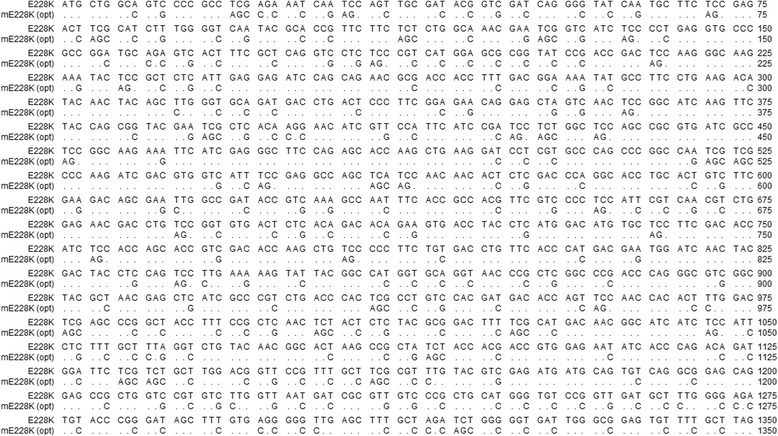
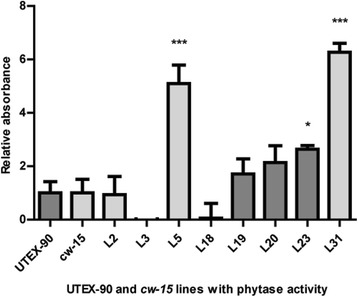
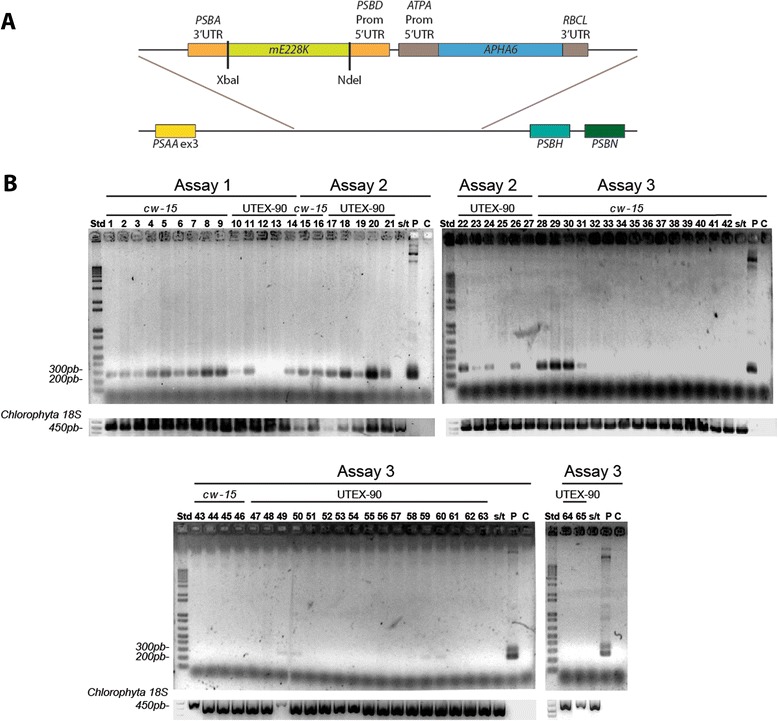
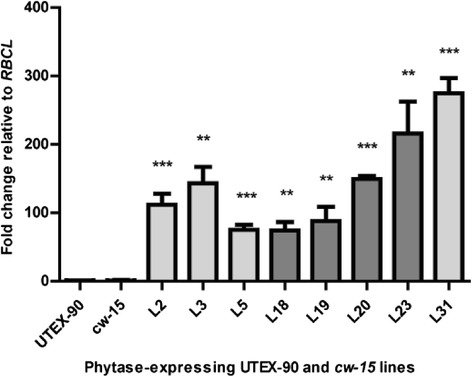
In this work, we developed a transgenic microalgae expressing a fungal phytase to be used as a food supplement for monogastric animals. A codon optimized Aspergillus niger PhyA E228K phytase (mE228K) with improved performance at pH 3.5 was transformed into the plastid genome of Chlamydomonas reinhardtii in order to achieve optimal expression. We engineered a plastid-specific construction harboring the mE228K gene, which allowed us to obtain high expression level lines with measurable in vitro phytase activity. Both wild-type and cell-wall deficient strains were selected, as the latter is a suitable model for animal digestion. The enzymatic activity of the mE228K expressing lines were approximately 5 phytase units per gram of dry biomass at pH 3.5 and 37 °C, similar to physiological conditions and economically competitive for use in commercial activities.
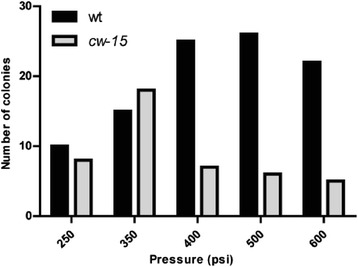
A reference basis for the future biotechnological application of microalgae is provided in this work. A cell-wall deficient transgenic microalgae with phytase activity at gastrointestinal pH and temperature and suitable for pellet formation was developed. Moreover, the associated microalgae biomass costs of this strain would be between US$5 and US$60 per ton of feedstuff, similar to the US$2 per ton of feedstuffs of commercially available phytases. Our data provide evidence of phytate-hydrolyzing microalgae biomass for use as a food additive without the need for protein purification.
在植物源动物饲料中,总磷含量的近80%以植酸盐的形式储存。然而,由于单胃动物如家禽、猪和鱼缺乏水解酶植酸酶,植酸盐很难被它们消化;因此,从磷酸盐生物利用度的角度来看,它被视为一种营养上无活性的化合物。此外,它还螯合重要的膳食矿物质和必需氨基酸。因此,需要在日粮中补充生物可利用的磷酸盐和外源性植酸酶,以实现动物的最佳生长。为了简化获取和应用过程,我们开发了一种表达植酸酶的细胞壁缺陷莱茵衣藻菌株。
在这项工作中,我们开发了一种表达真菌植酸酶的转基因微藻,用作单胃动物的食物补充剂。为了实现最佳表达,将在pH 3.5时性能得到改善的密码子优化的黑曲霉PhyA E228K植酸酶(mE228K)转化到莱茵衣藻的质体基因组中。我们构建了一个携带mE228K基因的质体特异性构建体,这使我们能够获得具有可测量的体外植酸酶活性的高表达水平株系。选择了野生型和细胞壁缺陷型菌株,因为后者是动物消化的合适模型。在pH 3.5和37°C条件下,表达mE228K的株系的酶活性约为每克干生物量5个植酸酶单位,类似于生理条件,在商业活动中使用具有经济竞争力。
这项工作为微藻未来的生物技术应用提供了参考依据。开发了一种在胃肠道pH和温度下具有植酸酶活性且适合制成颗粒的细胞壁缺陷型转基因微藻。此外,该菌株相关的微藻生物质成本为每吨饲料5至60美元,与市售植酸酶每吨饲料2美元相似。我们的数据提供了植酸水解微藻生物质用作食品添加剂而无需蛋白质纯化的证据。