Warne Ben, Harkins Catriona P, Harris Simon R, Vatsiou Alexandra, Stanley-Wall Nicola, Parkhill Julian, Peacock Sharon J, Palmer Tracy, Holden Matthew T G
The Wellcome Trust Sanger Institute, Wellcome Trust Genome Campus, Hinxton, Cambridge, CB10 15A, UK.
University of Cambridge, Addenbrooke's Hospital, Cambridge, CB2 0QQ, UK.
BMC Genomics. 2016 Mar 11;17:222. doi: 10.1186/s12864-016-2426-7.
Type VII protein secretion (T7SS) is a specialised system for excreting extracellular proteins across bacterial cell membranes and has been associated with virulence in Staphylococcus aureus. The genetic diversity of the ess locus, which encodes the T7SS, and the functions of proteins encoded within it are poorly understood.
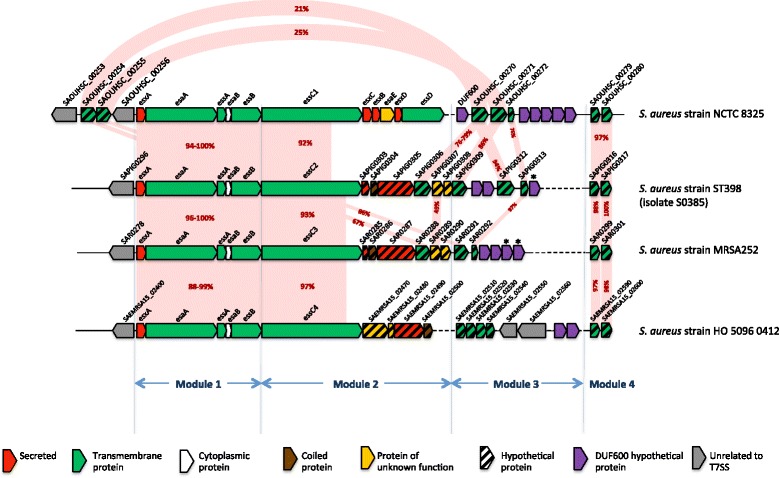
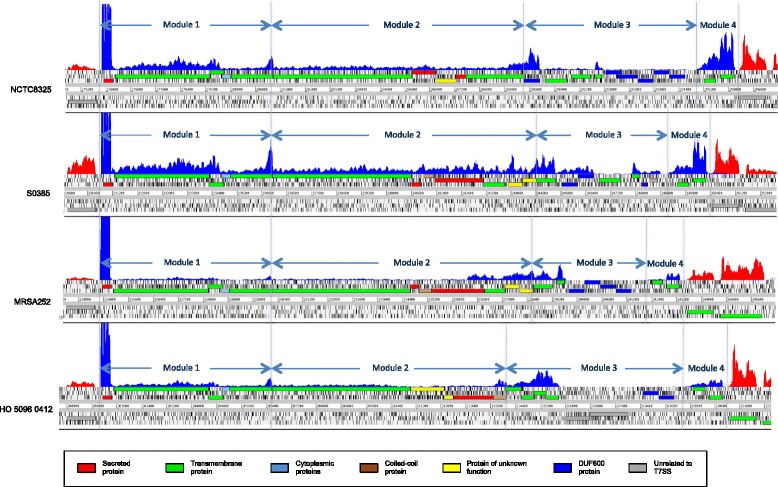
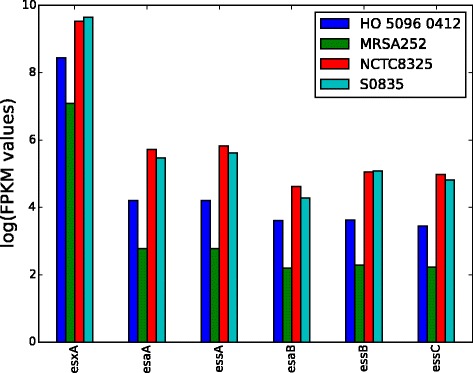
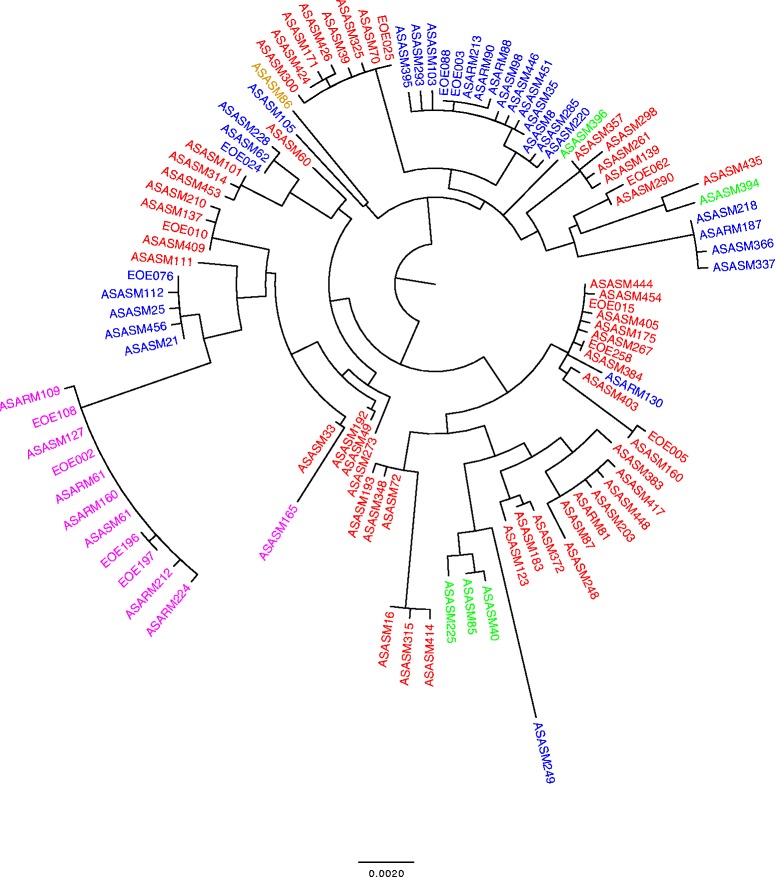
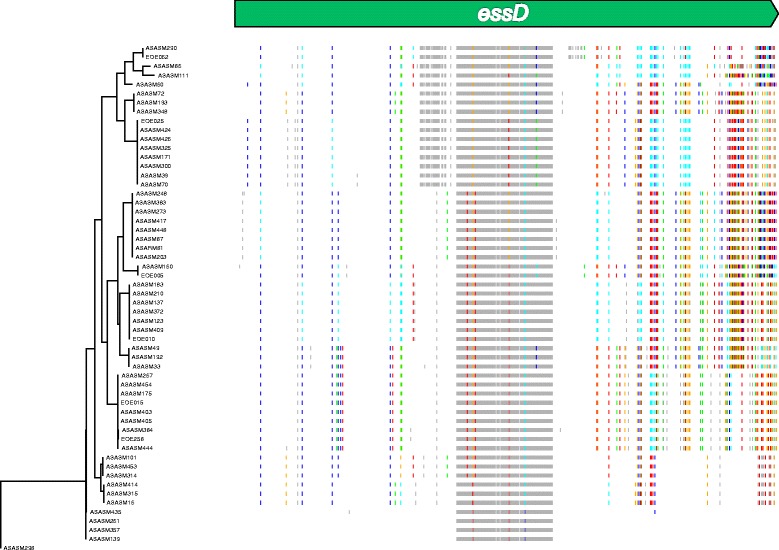
We used whole genome sequence data from 153 isolates representative of the diversity of the species to investigate the genetic variability of T7SS across S. aureus. The ess loci were found to comprise of four distinct modules based on gene content and relative conservation. Modules 1 and 4, comprising of the 5' and 3' modules of the ess locus, contained the most conserved clusters of genes across the species. Module 1 contained genes encoding the secreted protein EsxA, and the EsaAB and EssAB components of the T7SS machinery, and Module 4 contained two functionally uncharacterized conserved membrane proteins. Across the species four variants of Module 2 were identified containing the essC gene, each of which was associated with a specific group of downstream genes. The most diverse module of the ess locus was Module 3 comprising a highly variable arrangement of hypothetical proteins. RNA-Seq was performed on representatives of the four Module 2 variants and demonstrated strain-specific differences in the levels of transcription in the conserved Module 1 components and transcriptional linkage Module 2, and provided evidence of the expression of genes the variable regions of the ess loci.
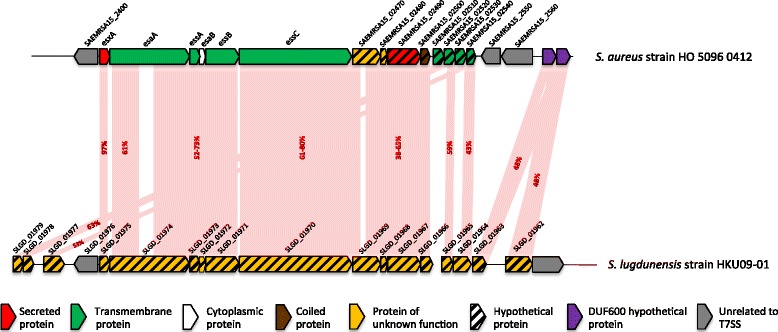
The ess locus of S. aureus exhibits modularity and organisational variation across the species and transcriptional variation. In silico analysis of ess loci encoded hypothetical proteins identified potential novel secreted substrates for the T7SS. The considerable variety in operon arrangement between otherwise closely related isolates provides strong evidence for recombination at this locus. Comparison of these recombination regions with each other, and with the genomes of other Staphylococcal species, failed to identify evidence of intra- and inter-species recombination, however the analysis identified a novel T7SS in another pathogenic staphylococci, Staphylococcus lugdunensis.
VII型蛋白分泌系统(T7SS)是一种用于将细胞外蛋白分泌穿过细菌细胞膜的特殊系统,并且与金黄色葡萄球菌的毒力相关。编码T7SS的ess基因座的遗传多样性及其内部编码的蛋白质功能尚不清楚。
我们使用了来自153株代表该物种多样性的分离株的全基因组序列数据,来研究金黄色葡萄球菌中T7SS的遗传变异性。基于基因含量和相对保守性,发现ess基因座由四个不同的模块组成。模块1和4,分别由ess基因座的5'和3'模块组成,包含了该物种中最保守的基因簇。模块1包含编码分泌蛋白EsxA以及T7SS机制的EsaAB和EssAB组分的基因,模块4包含两个功能未明的保守膜蛋白。在整个物种中,鉴定出了模块2的四种变体,均含有essC基因,每种变体都与一组特定的下游基因相关。ess基因座中最多样化的模块是模块3,其由高度可变的假设蛋白排列组成。对模块2的四种变体的代表进行了RNA测序,结果表明,在保守的模块1组分和转录连锁模块2中的转录水平存在菌株特异性差异,并为ess基因座可变区的基因表达提供了证据。
金黄色葡萄球菌的ess基因座在整个物种中表现出模块化、组织变异和转录变异。对ess基因座编码的假设蛋白进行的计算机分析确定了T7SS潜在的新型分泌底物。在其他方面密切相关的分离株之间,操纵子排列存在相当大的差异,这为该基因座的重组提供了有力证据。将这些重组区域相互比较,以及与其他葡萄球菌物种的基因组进行比较,均未发现种内和种间重组的证据,然而,该分析在另一种致病性葡萄球菌——路邓葡萄球菌中鉴定出了一种新型T7SS。