Christensen Maria H, Paludan Søren R
Department of Biomedicine, Aarhus University, Aarhus DK-8000, Denmark.
Aarhus Research Center for Innate Immunology, Aarhus University, Aarhus DK-8000, Denmark.
Cell Mol Immunol. 2017 Jan;14(1):4-13. doi: 10.1038/cmi.2016.06. Epub 2016 Mar 14.
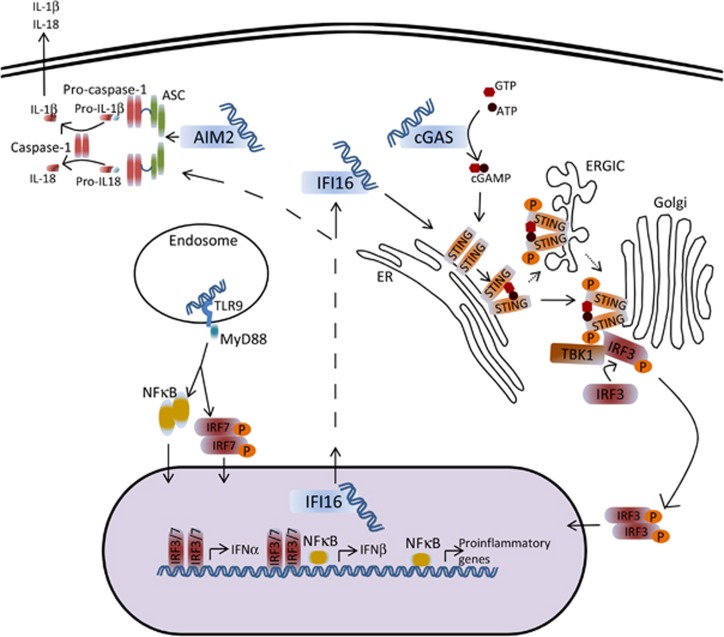
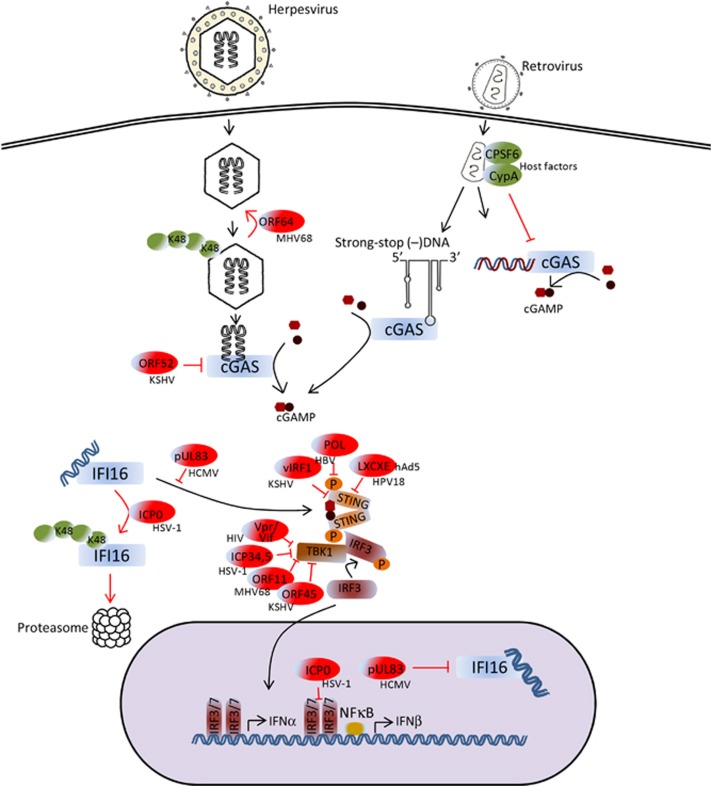
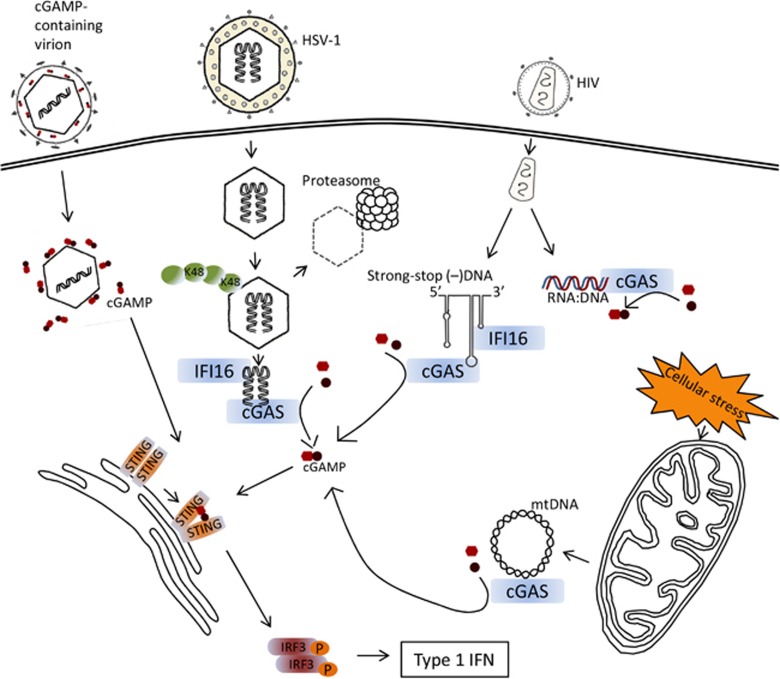
Cellular sensing of virus-derived nucleic acids is essential for early defenses against virus infections. In recent years, the discovery of DNA sensing proteins, including cyclic GMP-AMP synthase (cGAS) and gamma-interferon-inducible protein (IFI16), has led to understanding of how cells evoke strong innate immune responses against incoming pathogens carrying DNA genomes. The signaling stimulated by DNA sensors depends on the adaptor protein STING (stimulator of interferon genes), to enable expression of antiviral proteins, including type I interferon. To facilitate efficient infections, viruses have evolved a wide range of evasion strategies, targeting host DNA sensors, adaptor proteins and transcription factors. In this review, the current literature on virus-induced activation of the STING pathway is presented and we discuss recently identified viral evasion mechanisms targeting different steps in this antiviral pathway.
细胞对病毒衍生核酸的感知对于早期抵御病毒感染至关重要。近年来,包括环状GMP-AMP合酶(cGAS)和γ-干扰素诱导蛋白(IFI16)在内的DNA传感蛋白的发现,使人们了解了细胞如何对携带DNA基因组的入侵病原体引发强烈的先天免疫反应。DNA传感器刺激的信号传导依赖于衔接蛋白STING(干扰素基因刺激物),以实现包括I型干扰素在内的抗病毒蛋白的表达。为了促进高效感染,病毒进化出了多种逃避策略,靶向宿主DNA传感器、衔接蛋白和转录因子。在这篇综述中,我们介绍了关于病毒诱导的STING途径激活的当前文献,并讨论了最近发现的针对这一抗病毒途径不同步骤的病毒逃避机制。