Li Ji-Tao, Su Yun-Ai, Wang Hong-Li, Zhao Ying-Ying, Liao Xue-Mei, Wang Xiao-Dong, Si Tian-Mei
National Clinical Research Center for Mental Disorders, (Peking University Sixth Hospital/Institute of Mental Health) and the Key Laboratory of Mental Health, Ministry of Health (Peking University) Beijing, China.
Depression Treatment Center, Beijing Anding Hospital of Capital Medical University Beijing, China.
Front Mol Neurosci. 2016 Mar 3;9:17. doi: 10.3389/fnmol.2016.00017. eCollection 2016.
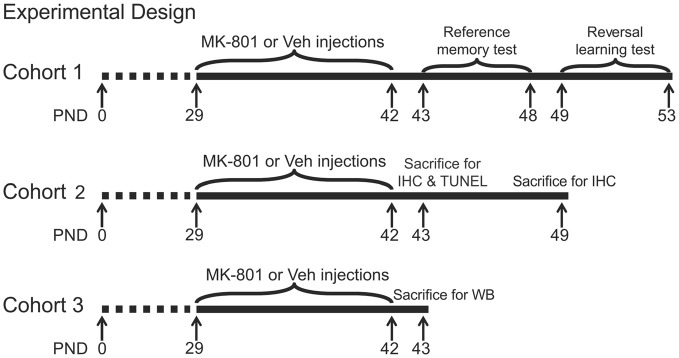
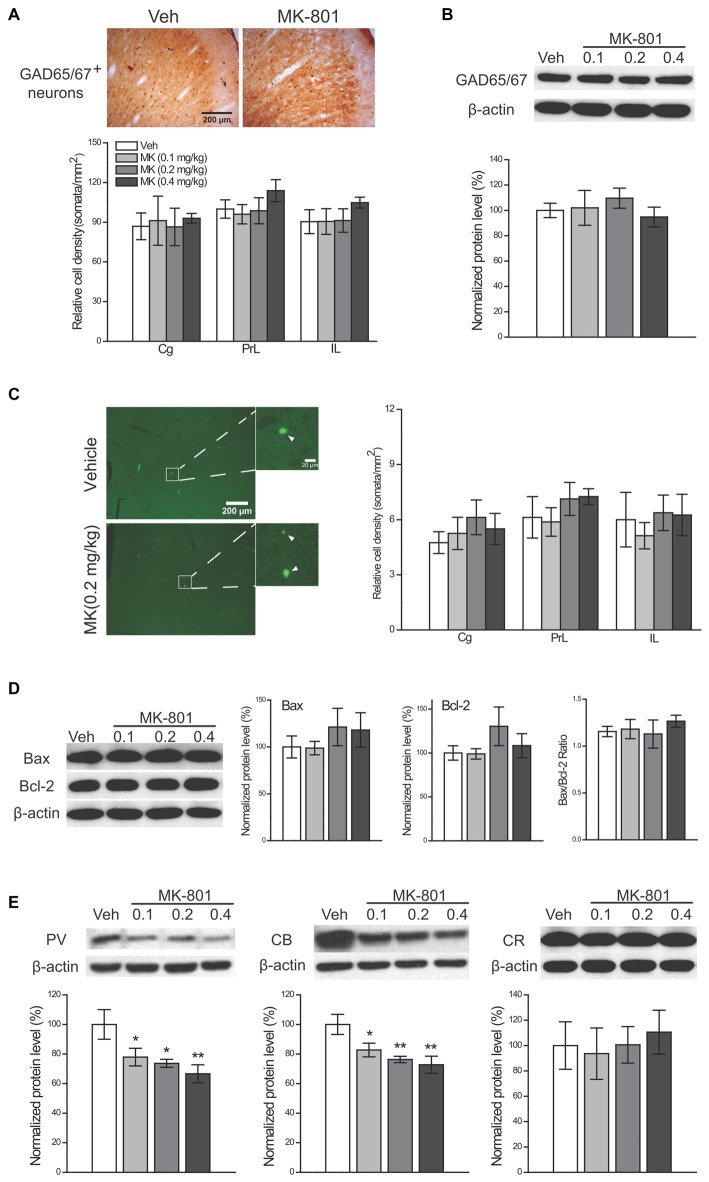
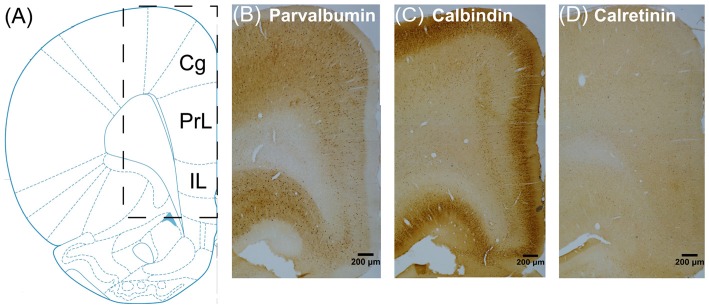
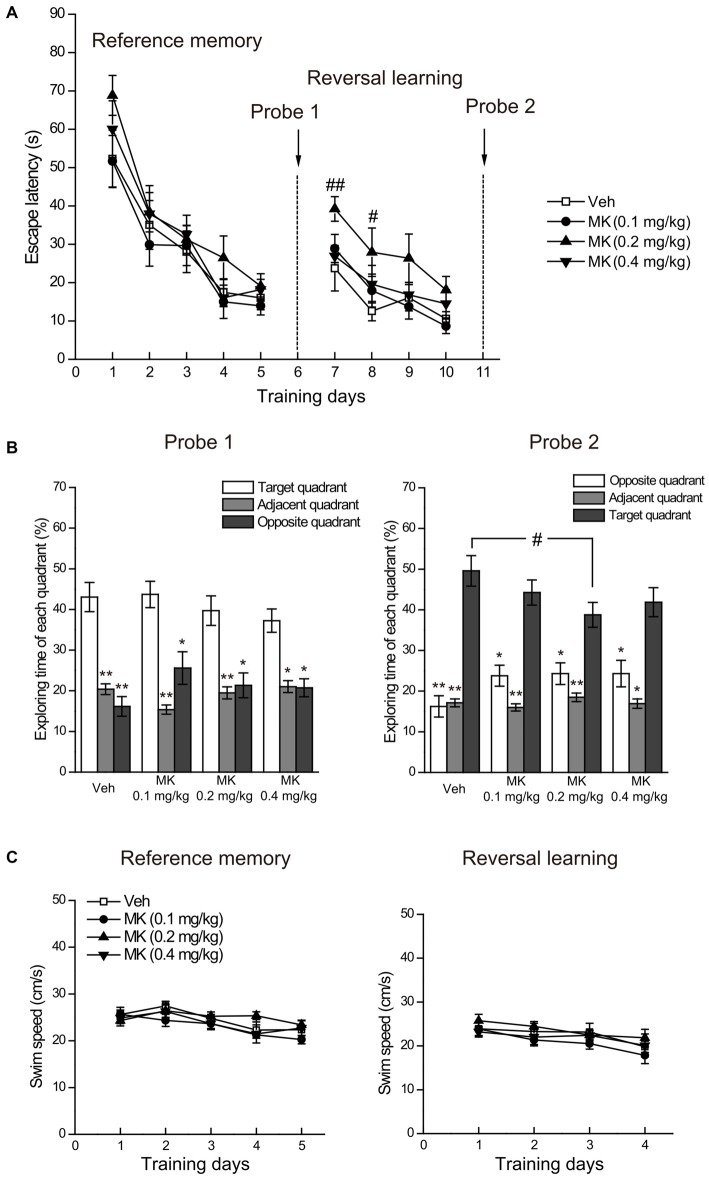
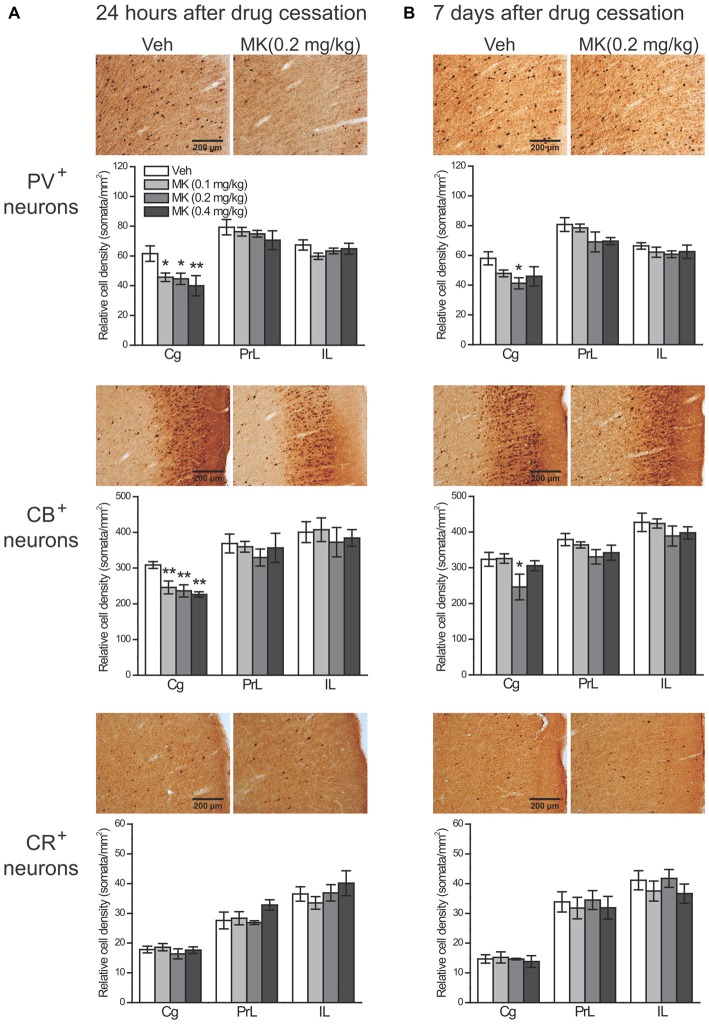
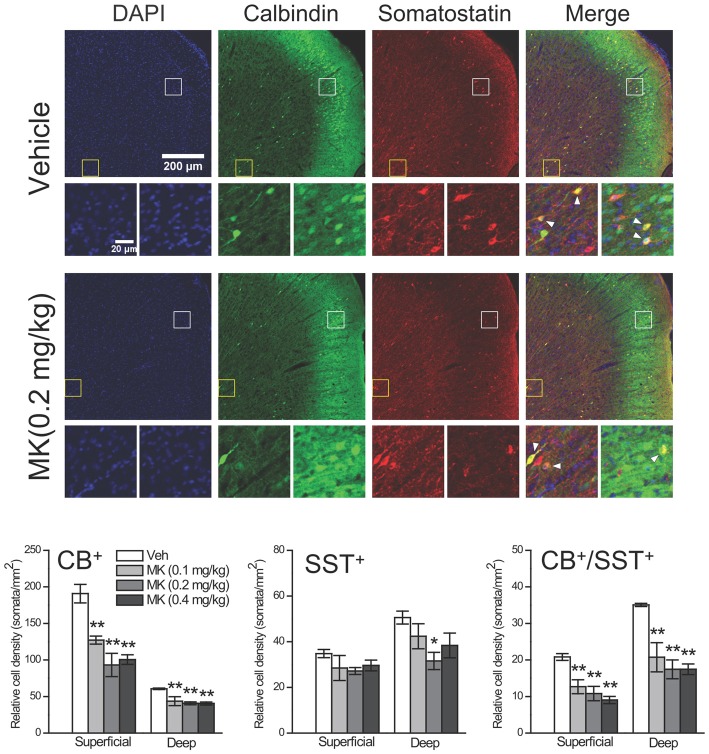
Adolescence is of particular significance to schizophrenia, since psychosis onset typically occurs in this critical period. Based on the N-methyl-D-aspartate (NMDA) receptor hypofunction hypothesis of schizophrenia, in this study, we investigated whether and how repeated NMDA receptor blockade during adolescence would affect GABAergic interneurons in rat medial prefrontal cortex (mPFC) and mPFC-mediated cognitive functions. Specifically, adolescent rats were subjected to intraperitoneal administration of MK-801 (0.1, 0.2, 0.4 mg/kg), a non-competitive NMDA receptor antagonist, for 14 days and then tested for reference memory and reversal learning in the water maze. The density of parvabumin (PV)-, calbindin (CB)- and calretinin (CR)-positive neurons in mPFC was analyzed at either 24 h or 7 days after drug cessation. We found that MK-801 treatment delayed reversal learning in the water maze without affecting initial acquisition. Strikingly, MK-801 treatment also significantly reduced the density of PV(+) and CB(+) neurons, and this effect persisted for 7 days after drug cessation at the dose of 0.2 mg/kg. We further demonstrated that the reduction in PV(+) and CB(+) neuron densities was ascribed to a downregulation of the expression levels of PV and CB, but not to neuronal death. These results parallel the behavioral and neuropathological changes of schizophrenia and provide evidence that adolescent NMDA receptors antagonism offers a useful tool for unraveling the etiology of the disease.
青春期对精神分裂症具有特殊意义,因为精神病通常在这个关键时期发病。基于精神分裂症的N-甲基-D-天冬氨酸(NMDA)受体功能低下假说,在本研究中,我们调查了青春期期间反复阻断NMDA受体是否以及如何影响大鼠内侧前额叶皮质(mPFC)中的γ-氨基丁酸能中间神经元以及mPFC介导的认知功能。具体而言,对青春期大鼠腹腔注射非竞争性NMDA受体拮抗剂MK-801(0.1、0.2、0.4mg/kg),持续14天,然后在水迷宫中测试其参考记忆和逆向学习能力。在停药后24小时或7天分析mPFC中小清蛋白(PV)、钙结合蛋白(CB)和钙视网膜蛋白(CR)阳性神经元的密度。我们发现,MK-801治疗延迟了水迷宫中的逆向学习,而不影响初始习得。令人惊讶的是,MK-801治疗还显著降低了PV(+)和CB(+)神经元的密度,并且在0.2mg/kg剂量下,这种效应在停药后持续7天。我们进一步证明,PV(+)和CB(+)神经元密度的降低归因于PV和CB表达水平的下调,而不是神经元死亡。这些结果与精神分裂症的行为和神经病理学变化相似,并提供了证据表明青春期NMDA受体拮抗作用为揭示该疾病的病因提供了一个有用的工具。