Caballero Adriana, Flores-Barrera Eden, Cass Daryn K, Tseng Kuei Y
Department of Cellular and Molecular Pharmacology, The Chicago Medical School at Rosalind Franklin University of Medicine and Science, 3333 Green Bay Rd, North Chicago, IL, 60064, USA.
Brain Struct Funct. 2014 Jan;219(1):395-406. doi: 10.1007/s00429-013-0508-8. Epub 2013 Feb 12.
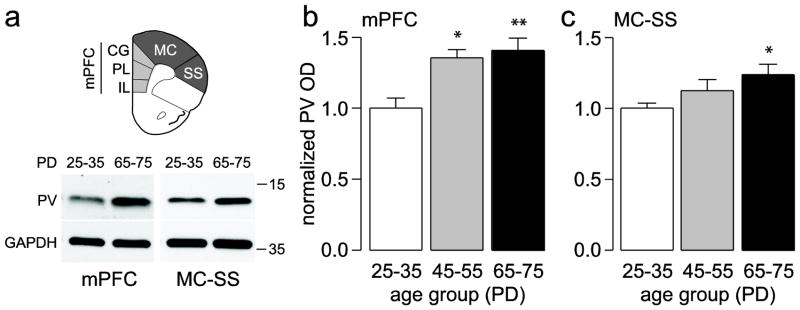
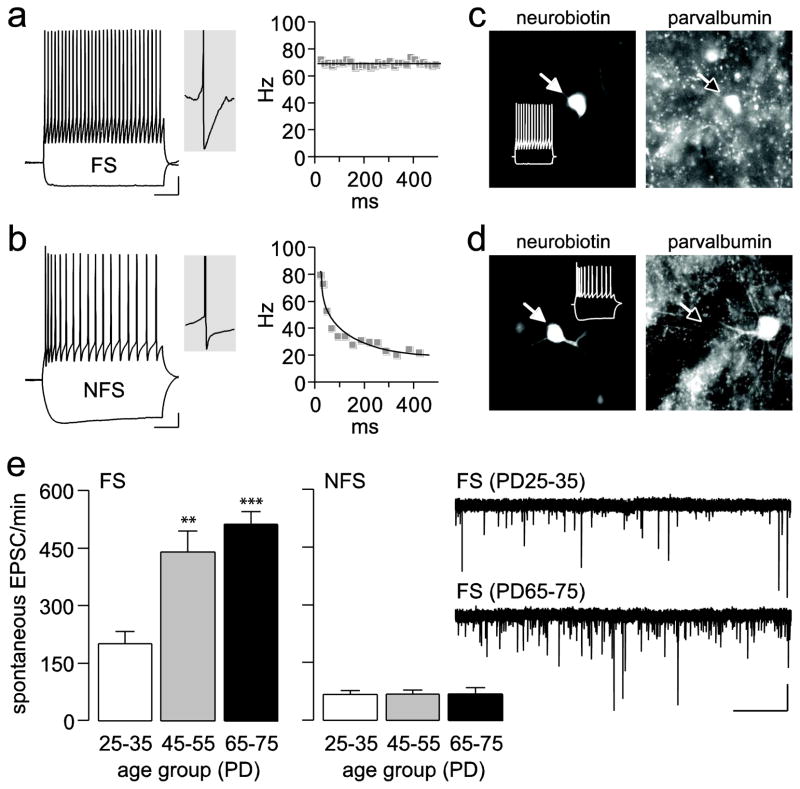
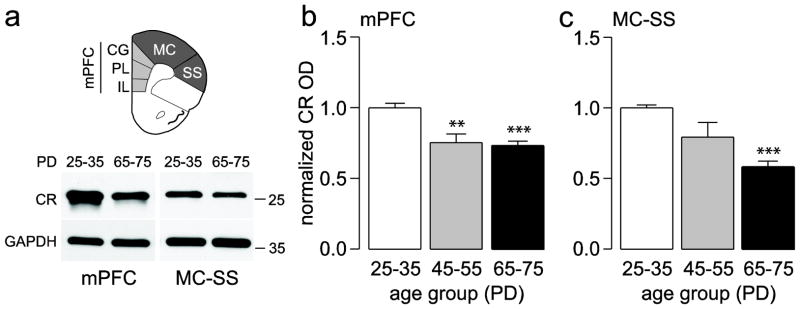
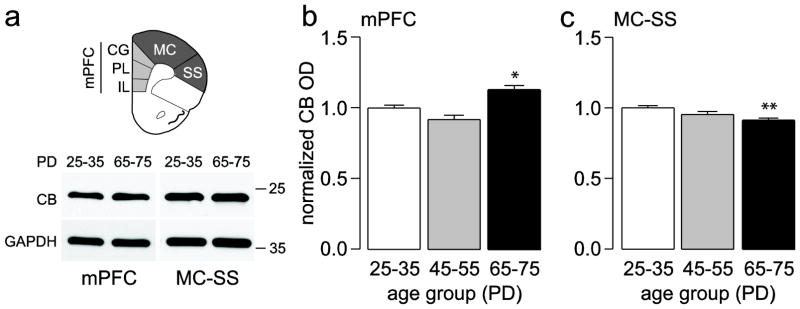
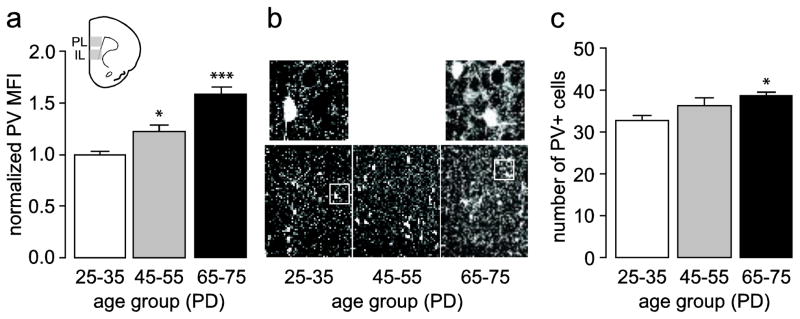
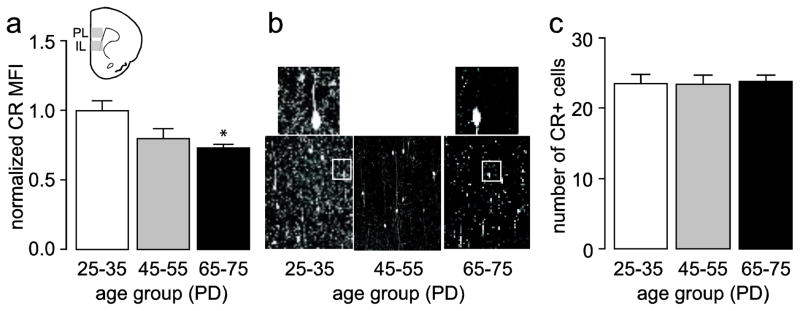
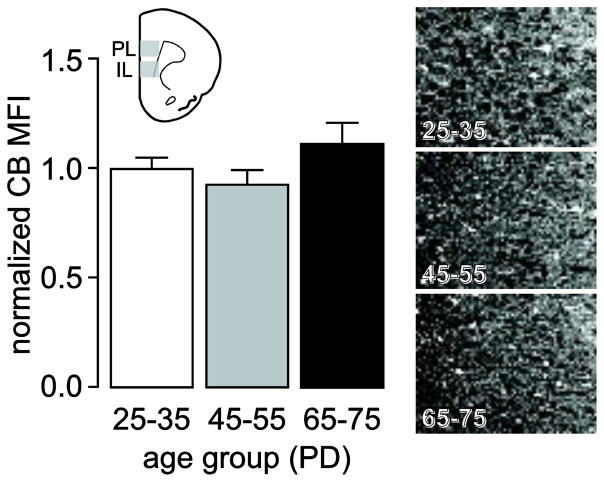
Determining the normal developmental trajectory of individual GABAergic components in the prefrontal cortex (PFC) during the adolescent transition period is critical because local GABAergic interneurons are thought to play an important role in the functional maturation of cognitive control that occurs in this developmental window. Based on the expression of calcium-binding proteins, three distinctive subtypes of interneurons have been identified in the PFC: parvalbumin (PV)-, calretinin (CR)-, and calbindin (CB)-positive cells. Using biochemical and histochemical measures, we found that the protein level of PV is lowest in juveniles [postnatal days (PD) 25-35] and increases during adolescence (PD 45-55) to levels similar to those observed in adulthood (PD 65-75). In contrast, the protein expression of CR is reduced in adults compared to juvenile and adolescent animals, whereas CB levels remain mostly unchanged across the developmental window studied here. Semi-quantitative immunostaining analyses revealed that the periadolescent upregulation of PV and the loss of the CR signal appear to be attributable to changes in PV- and CR-positive innervation, which are dissociable from the trajectory of PV- and CR-positive cell number. At the synaptic level, our electrophysiological data revealed that a developmental facilitation of spontaneous glutamatergic synaptic inputs onto PV-positive/fast-spiking interneurons parallels the increase in prefrontal PV signal during the periadolescent transition. In contrast, no age-dependent changes in glutamatergic transmission were observed in PV-negative/non fast-spiking interneurons. Together, these findings emphasize that GABAergic inhibitory interneurons in the PFC undergo a dynamic, cell type-specific remodeling during adolescence and provide a developmental framework for understanding alterations in GABAergic circuits that occur in psychiatric disorders.
确定青春期过渡期间前额叶皮质(PFC)中各个GABA能成分的正常发育轨迹至关重要,因为局部GABA能中间神经元被认为在这个发育阶段发生的认知控制功能成熟中起重要作用。基于钙结合蛋白的表达,在PFC中已鉴定出三种不同亚型的中间神经元:小白蛋白(PV)、钙视网膜蛋白(CR)和钙结合蛋白(CB)阳性细胞。通过生化和组织化学方法,我们发现PV的蛋白水平在幼年动物(出生后天数[PD]25 - 35)中最低,并在青春期(PD 45 - 55)增加至与成年动物(PD 65 - 75)中观察到的水平相似。相比之下,与幼年和青春期动物相比,成年动物中CR的蛋白表达降低,而CB水平在此处研究的整个发育阶段基本保持不变。半定量免疫染色分析表明,青春期前后PV的上调和CR信号的丧失似乎归因于PV和CR阳性神经支配的变化,这与PV和CR阳性细胞数量的轨迹无关。在突触水平,我们的电生理数据表明,在青春期前后过渡期间,自发谷氨酸能突触输入对PV阳性/快速放电中间神经元的发育促进作用与前额叶PV信号的增加平行。相比之下,在PV阴性/非快速放电中间神经元中未观察到谷氨酸能传递的年龄依赖性变化。总之,这些发现强调PFC中的GABA能抑制性中间神经元在青春期经历动态的、细胞类型特异性的重塑,并为理解精神疾病中发生的GABA能回路改变提供了一个发育框架。