
孕期锌缺乏小鼠自闭症样行为的性别依赖性评估
Gender Dependent Evaluation of Autism like Behavior in Mice Exposed to Prenatal Zinc Deficiency.
作者信息
Grabrucker Stefanie, Boeckers Tobias M, Grabrucker Andreas M
机构信息
Institute for Anatomy and Cell Biology, Ulm University Ulm, Germany.
Institute for Anatomy and Cell Biology, Ulm UniversityUlm, Germany; WG Molecular Analysis of Synaptopathies, Neurology Department, Neurocenter of Ulm UniversityUlm, Germany.
出版信息
Front Behav Neurosci. 2016 Mar 3;10:37. doi: 10.3389/fnbeh.2016.00037. eCollection 2016.
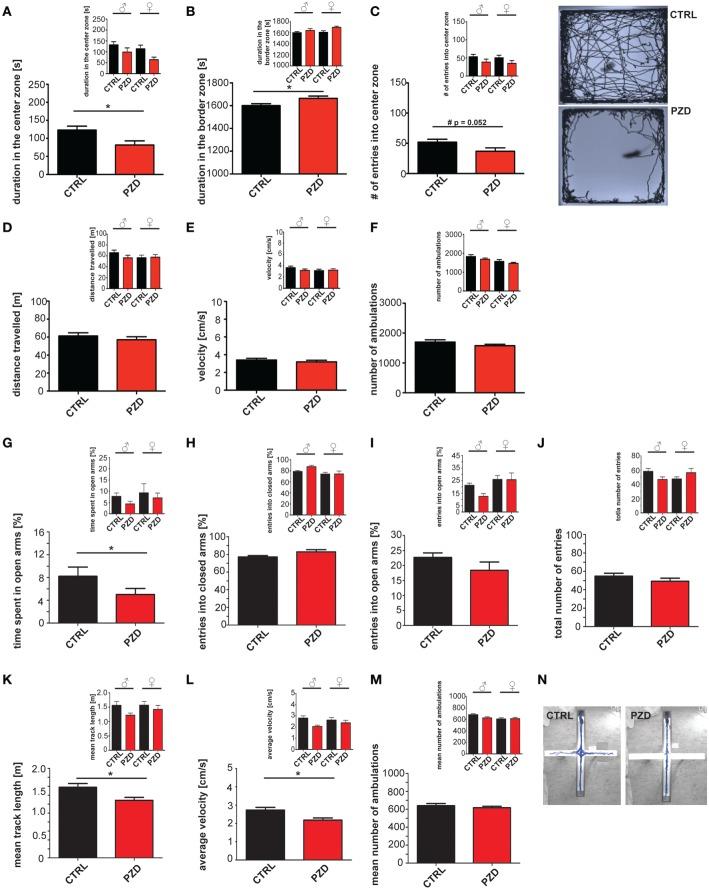
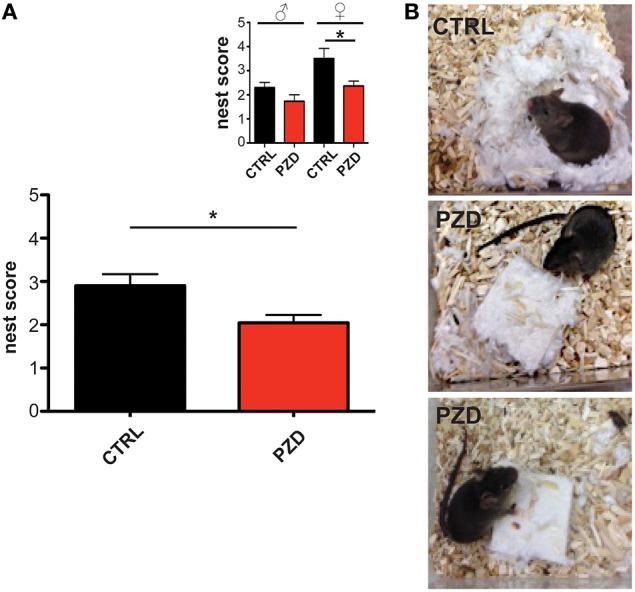
Zinc deficiency has recently been linked to the etiology of autism spectrum disorders (ASD) as environmental risk factor. With an estimated 17% of the world population being at risk of zinc deficiency, especially zinc deficiency during pregnancy might be a common occurrence, also in industrialized nations. On molecular level, zinc deficiency has been shown to affect a signaling pathway at glutamatergic synapses that has previously been identified through genetic mutations in ASD patients, the Neurexin-Neuroligin-Shank pathway, via altering zinc binding Shank family members. In particular, prenatal zinc deficient but not acute zinc deficient animals have been reported to display autism like behavior in some behavioral tests. However, a full behavioral analysis of a possible autism like behavior has been lacking so far. Here, we performed an extensive behavioral phenotyping of mice born from mothers with mild zinc deficiency during all trimesters of pregnancy. Prenatal zinc deficient animals were investigated as adults and gender differences were assessed. Our results show that prenatal zinc deficient mice display increased anxiety, deficits in nest building and various social interaction paradigm, as well as mild alterations in ultrasonic vocalizations. A gender specific analysis revealed only few sex specific differences. Taken together, given that similar behavioral abnormalities as reported here are frequently observed in ASD mouse models, we conclude that prenatal zinc deficient animals even without specific genetic susceptibility for ASD, already show some features of ASD like behavior.
锌缺乏最近被认为是自闭症谱系障碍(ASD)病因中的一种环境风险因素。据估计,全球17%的人口面临锌缺乏风险,尤其是孕期锌缺乏,即便在工业化国家也可能是常见现象。在分子水平上,锌缺乏已被证明会影响谷氨酸能突触处的一条信号通路,该通路先前已通过对ASD患者的基因突变确定,即通过改变锌结合蛋白Shank家族成员,影响Neurexin-Neuroligin-Shank信号通路。特别值得一提的是,据报道,产前锌缺乏而非急性锌缺乏的动物在一些行为测试中表现出自闭症样行为。然而,迄今为止,尚未对可能的自闭症样行为进行全面的行为分析。在此,我们对孕期全程轻度锌缺乏的母鼠所生的小鼠进行了广泛的行为表型分析。对产前锌缺乏的动物成年后进行研究,并评估性别差异。我们的结果表明,产前锌缺乏的小鼠表现出焦虑增加、筑巢能力缺陷、在各种社交互动范式中存在问题,以及超声波发声出现轻微改变。性别特异性分析仅揭示了少数性别特异性差异。综上所述,鉴于在此报道的类似行为异常在ASD小鼠模型中经常观察到,我们得出结论,即使没有ASD的特定遗传易感性,产前锌缺乏的动物已经表现出一些ASD样行为特征。




 Zotero 插件