Habgood Anthony N, Tatler Amanda L, Porte Joanne, Wahl Sharon M, Laurent Geoffrey J, John Alison E, Johnson Simon R, Jenkins Gisli
Nottingham Respiratory Research Unit, University of Nottingham, Nottingham, England.
National Institute of Dental & Craniofacial Research, NIH, Bethesda, MA, USA.
Lab Invest. 2016 Jun;96(6):623-31. doi: 10.1038/labinvest.2016.40. Epub 2016 Mar 14.
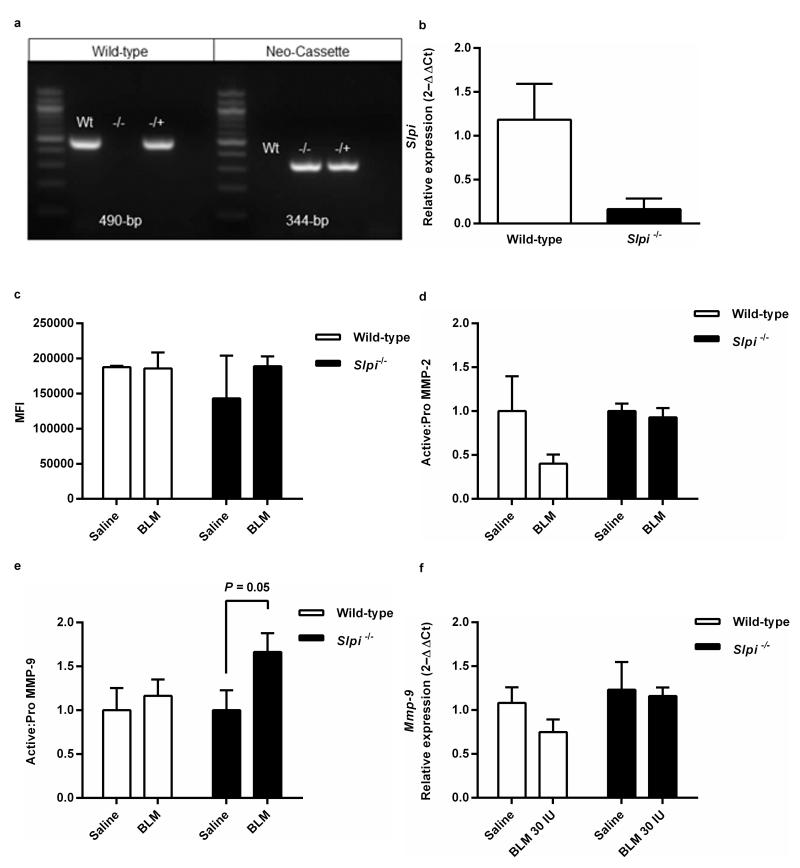
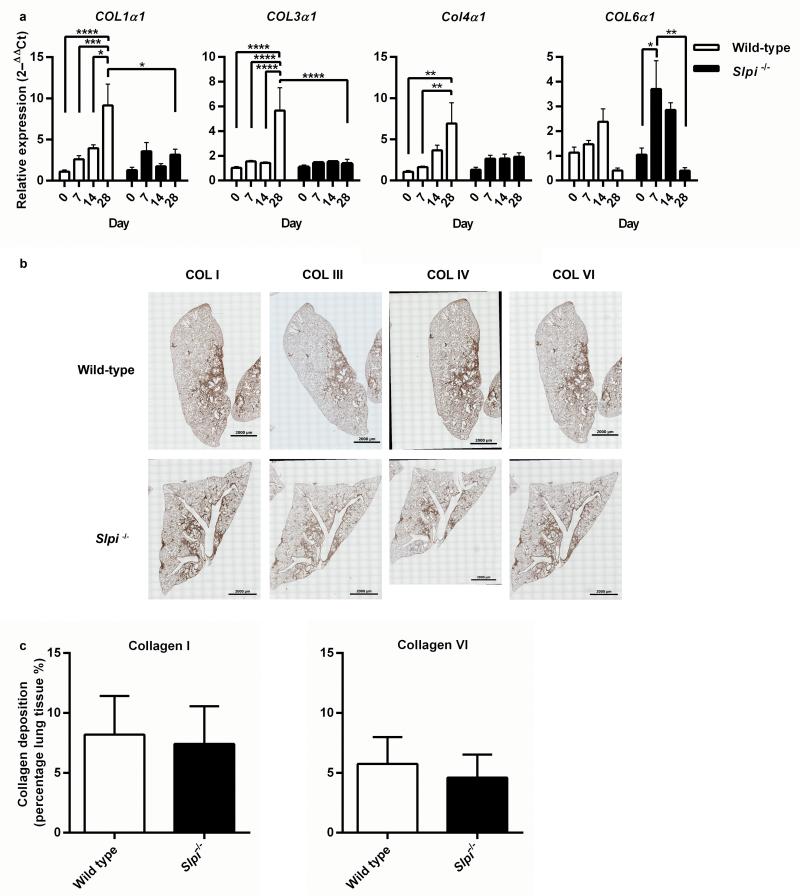
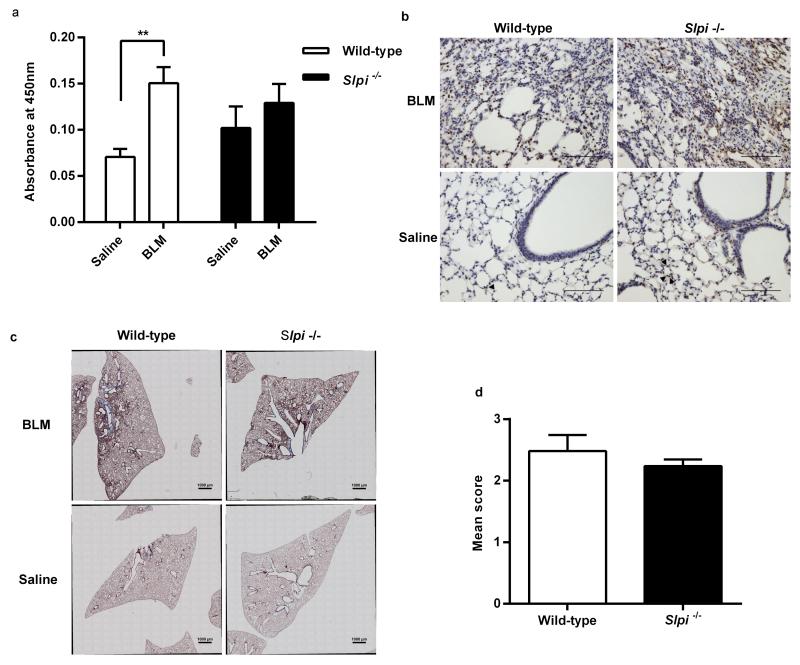
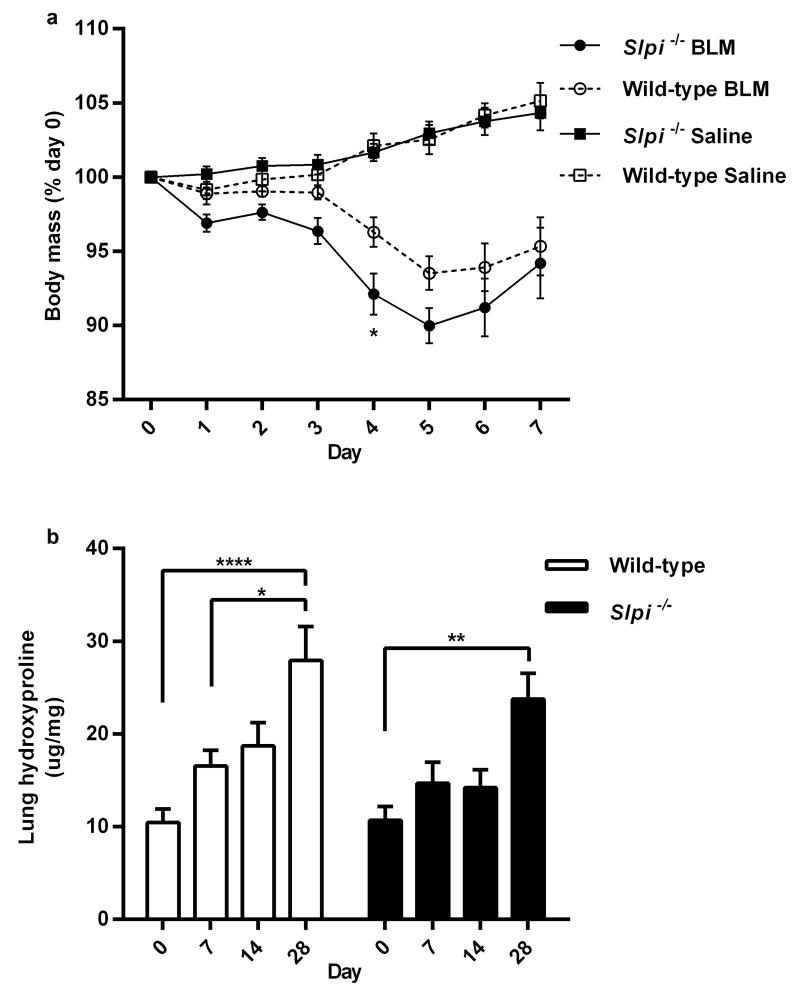
Idiopathic pulmonary fibrosis is a progressive, fatal disease with limited treatment options. Protease-mediated transforming growth factor-β (TGF-β) activation has been proposed as a pathogenic mechanism of lung fibrosis. Protease activity in the lung is tightly regulated by protease inhibitors, particularly secretory leukocyte protease inhibitor (SLPI). The bleomycin model of lung fibrosis was used to determine the effect of increased protease activity in the lungs of Slpi(-/-) mice following injury. Slpi(-/-), and wild-type, mice received oropharyngeal administration of bleomycin (30 IU) and the development of pulmonary fibrosis was assessed. Pro and active forms of matrix metalloproteinase (MMP)-2 and MMP-9 were measured. Lung fibrosis was determined by collagen subtype-specific gene expression, hydroxyproline concentration, and histological assessment. Alveolar TGF-β activation was measured using bronchoalveolar lavage cell pSmad2 levels and global TGF-β activity was assessed by pSmad2 immunohistochemistry. The active-MMP-9 to pro-MMP-9 ratio was significantly increased in Slpi(-/-) animals compared with wild-type animals, demonstrating enhanced metalloproteinase activity. Wild-type animals showed an increase in TGF-β activation following bleomycin, with a progressive and sustained increase in collagen type I, alpha 1 (Col1α1), III, alpha 1(Col3α1), IV, alpha 1(Col4α1) mRNA expression, and a significant increase in total lung collagen 28 days post bleomycin. In contrast Slpi(-/-) mice showed no significant increase of alveolar TGF-β activity following bleomycin, above their already elevated levels, although global TGF-β activity did increase. Slpi(-/-) mice had impaired collagen gene expression but animals demonstrated minimal reduction in lung fibrosis compared with wild-type animals. These data suggest that enhanced proteolysis does not further enhance TGF-β activation, and inhibits sustained Col1α1, Col3α1, and Col4α1 gene expression following lung injury. However, these changes do not prevent the development of lung fibrosis. Overall, these data suggest that the absence of Slpi does not markedly modify the development of lung fibrosis following bleomycin-induced lung injury.
特发性肺纤维化是一种进行性致命疾病,治疗选择有限。蛋白酶介导的转化生长因子-β(TGF-β)激活已被提出作为肺纤维化的致病机制。肺中的蛋白酶活性受蛋白酶抑制剂严格调控,尤其是分泌型白细胞蛋白酶抑制剂(SLPI)。使用博来霉素诱导的肺纤维化模型来确定损伤后Slpi(-/-)小鼠肺中蛋白酶活性增加的影响。将Slpi(-/-)小鼠和野生型小鼠经口咽给予博来霉素(30IU),并评估肺纤维化的发展情况。检测基质金属蛋白酶(MMP)-2和MMP-9的前体和活性形式。通过胶原亚型特异性基因表达、羟脯氨酸浓度和组织学评估来确定肺纤维化。使用支气管肺泡灌洗细胞pSmad2水平测量肺泡TGF-β激活,并通过pSmad2免疫组织化学评估整体TGF-β活性。与野生型动物相比,Slpi(-/-)动物中活性MMP-9与前体MMP-9的比率显著增加,表明金属蛋白酶活性增强。野生型动物在博来霉素处理后TGF-β激活增加,I型胶原α1(Col1α1)、III型胶原α1(Col3α1)、IV型胶原α1(Col4α1)mRNA表达呈进行性持续增加,且在博来霉素处理28天后肺总胶原显著增加。相比之下,Slpi(-/-)小鼠在博来霉素处理后肺泡TGF-β活性虽高于其已升高的水平,但无显著增加,尽管整体TGF-β活性确实增加。Slpi(-/-)小鼠的胶原基因表达受损,但与野生型动物相比,其肺纤维化程度仅有轻微降低。这些数据表明,增强的蛋白水解作用不会进一步增强TGF-β激活,并抑制肺损伤后Col1α1、Col3α1和Col4α1基因的持续表达。然而,这些变化并不能阻止肺纤维化的发展。总体而言,这些数据表明,缺乏SLPI并不会显著改变博来霉素诱导的肺损伤后肺纤维化的发展。