Hurley M M, Resch J M, Maunze B, Frenkel M M, Baker D A, Choi S
Department of Biomedical Sciences, Marquette University, Milwaukee, WI, USA.
Int J Obes (Lond). 2016 Jul;40(7):1183-6. doi: 10.1038/ijo.2016.31. Epub 2016 Feb 15.
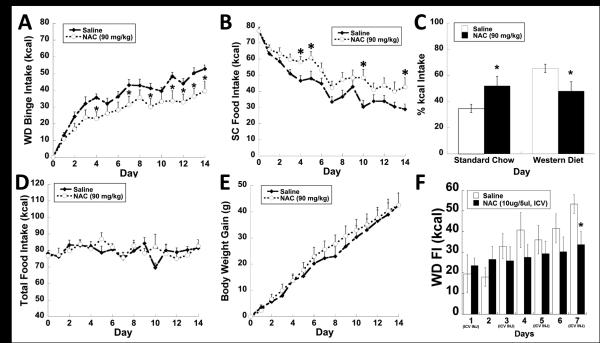
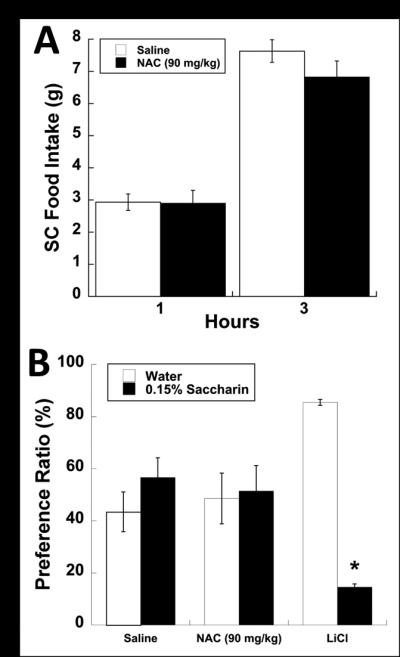
Binge-eating behavior involves rapid consumption of highly palatable foods leading to increased weight gain. Feeding in binge disorders resembles other compulsive behaviors, many of which are responsive to N-acetylcysteine (NAC), which is a cysteine prodrug often used to promote non-vesicular glutamate release by a cystine-glutamate antiporter. To examine the potential for NAC to alter a form of compulsive eating, we examined the impact of NAC on binge eating in a rodent model. Specifically, we monitored consumption of standard chow and a high-fat, high carbohydrate western diet (WD) in a rodent limited-access binge paradigm. Before each session, rats received either a systemic or intraventricular injection of NAC. Both systemic and central administration of NAC resulted in significant reductions of binge eating the WD without decreasing standard chow consumption. The reduction in WD was not attributable to general malaise as NAC did not produce condition taste aversion. These results are consistent with the clinical evidence of NAC to reduce or reverse compulsive behaviors, such as, drug addiction, skin picking and hair pulling.
暴饮暴食行为包括快速大量食用美味食物,从而导致体重增加。暴饮暴食障碍中的进食行为类似于其他强迫行为,其中许多行为对N-乙酰半胱氨酸(NAC)有反应,NAC是一种半胱氨酸前体药物,常用于通过胱氨酸-谷氨酸反向转运体促进非囊泡性谷氨酸释放。为了研究NAC改变强迫性进食形式的可能性,我们在啮齿动物模型中研究了NAC对暴饮暴食的影响。具体而言,我们在啮齿动物限时暴饮暴食范式中监测了标准食物和高脂肪、高碳水化合物的西方饮食(WD)的摄入量。在每次实验前,大鼠接受全身或脑室内注射NAC。全身和中枢给予NAC均导致WD暴饮暴食量显著减少,而标准食物摄入量未减少。WD摄入量的减少并非由于全身不适,因为NAC并未产生条件性味觉厌恶。这些结果与NAC减少或逆转强迫行为(如药物成瘾、抠皮肤和拔毛发)的临床证据一致。