Yu Hye-Sun, Kim Jung-Ju, Kim Hae-Won, Lewis Mark P, Wall Ivan
Department of Biochemical Engineering, University College London, London, UK; Department of Nanobiomedical Science and BK21 Plus NBM Global Research Center for Regenerative Medicine, Dankook University Graduate School, Cheonan, South Korea; Institute of Tissue Regeneration Engineering (ITREN), Dankook University, Cheonan, South Korea.
Department of Nanobiomedical Science and BK21 Plus NBM Global Research Center for Regenerative Medicine, Dankook University Graduate School, Cheonan, South Korea; Institute of Tissue Regeneration Engineering (ITREN), Dankook University, Cheonan, South Korea.
J Tissue Eng. 2016 Feb 13;7:2041731415618342. doi: 10.1177/2041731415618342. eCollection 2016 Jan-Dec.
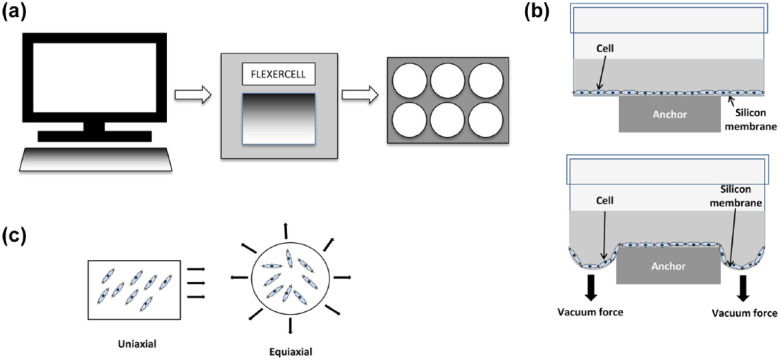
Mechanical loading is recognized to play an important role in regulating the behaviors of cells in bone and surrounding tissues in vivo. Many in vitro studies have been conducted to determine the effects of mechanical loading on individual cell types of the tissues. In this review, we focus specifically on the use of the Flexercell system as a tool for studying cellular responses to mechanical stretch. We assess the literature describing the impact of mechanical stretch on different cell types from bone, muscle, tendon, ligament, and cartilage, describing individual cell phenotype responses. In addition, we review evidence regarding the mechanotransduction pathways that are activated to potentiate these phenotype responses in different cell populations.
机械负荷被认为在体内调节骨及周围组织中细胞的行为方面发挥着重要作用。已经进行了许多体外研究来确定机械负荷对组织中单个细胞类型的影响。在这篇综述中,我们特别关注使用Flexercell系统作为研究细胞对机械拉伸反应的工具。我们评估了描述机械拉伸对来自骨、肌肉、肌腱、韧带和软骨的不同细胞类型影响的文献,描述了单个细胞表型反应。此外,我们回顾了关于在不同细胞群体中被激活以增强这些表型反应的机械转导途径的证据。