Duric Vanja, Clayton Sarah, Leong Mai Lan, Yuan Li-Lian
Department of Physiology and Pharmacology, Des Moines University, Des Moines, IA 50312, USA.
Neural Plast. 2016;2016:5460732. doi: 10.1155/2016/5460732. Epub 2016 Feb 8.
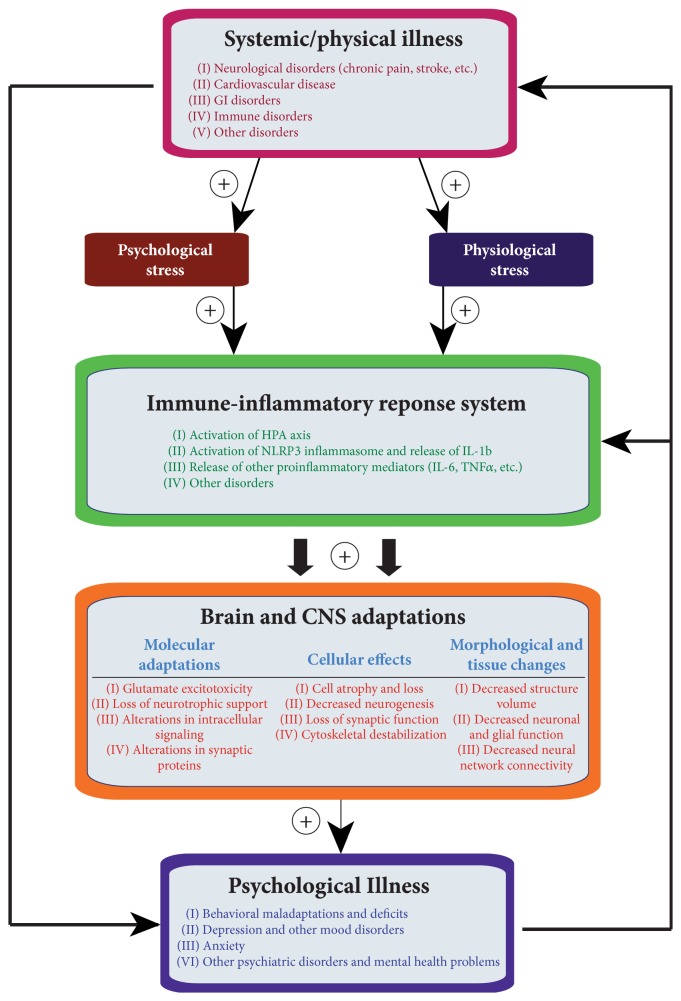
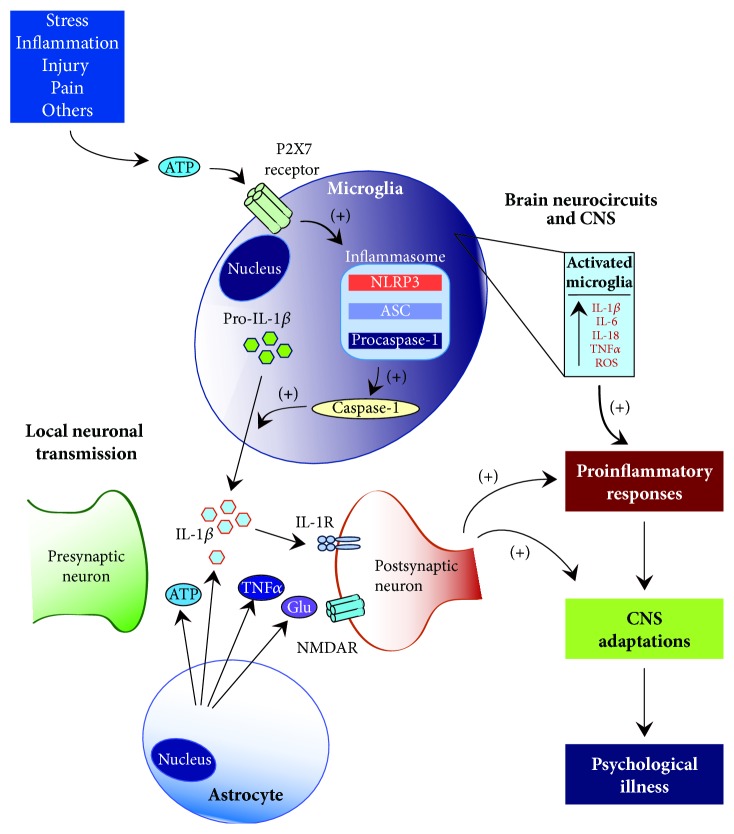
Neuropsychiatric symptoms and mental illness are commonly present in patients with chronic systemic diseases. Mood disorders, such as depression, are present in up to 50% of these patients, resulting in impaired physical recovery and more intricate treatment regimen. Stress associated with both physical and emotional aspects of systemic illness is thought to elicit detrimental effects to initiate comorbid mental disorders. However, clinical reports also indicate that the relationship between systemic and psychiatric illnesses is bidirectional, further increasing the complexity of the underlying pathophysiological processes. In this review, we discuss the recent evidence linking chronic stress and systemic illness, such as activation of the immune response system and release of common proinflammatory mediators. Altogether, discovery of new targets is needed for development of better treatments for stress-related psychiatric illnesses as well as improvement of mental health aspects of different systemic diseases.
神经精神症状和精神疾病在慢性全身性疾病患者中普遍存在。情绪障碍,如抑郁症,在这些患者中发生率高达50%,导致身体恢复受损和治疗方案更加复杂。全身性疾病的身体和情感方面相关的压力被认为会引发有害影响,从而引发共病性精神障碍。然而,临床报告也表明,全身性疾病和精神疾病之间的关系是双向的,这进一步增加了潜在病理生理过程的复杂性。在这篇综述中,我们讨论了将慢性应激与全身性疾病联系起来的最新证据,如免疫反应系统的激活和常见促炎介质的释放。总之,需要发现新的靶点,以开发针对与压力相关的精神疾病的更好治疗方法,并改善不同全身性疾病的心理健康状况。